
BugBounty Arsenal v3





BugBounty Arsenal is a full-stack platform for running authorized web application security scans, collecting evidence, and triaging results from a single interface.
This repository is the open-source release of BugBounty Arsenal.
It focuses on development-safe source code. Operational runbooks, environment-specific deployment assets, customer evidence, and internal testing material are intentionally excluded.
What it includes
- Django API and async scan orchestration
- React dashboard for scans, findings, auth, and account flows
- Detector-based scan engine for common web security checks
- Export and evidence handling paths for result review workflows
- Docker-based local development setup
Product walkthrough
Live links: Open the live app · Latest release
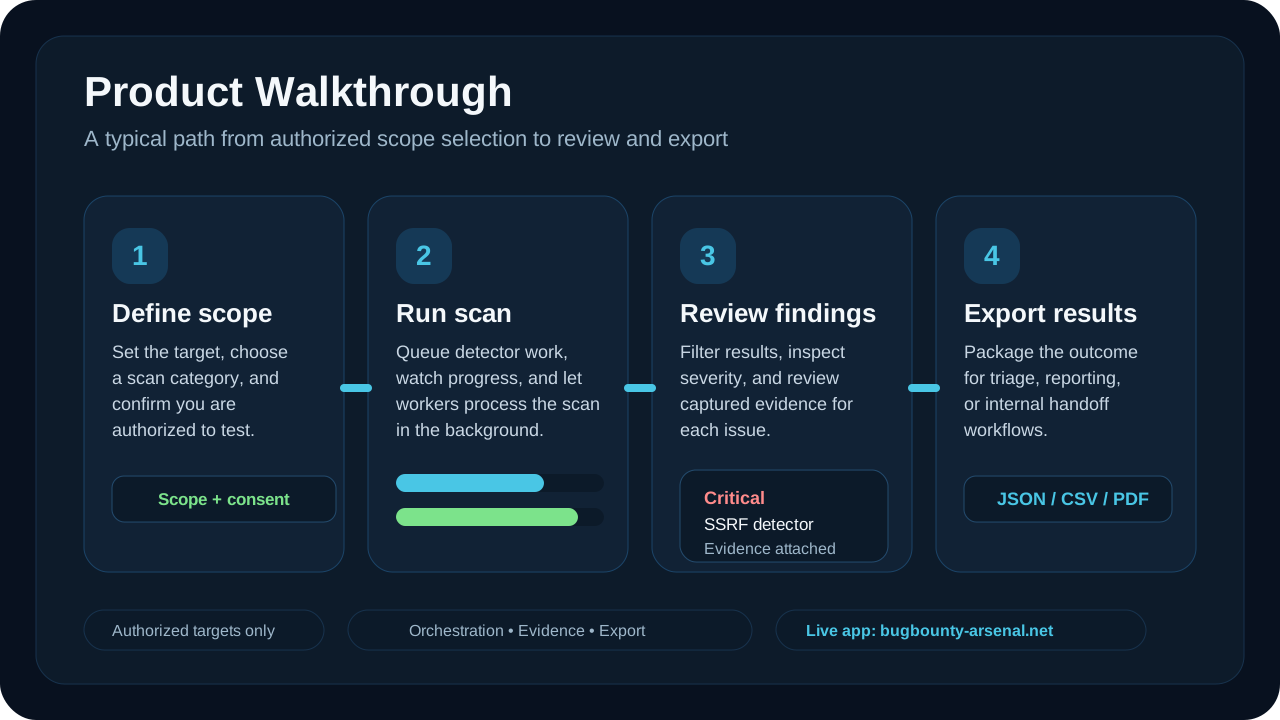
- Set the target scope and confirm you are authorized to test it.
- Start a scan from the dashboard and let the worker pipeline run detectors in the background.
- Review findings, evidence, and severity data from the results interface.
- Export the outcome for triage, disclosure, or internal remediation workflows.
Typical operator flow
- Sign in and configure the target or category you want to assess.
- Launch a scan and monitor progress while Celery workers process the queued tasks.
- Inspect findings, filter noise, and verify the evidence captured for each issue.
- Export the results and hand them off to the next review or reporting step.
Stack
- Django 6 and Django REST Framework
- React 18, React Query, React Router, Tailwind CSS
- Celery and Redis for async job execution
- SQLite or PostgreSQL-backed persistence
- Docker Compose for local development
Repository layout
config/settings, ASGI, Celery, middleware, routingdetectors/active and passive detector implementationsfrontend/React application and static serverscans/scan models, tasks, APIs, exports, websocket updatesusage/usage state and related data modelsusers/authentication, verification, profile, integrations
Quick start
cp .env.example .env
docker compose up --build
docker compose exec web python manage.py migrate
docker compose exec web python manage.py createsuperuser
App URLs:
- Frontend:
http://localhost:3000 - API:
http://localhost:8001/api
Local development
Backend
python3 -m venv .venv
. .venv/bin/activate
pip install -r requirements.txt
cp .env.example .env
python manage.py migrate
python manage.py runserver 0.0.0.0:8001
Frontend
cd frontend
npm install
npm start
Repository Scope
This repository intentionally omits:
- internal runbooks and launch checklists
- evidence and generated scan artifacts
- deployment-only infrastructure files
- local databases, keys, certificates, and editor state
- the internal day-to-day test suite used in the main development repository
Safety
Use this project only against systems you own or are explicitly authorized to test.
License
MIT