
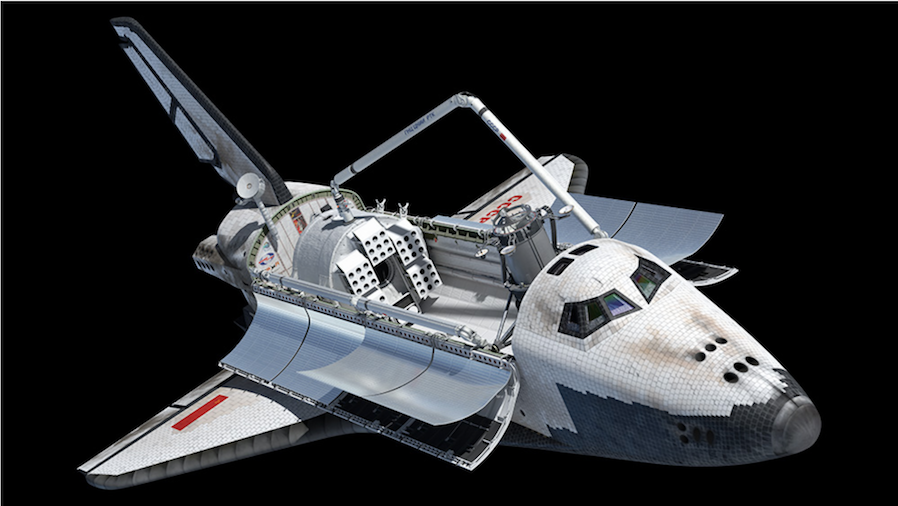
Buran (meaning "Snowstorm" or "Blizzard") was the first spaceplane to be produced as part of the Soviet/Russian Buran programme. Wikipedia
Buran 🌀
Parse and generate RSS/Atom feeds in Clojure



Buran is a bidirectional feed library: parse any RSS/Atom feed into Clojure data structures, transform them with standard functions, and produce feeds in any format. Built on ROME Tools with a data-driven approach.
Buran can be used as an aggregator for various feed formats, converting them into regular Clojure data structures. When consuming a feed, Buran creates a map, which can be read or manipulated using regular functions such as filter, sort, assoc, dissoc, and more. After the modifications, Buran can generate your own feed, for example, in a different format (RSS 2.0, 1.0, 0.9x or Atom 1.0, 0.3).
Quick Start
;; Add to deps.edn
{:deps {buran/buran {:mvn/version "0.1.4"}}}

;; Or to project.clj
[buran "0.1.4"]

;; In your namespace
(ns your.app
  (:require [buran.core :as buran]))

;; Parse a feed
(def data (buran/consume-http "https://stackoverflow.com/feeds/tag?tagnames=clojure"))

;; Generate a feed
(buran/produce {:info {:feed-type "atom_1.0" :title "My Feed"}
                :entries [{:title "Hello" :description {:value "World"}}]})
Usage
Regardless of the feed format you are working with and whether you want to consume or produce a new feed, Buran uses the same data structure every time. Buran's API is concise, with functions such as consume, consume-http, produce, and some helpers to manipulate feeds, including combine-feeds, filter-entries, sort-entries-by and shrink. The basic workflow involves passing the data structure to the API functions repeatedly. See the documentation for Various options and details.
examples
Consume a feed from String
(def feed "<?xml version=\"1.0\" encoding=\"UTF-8\"?>
           <feed xmlns=\"http://www.w3.org/2005/Atom\">
             <title>Feed title</title>
             <subtitle />
             <entry>
               <title>Entry title</title>
               <author>
                 <name />
               </author>
               <summary>entry description</summary>
             </entry>
           </feed>
           ")
(shrink (consume feed))
=>
{:info    {:feed-type "atom_1.0",
           :title     "Feed title"},
 :entries [{:title       "Entry title",
            :description {:value "entry description"}}]}
Produce a feed
(def feed {:info {:feed-type "atom_1.0"
                  :title     "Feed title"}
           :entries [{:title       "Entry title"
                      :description {:value "entry description"}}]})
(produce feed)
=>
"<?xml version=\"1.0\" encoding=\"UTF-8\"?>
 <feed xmlns=\"http://www.w3.org/2005/Atom\">\r
   <title>Feed title</title>\r
   <subtitle />\r
   <entry>\r
     <title>Entry title</title>\r
     <author>\r
       <name />\r
     </author>\r
     <summary>entry description</summary>\r
   </entry>\r
 </feed>
 "
Consume a feed over http
(consume-http "https://stackoverflow.com/feeds/tag?tagnames=clojure")
=>
{:info {...},
 :entries [...],
 :foreign-markup [...]}
Shrink a feed (remove nils, empty colls, maps and etc.)
(shrink (consume-http "https://stackoverflow.com/feeds/tag?tagnames=clojure"))
=>
{:info {:description "most recent 30 from stackoverflow.com",
        :feed-type "atom_1.0",
        :published-date #inst"2018-08-20T08:03:33.000-00:00",
        :title "Active questions tagged clojure - Stack Overflow",
        :link "https://stackoverflow.com/questions/tagged/?tagnames=clojure&sort=active",
        :uri "https://stackoverflow.com/feeds/tag?tagnames=clojure",
        :links [{:href "https://stackoverflow.com/questions/tagged/?tagnames=clojure&sort=active",
                 :type "text/html",
                 :rel "alternate",
                 :length 0}, ...]},
 :entries [{:description {:type "html", :value "<p>..."},
            :updated-date #inst"2018-08-20T06:16:12.000-00:00",
            :foreign-markup [...],
            :published-date #inst"2018-08-20T05:54:39.000-00:00",
            :title "Clojure evaluate lazy sequence",
            :author "Constantine",
            :categories [{:name "clojure", :taxonomy-uri "https://stackoverflow.com/tags"}, ...],
            :link "https://stackoverflow.com/questions/51924808/clojure-evaluate-lazy-sequence",
            :uri "https://stackoverflow.com/q/51924808",
            :authors [{:name "Constantine", :uri "https://stackoverflow.com/users/4201205"}],
            :links [{:href "https://stackoverflow.com/questions/51924808/clojure-evaluate-lazy-sequence",
                     :rel "alternate",
                     :length 0}]}, ...],
 :foreign-markup [...]}
Supported Formats
| Format | Parse | Generate | Notes |
|---|---|---|---|
| Atom 1.0 | ✅ | ✅ | Full support |
| Atom 0.3 | ✅ | ✅ | Legacy |
| RSS 2.0 | ✅ | ✅ | Most common |
| RSS 1.0 | ✅ | ✅ | RDF-based |
| RSS 0.9x | ✅ | ✅ | Various variants |
| RSS 0.9 | ✅ | ✅ | Original |
Basic API Reference
consume
Parse a feed from string, file, reader, or other sources.
;; Shortcut
(consume "<?xml version=\"1.0\"?><feed>...</feed>")

;; With options
(consume {:from             (java.io.File. "~/feed.xml")
                                        ; String, File, Reader, W3C DOM document, JDOM document, W3C SAX InputSource
          :validate         false       ; Indicates if the input should be validated
          :locale           (Locale/US) ; java.util.Locale
          :xml-healer-on    true        ; Healing trims leading chars from the stream (empty spaces and comments) until the XML prolog.
                                        ; Healing resolves HTML entities (from literal to code number) in the reader.
                                        ; The healing is done only with the File and Reader.
          :allow-doctypes   false       ; You should only activate it when the feeds that you process are absolutely trustful
          :throw-exception  false       ; false - return map with an exception, throw an exception otherwise
         })
| Option | Type | Default | Description |
|---|---|---|---|
:from |
String, File, Reader, InputStream, W3C DOM, JDOM, SAX InputSource | required | Source to parse |
:validate |
boolean | false |
Validate XML against DTD/schema |
:locale |
java.util.Locale |
(Locale/US) |
Locale for parsing |
:xml-healer-on |
boolean | true |
Trim whitespace/comments before XML prolog; resolve HTML entities |
:allow-doctypes |
boolean | false |
Allow DOCTYPE declarations (⚠️ security risk - only for trusted sources) |
:throw-exception |
boolean | false |
If false, return error map; if true, throw exception |
consume-http
Fetch and parse a feed over HTTP.
;; Shortcut
(consume-http "https://example.com/feed.xml")

;; With options
(consume-http {:from             "https://stackoverflow.com/feeds/tag?tagnames=clojure"
                                                      ; <http url string>, URL, File, InputStream
               :headers          {"X-Header" "Value"} ; Request's HTTP headers map
               :lenient          true                 ; Indicates if the charset encoding detection should be relaxed
               :default-encoding "US-ASCII"           ; Supports: UTF-8, UTF-16, UTF-16BE, UTF-16LE, CP1047, US-ASCII
               ...
               + All options applied to a (consume) call.
              })
| Option | Type | Default | Description |
|---|---|---|---|
:from |
String URL, java.net.URL, File, InputStream |
required | URL or source to fetch |
:headers |
map | {} |
HTTP headers (e.g., {"User-Agent" "MyApp"}) |
:lenient |
boolean | true |
Relaxed charset encoding detection |
:default-encoding |
String | "US-ASCII" |
Fallback encoding: UTF-8, UTF-16, UTF-16BE, UTF-16LE, CP1047, US-ASCII |
:content-type |
String | nil |
Override Content-Type header (used with InputStream) |
Beware! consume-http from either http url string or URL is rudimentary and works only for simplest cases. For instance, it does not follow HTTP 302 redirects.
Please consider using a separate library like clj-http or http-kit for fetching the feed.
produce
Generate RSS/Atom feed as string, file, or DOM.
(produce {:feed            {:info {:feed-type "atom_1.0" ; Supports: atom_1.0, atom_0.3, rss_2.0,
                                                         ; rss_1.0, rss_0.94, rss_0.93, rss_0.92,
                                                         ; rss_0.91U (Userland), rss_0.91N (Netscape),
                                                         ; rss_0.9
                                   :title "Feed title"}
                            :entries [{:title       "Entry 1 title"
                                       :description {:value "entry description"}}]
                            :foreign-markup nil}

          :to              :string ; <file path string>, :string, :w3cdom, :jdom, File, Writer
          :pretty-print    true    ; Pretty-print XML output
          :throw-exception false   ; false - return map with an exception, throw an exception otherwise
         })
| Option | Type | Default | Description |
|---|---|---|---|
:feed |
map | nil (uses argument as feed) |
Feed data structure to generate |
:to |
:string, :w3cdom, :jdom, String (file path), File, Writer |
:string |
Output destination |
:pretty-print |
boolean | true |
Pretty-print XML output |
:throw-exception |
boolean | false |
If false, return error map; if true, throw exception |
shrink
Remove nil values and empty collections from feed data.
(shrink feed)
License
Copyright © 2018-2026 Aleksei Sotnikov
Distributed under the MIT License