Project Summary
If you're new here, this project was started in response to an effort to extract some unredacted content in the Epstein archives. The CNN in this repo was used to successfully exfiltrate DBC12.pdf from EFTA00400459.
You can read about this code/approach here: EFTA00400459 has been cracked, DBC12.pdf liberated.
The code in this project runs against the images extracted from the PDF with pdfimages, you can download an archive containing them here.
Basic Usage Info
Expects ../EFTA00400459-{000..=075}_2x.png to exist
- Run
./train.shto generate training from train_top.txt and train_bot.txt corresponding to page-001_2x.png - Run
./run.shto OCR all pages and generated recovered.pdf
Trains from top of page-001 and bottom of page-001 non-contiguously to capture vertical drift. Memorizes grid location and reuses for subsequent pages (non-training runs) to prevent pixel shifts.
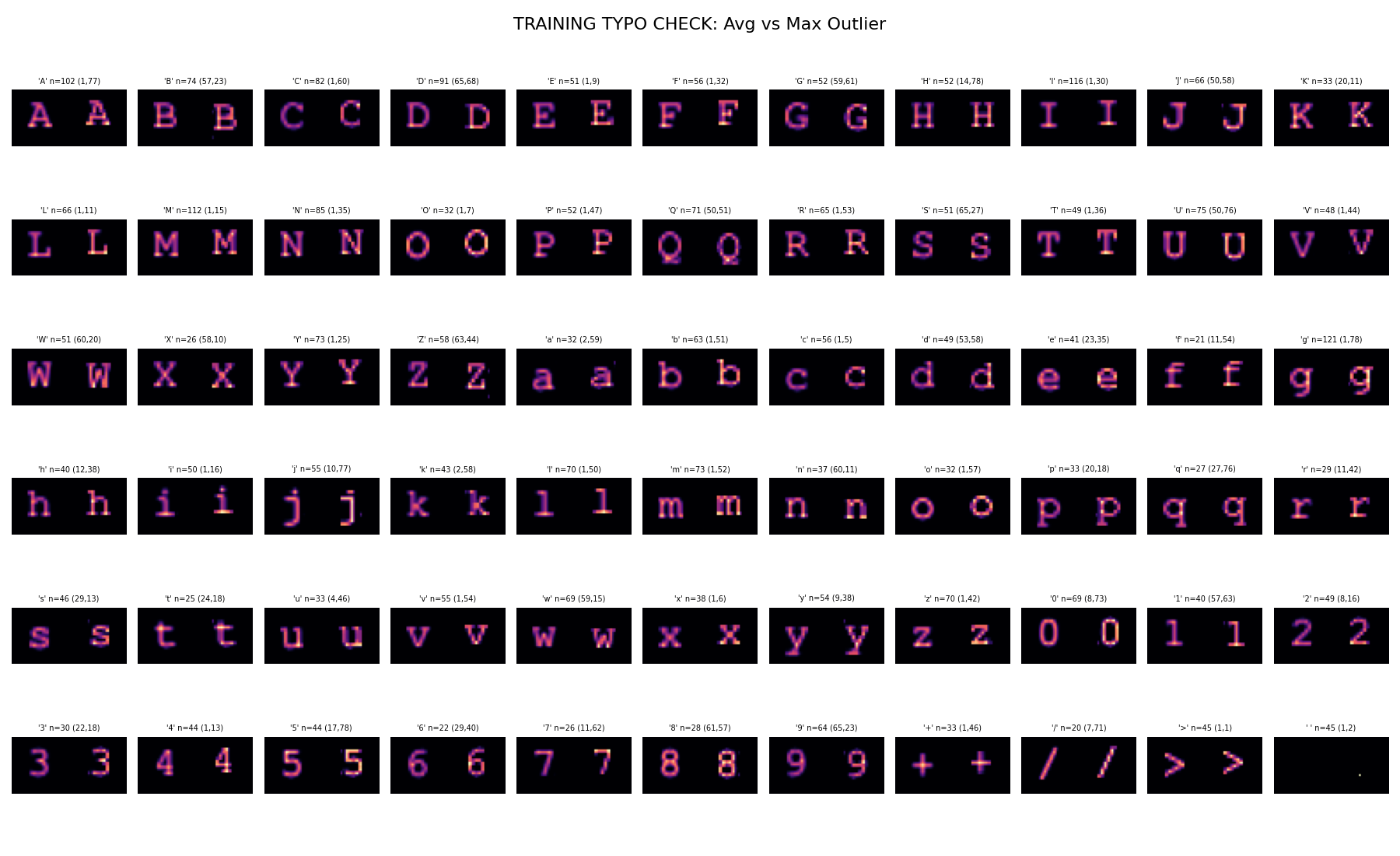
In training runs with -d/--debug, generates a debug view that lets you see if you mis-typed anything by showing greatest outliers compared to the rest of the members assigned to the bucket:
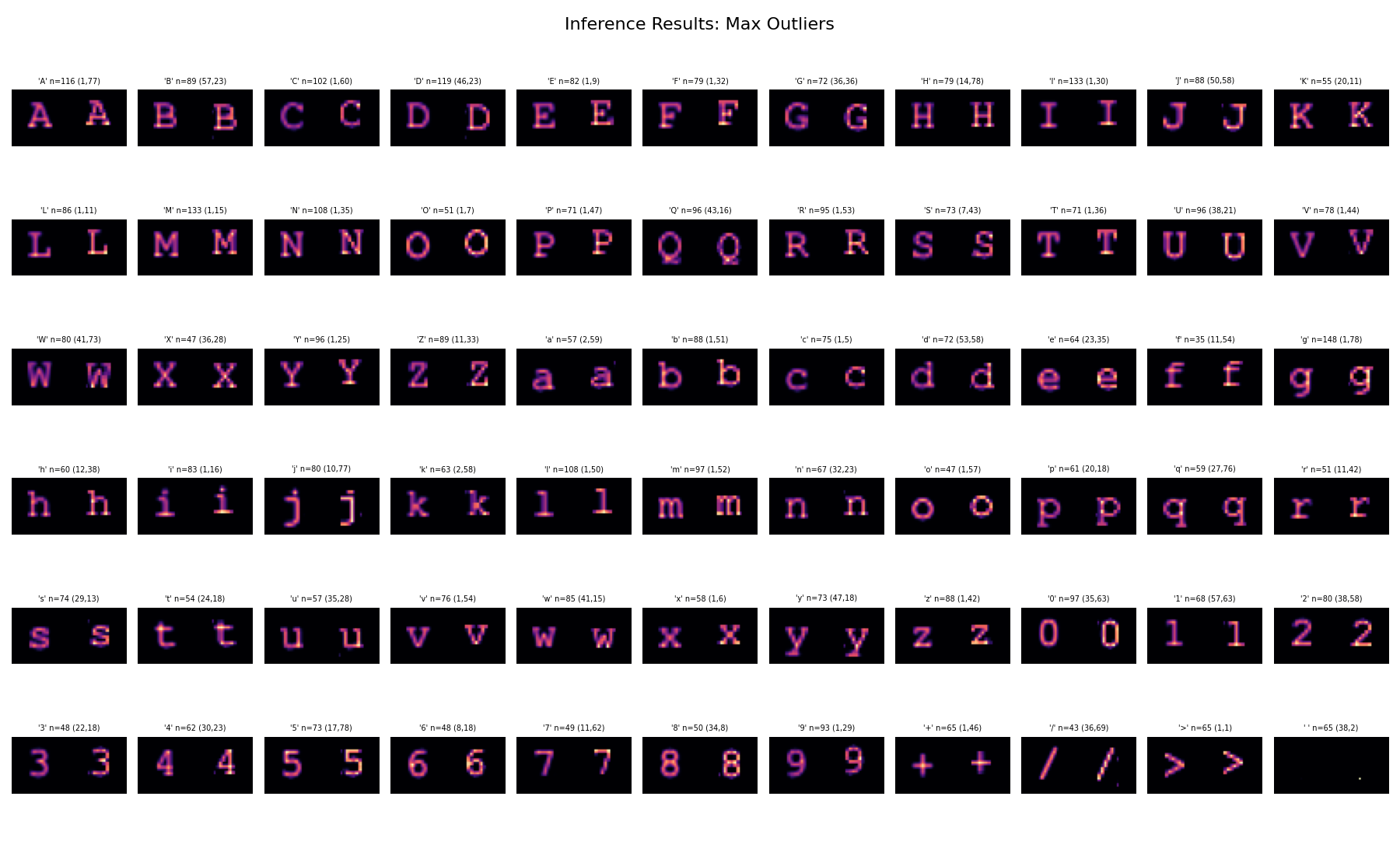
In inference runs, generates a debug view (when -d is in use with no -q/--quiet) that shows the max outliers compared to the rest of the characters in the image. When -o/--output is specified, the debug view is saved to <basename>-proof.png so you can inspect it later.