
microtunnel

Self-hosted HTTPS tunnels made simple — using Go, Caddy, and Cloudflare.
- One lightweight Go binary.
- Automatic HTTPS with wildcard certificates.
- WebSocket-based tunneling (no raw TCP needed).
- Fully self-hosted: your domain, your rules.
Why microtunnel?
Most tunneling tools either require paid plans, rely on proprietary infrastructure, or need complex setups. microtunnel is a self-hosted alternative that gives you HTTPS tunnels using just Go, WebSockets, and Caddy — no third-party services required.
- No paid plans
- No vendor lock-in
- No opaque black boxes
Just one Go binary + Caddy with automatic TLS = your own public HTTPS tunnel.
Features
- 🔐 Secure WebSocket-based tunneling
- 🔒 Automatic Let's Encrypt TLS (via Cloudflare DNS)
- 📡 Multiplexing multiple HTTP streams over one WebSocket with yamux
- 🖊️ Simple, structured logs (thanks, Logrus)
- 🌐 Designed for side-projects, demos, webhook testing
Quick Start
Server Setup
First, prepare your environment variables:
export TUNNEL_SERVER_DOMAIN_NAME=tunnel.example.com
export CADDY_PROXY_PORT=3000
export CF_API_TOKEN=your_cloudflare_token
Build and run the server:
go run main.go --port 3000 --base-domain-name=tunnel.example.com
Caddy needs to be set up separately for wildcard HTTPS. See full guide in the article.
Client Usage
Tunnel your local app (e.g., running on localhost:8080):
go run main.go --server-url=wss://tunnel.example.com/tunnel --port 8080
You'll get a URL like:
https://ab12cd34.tunnel.example.com
Open it. Magic.
How It Works
- Clients connect to
/tunnelvia secure WebSocket. - Server assigns a random 8-character subdomain.
- Caddy handles automatic TLS certificates.
- Yamux multiplexes multiple HTTP requests over a single WebSocket.
- HTTP hijacking enables raw streaming of HTTP traffic without re-encoding.
For a deeper technical dive, check the full article.
Requirements
- A domain (e.g.,
example.com) with Cloudflare managing DNS. - A public VM (free Oracle/AWS/anything).
- Go (for building the binary).
- Caddy (with Cloudflare DNS plugin).
Future Improvements
- Token-based tunnel authentication
- gRPC transport support
- Prometheus metrics for tunnel traffic
Demo
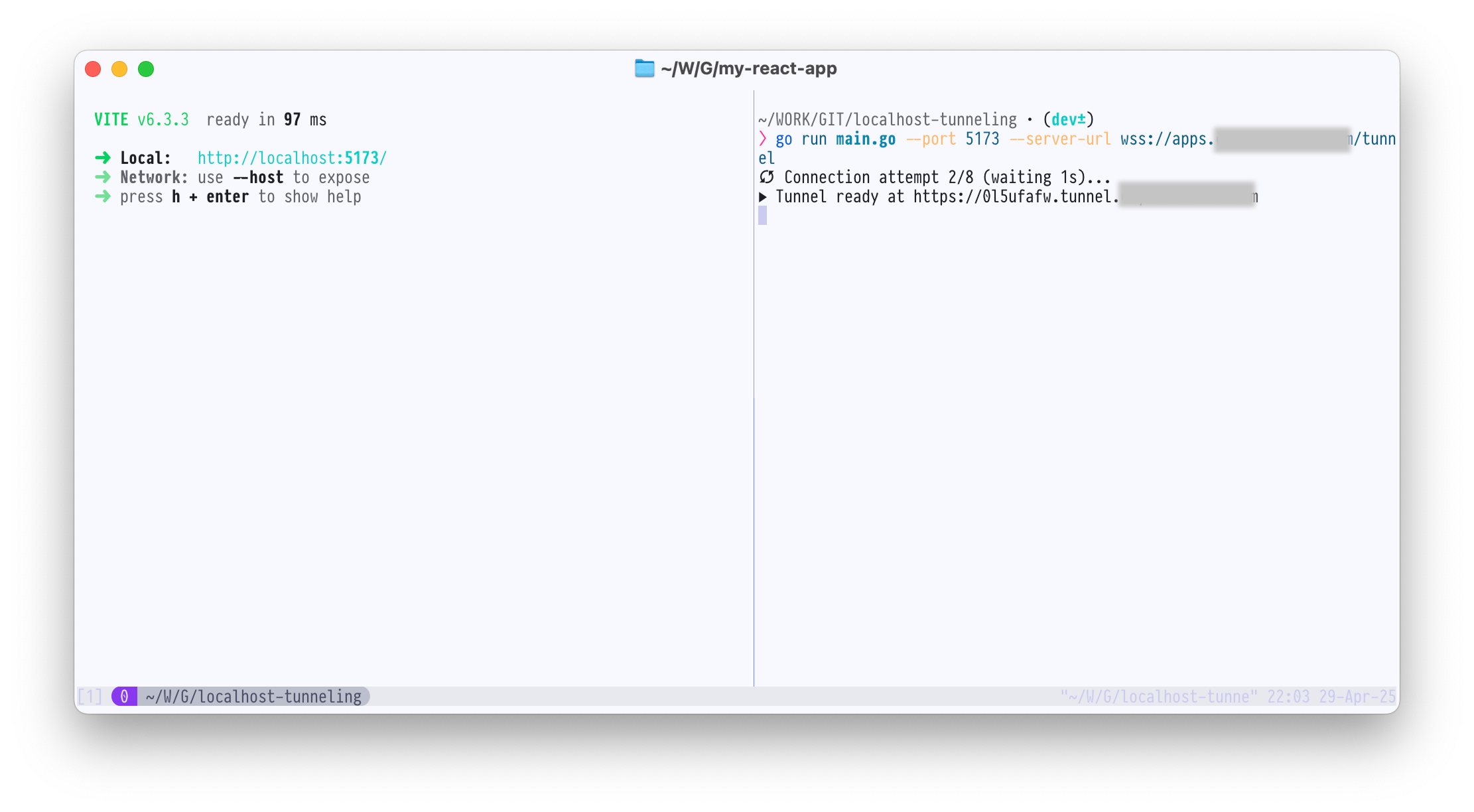
Tunnel established
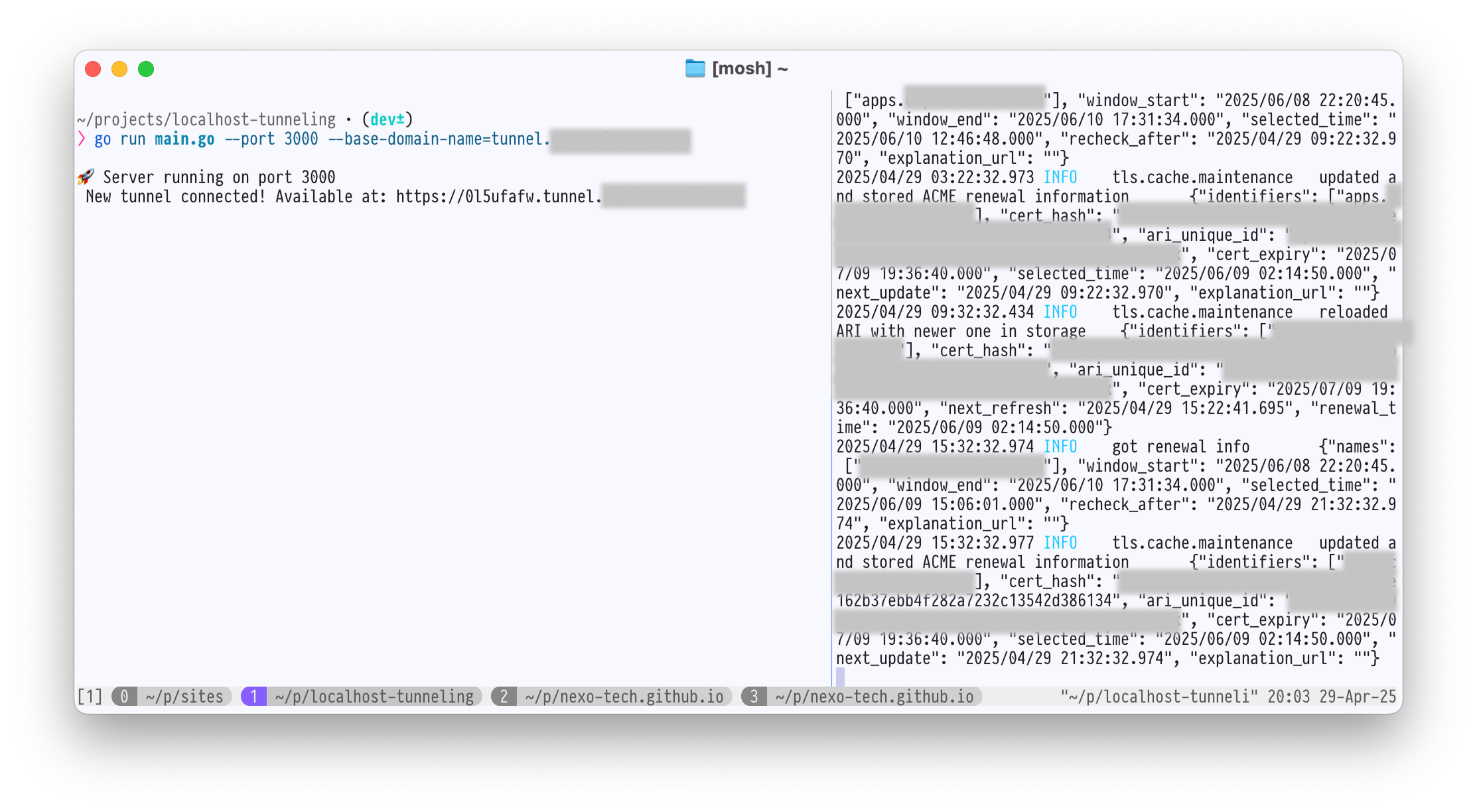
Incoming request to server
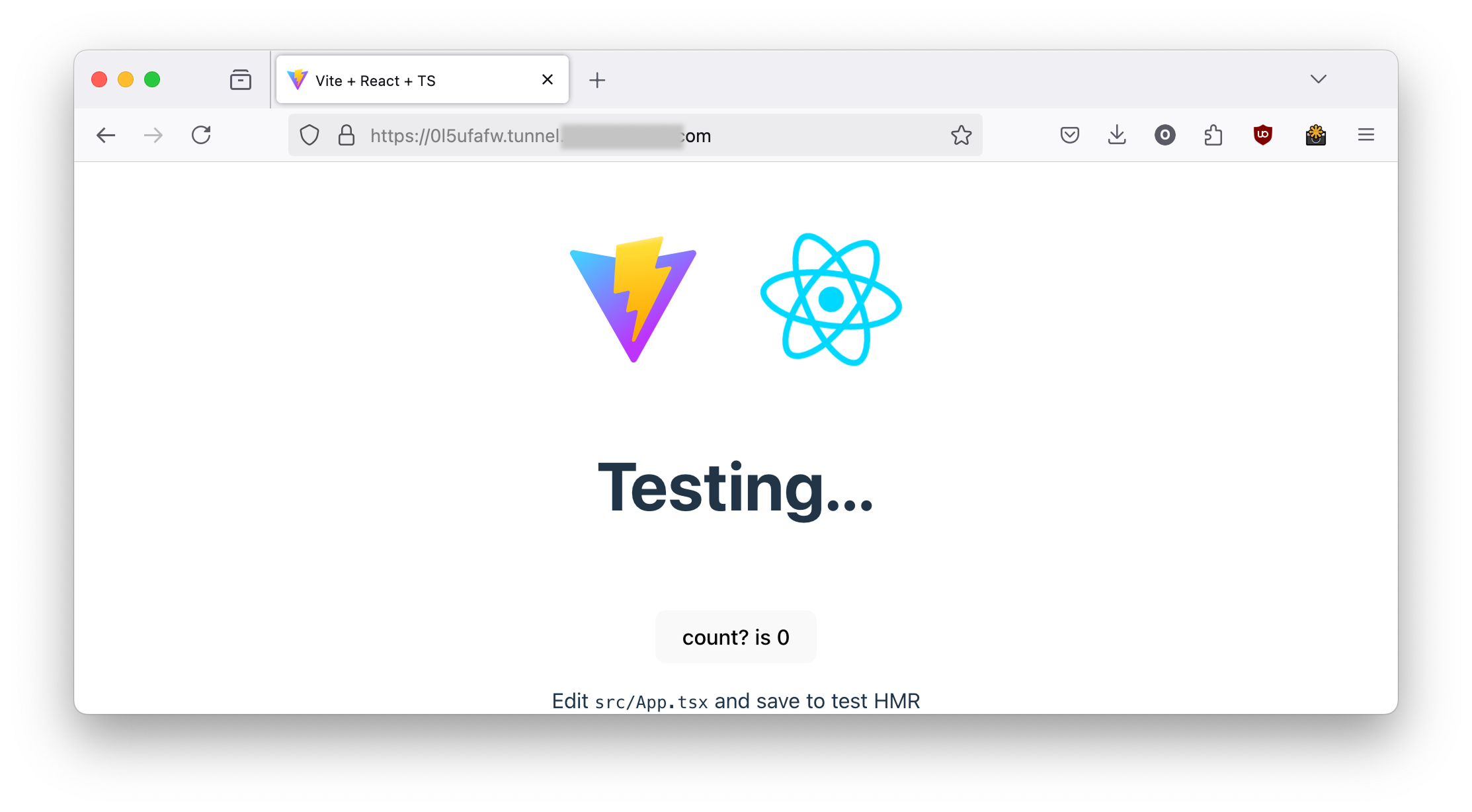
Accessing local app via HTTPS
License
MIT. Do whatever you want. Stars are appreciated