
Notion Bases for Obsidian
The database engine Obsidian deserves
7 views. 18 column types. Charts, subtasks, formulas and relations. Zero code required.
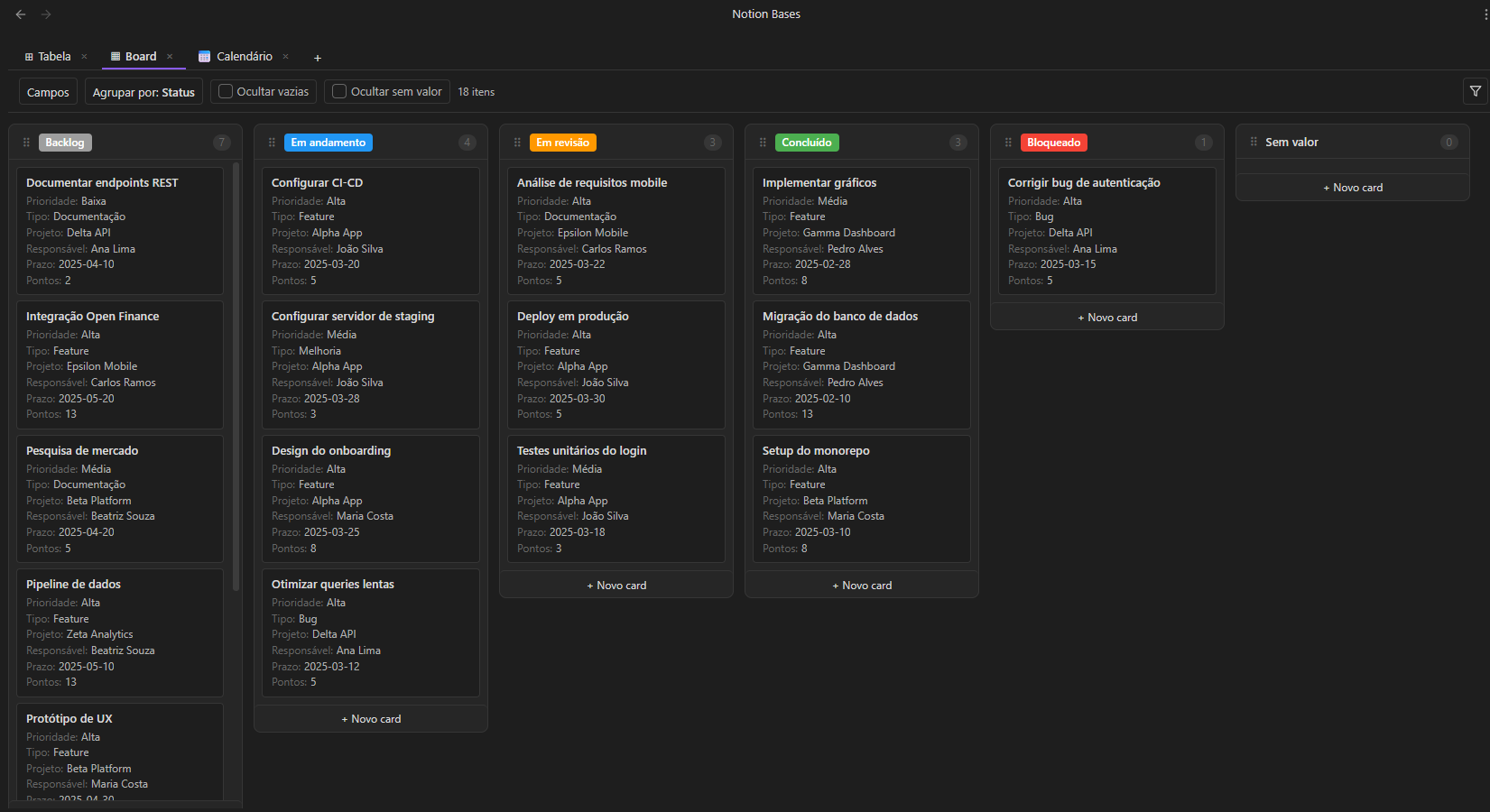
Turn any folder into a Notion-style database with Table, Board (Kanban), Gallery, List, Calendar, Timeline (Gantt), and Chart views — powered by plain Markdown and frontmatter. Your data stays yours, always.







Highlights
- 7 views — Table, Board (Kanban), Gallery, List, Calendar, Timeline (Gantt), Chart
- 18 column types — Title, Text, Number, Select, Multi-select, Checkbox, Date, URL, Email, Phone, Status, Formula, Relation, Lookup, Rollup, Image, Audio, Video
- Charts — Bar, line, and pie charts with configurable axes, aggregations, and smart formatting — pure SVG, zero dependencies
- Subtasks — Hierarchical rows with expand/collapse, up to 3 levels deep, powered by self-relation columns
- Rollup columns — Aggregate values across related databases with 7 functions (sum, count, avg, min, max, count_values, list)
- Formula engine — Spreadsheet-style functions:
IF,SUM,AVG,CONCAT,LEFT,ROUND, and many more - Relations & Lookups — Link rows across databases and pull values from related notes
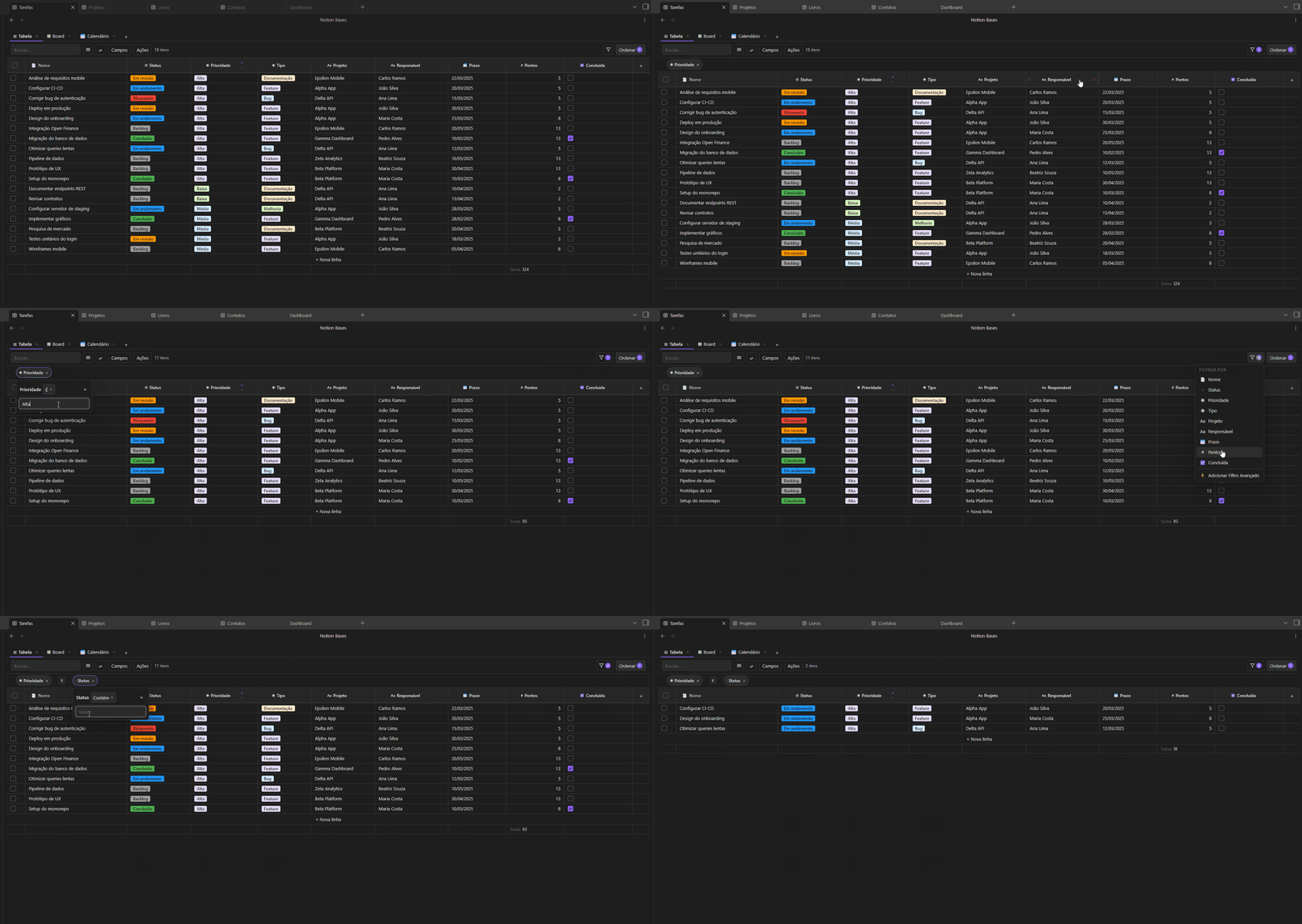
- Advanced filters — Type-aware operators with AND/OR logic
- 100% local Markdown — Every row is a
.mdfile, every column is a frontmatter field. No lock-in, no cloud, no telemetry
Why Notion Bases?
Obsidian's built-in Bases plugin is great for tables and has its own expression-based formula system. Notion Bases focuses on a different set of trade-offs — more views, more column types, and a spreadsheet-style formula syntax.
Views
| View | Notion Bases | Core Bases |
|---|---|---|
| Table | Yes | Yes |
| Board / Kanban | Yes | No |
| Gallery | Yes | No |
| List | Yes | Yes |
| Calendar | Yes | No |
| Timeline / Gantt | Yes | No |
| Chart view | Yes | No |
Notion Bases offers 5 exclusive views that Core Bases doesn't have — Board, Gallery, Calendar, Timeline, and Chart — giving you the flexibility to visualize data the way that fits your workflow.
Data modeling
| Feature | Notion Bases | Core Bases |
|---|---|---|
| Column types | 18 | 6 |
| Formulas | Spreadsheet-style (IF, SUM, AVG, CONCAT) |
Expression-based (JS-like) |
| Relation columns | Yes | No |
| Lookup columns | Yes | No |
| Rollup columns | Yes | No |
| Image columns | Rendered in cell | Text only |
| Subtasks / Sub-rows | Yes | No |
| Number formatting (prefix, suffix, decimals, thousands) | Yes | No |
With relation and lookup columns, you can link databases together and pull values across notes — just like Notion. The spreadsheet-style formula syntax is familiar to anyone who has used Excel or Google Sheets.
Table experience
| Feature | Notion Bases | Core Bases |
|---|---|---|
| Column reordering (drag) | Yes | Yes |
| Column resizing (drag) | Yes | Yes |
| Column pinning | Yes | No |
| Row height options | Yes | Yes |
| Text wrap toggle | Yes | No |
| Aggregation row | 5 functions always visible | Right-click → Summarize |
| Multi-column sort with priority | Yes | Basic sort |
| CSV import / export | Yes | No |
| Bulk actions (delete, duplicate, move) | Yes | No |
Both plugins let you resize, reorder columns and adjust row height. Notion Bases goes further with column pinning, text wrap, a persistent aggregation footer, multi-column sort with drag-to-reorder priority, CSV import/export, and bulk row actions.
Shared features
| Feature | Notion Bases | Core Bases |
|---|---|---|
| Embed database in any note | Yes | Yes |
| Multiple views per database | Yes | Yes |
| AND/OR filter logic | Yes | Yes |
| 100% local Markdown | Yes | Yes |
If you ever wished Obsidian had Notion-level databases without leaving your vault, this is it.
Views
Table
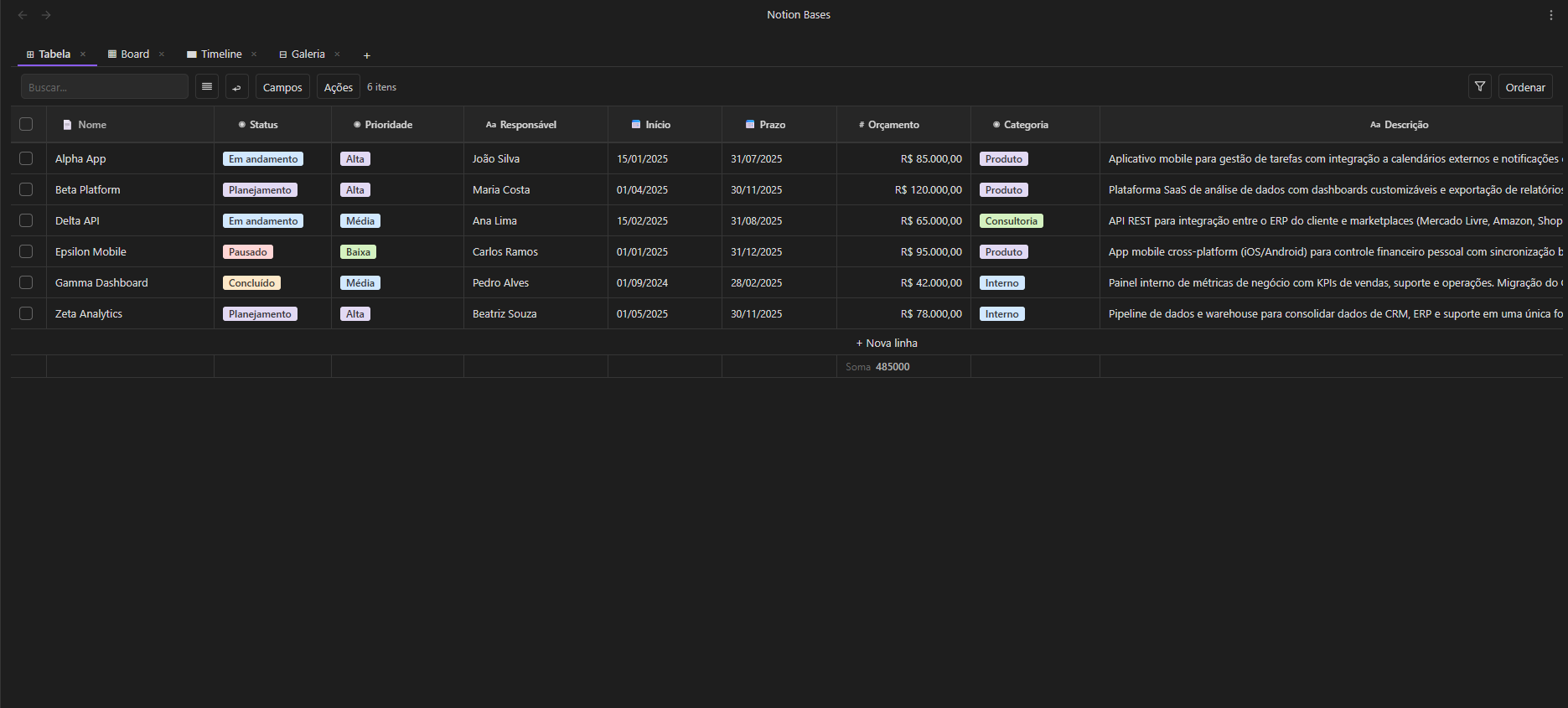
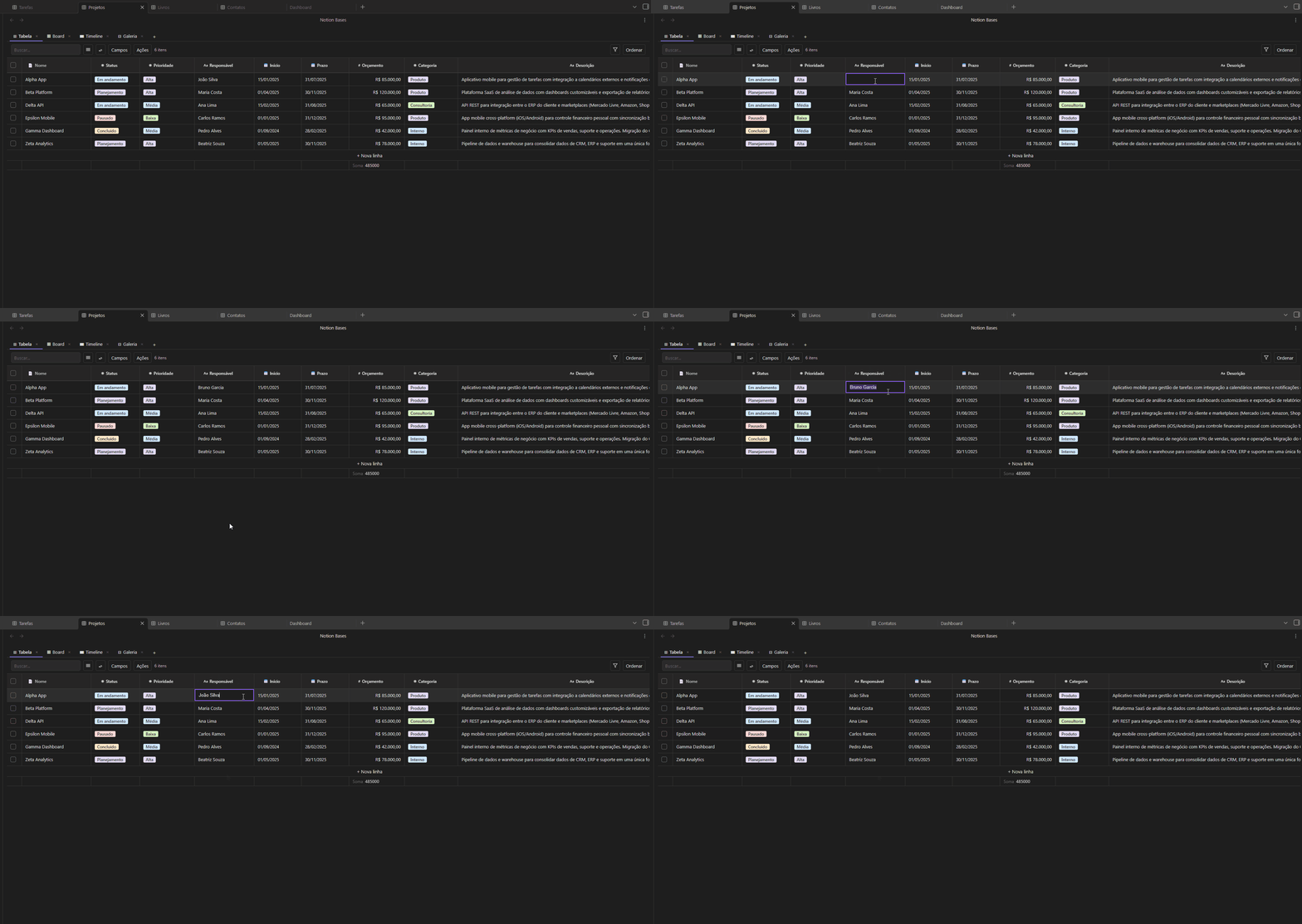
A fully interactive spreadsheet: inline editing, resizable/reorderable/pinnable columns, aggregation footer, row height options, text wrap, multi-column sort, and bulk row actions.
Board (Kanban)
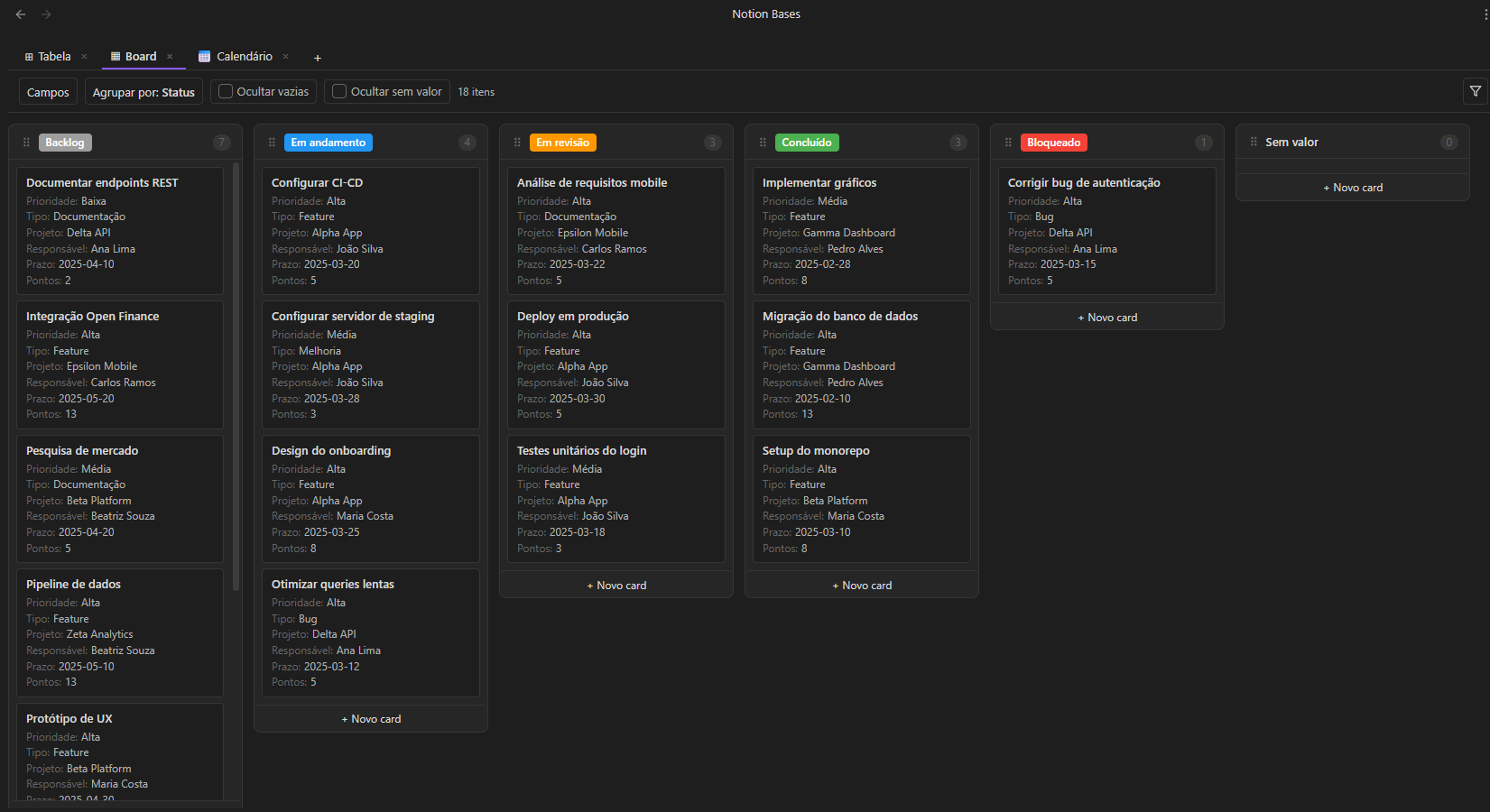
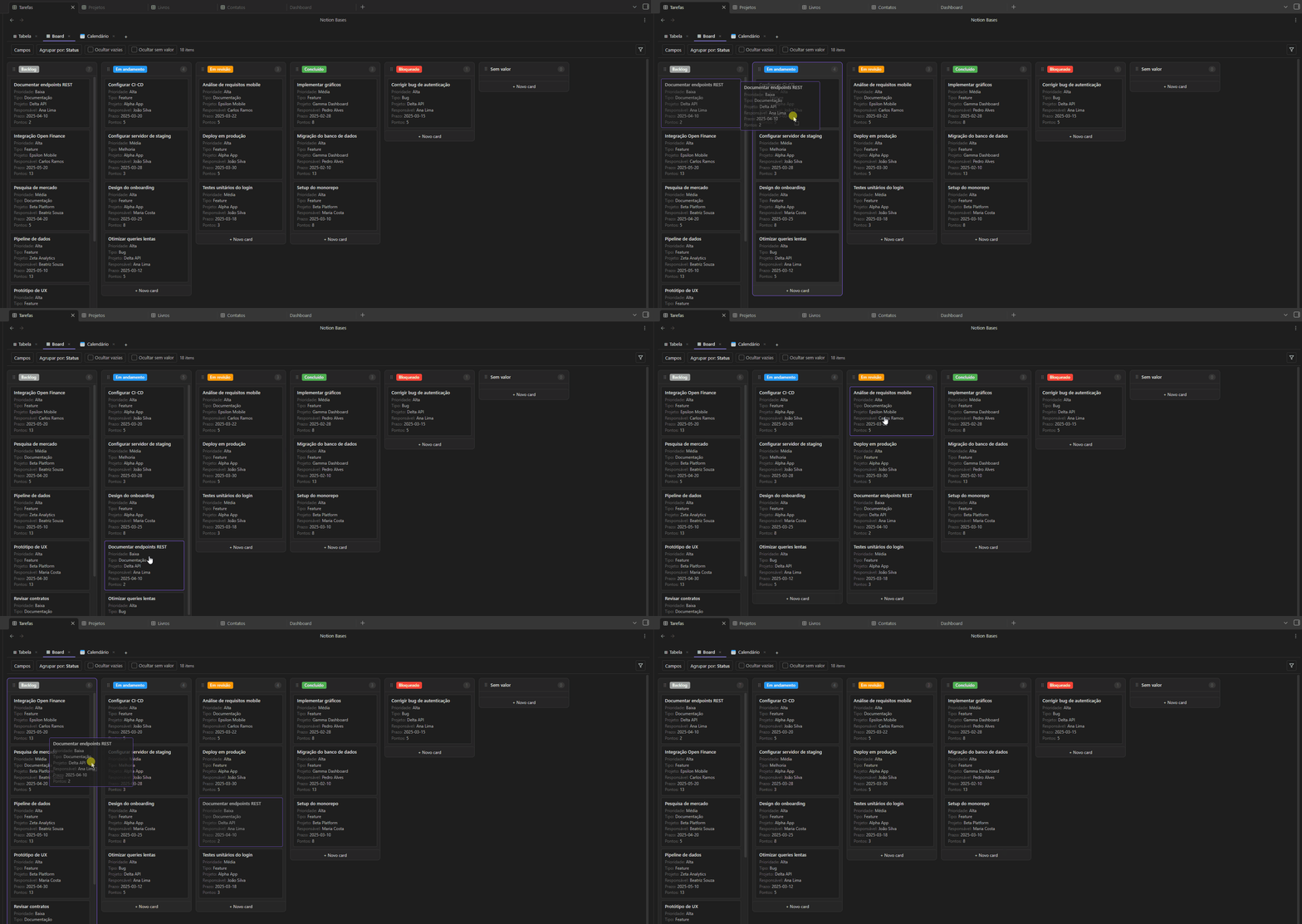
Drag cards between columns grouped by any select or status field. Add cards directly to a column. Hide empty or no-value columns. Configure which properties appear on each card.
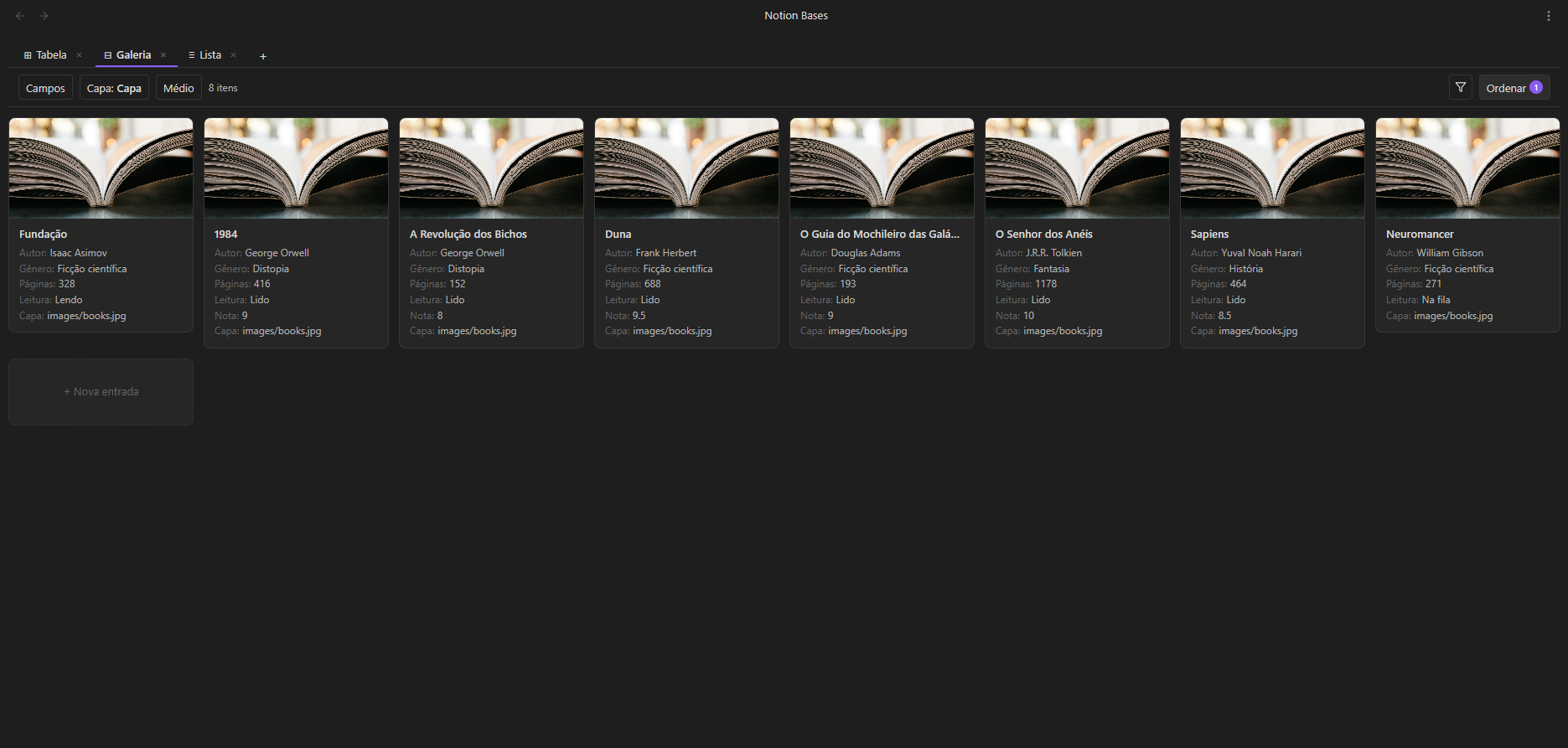
Gallery
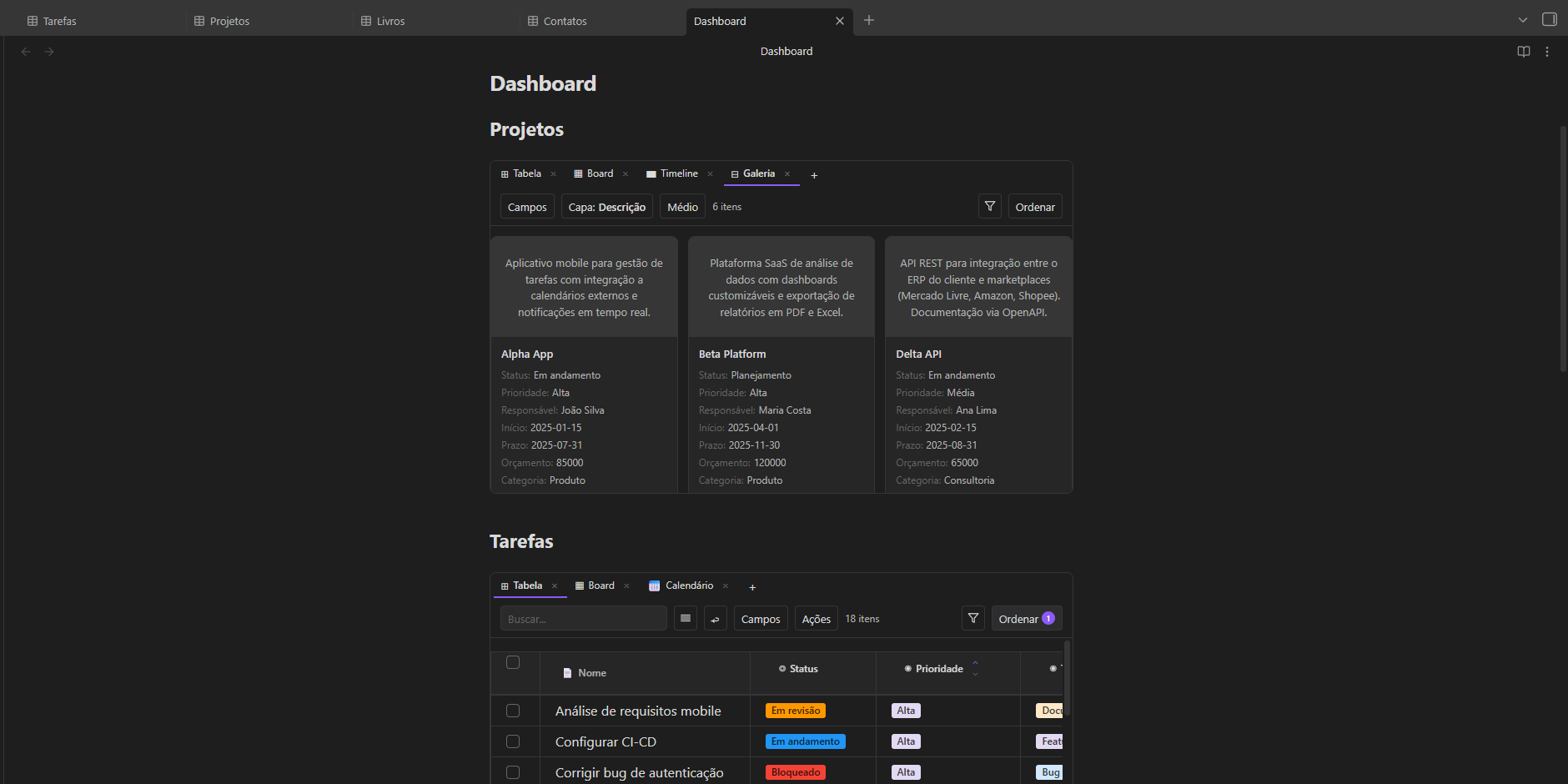
A responsive card grid. Pick a cover field, choose card size (small / medium / large), and display any properties below the title.
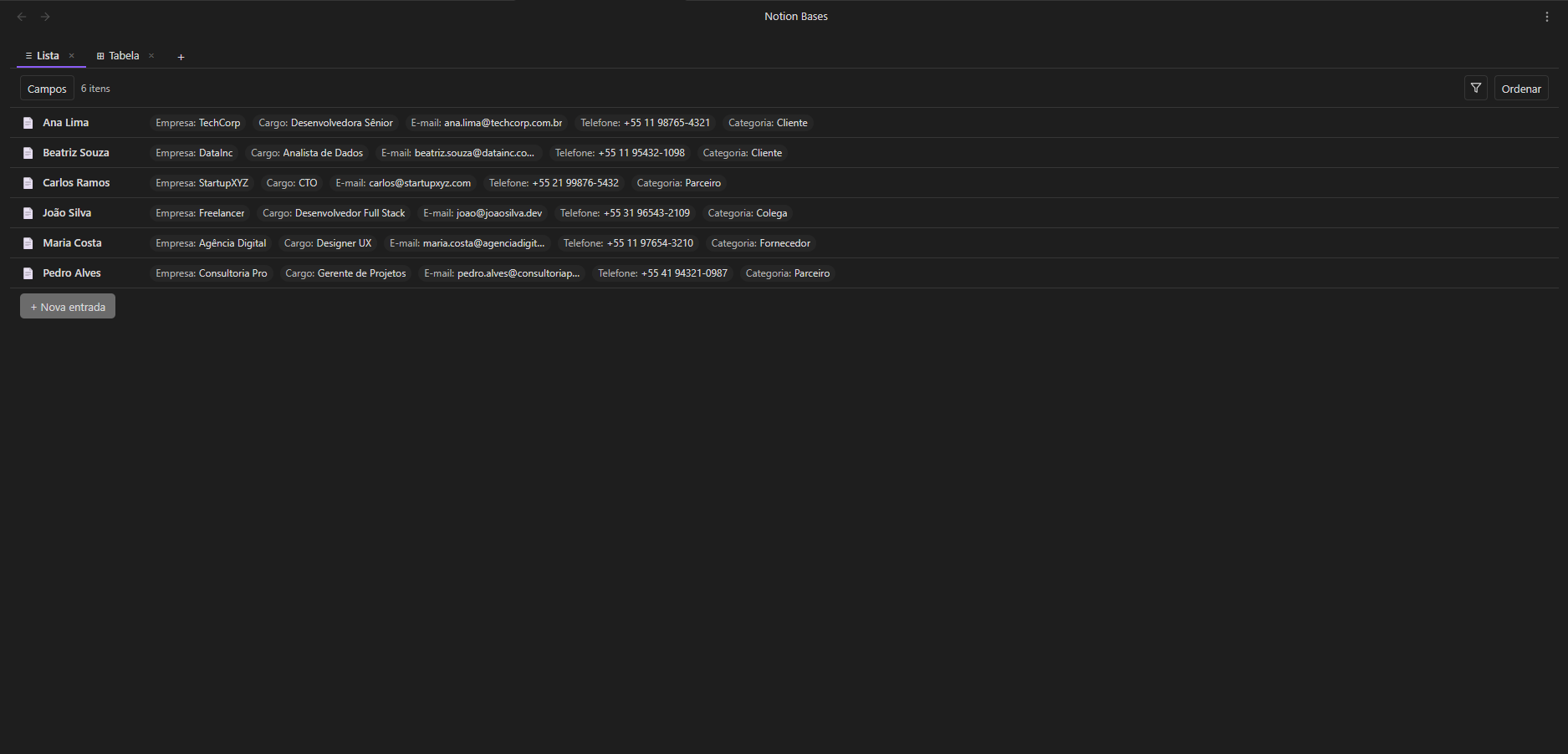
List
A minimal, single-line view — title plus property chips. Great for quick overviews and task-oriented databases.
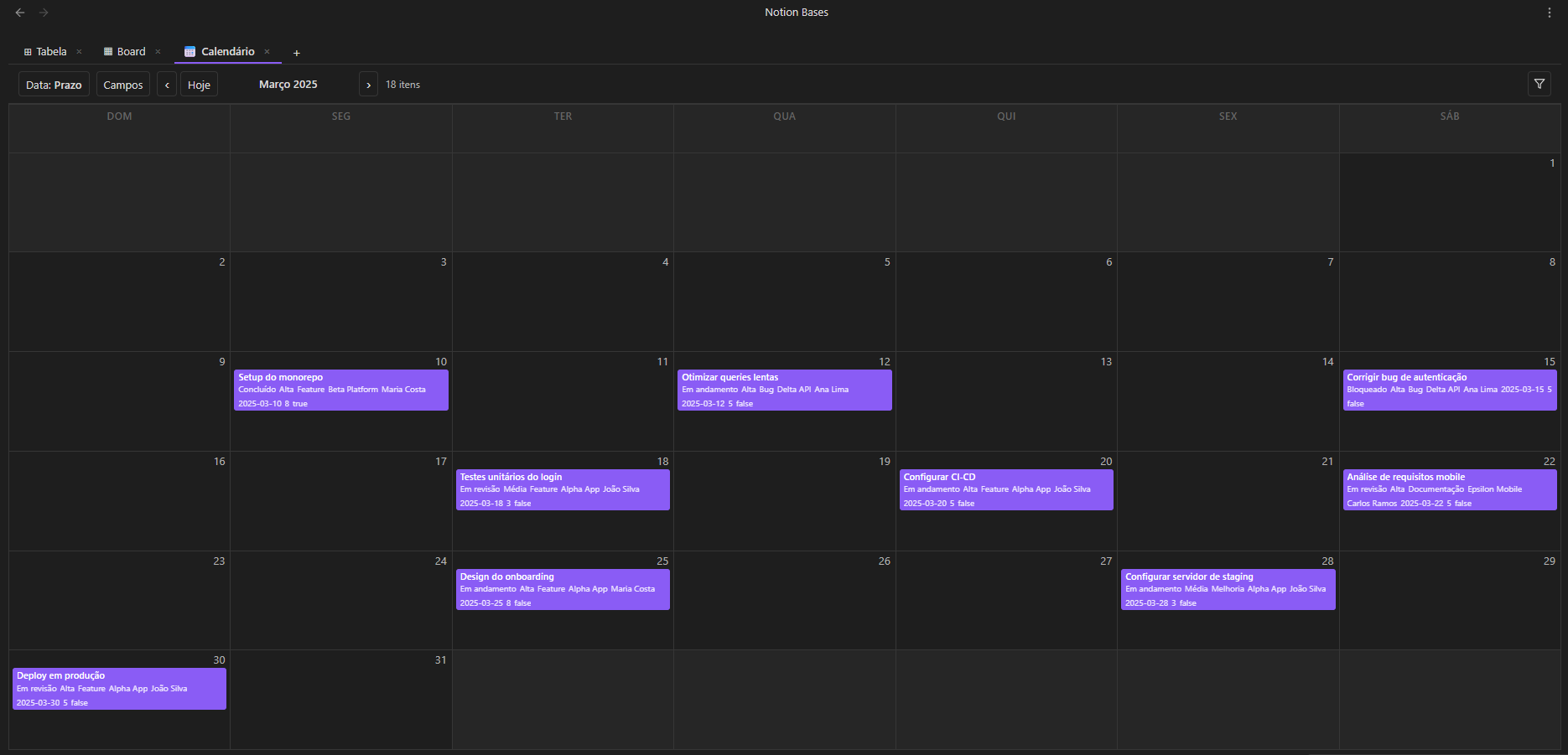
Calendar
Monthly calendar. Position notes by any date field. Click a day to create a note with the date pre-filled. Notes without a date appear in a collapsible section.
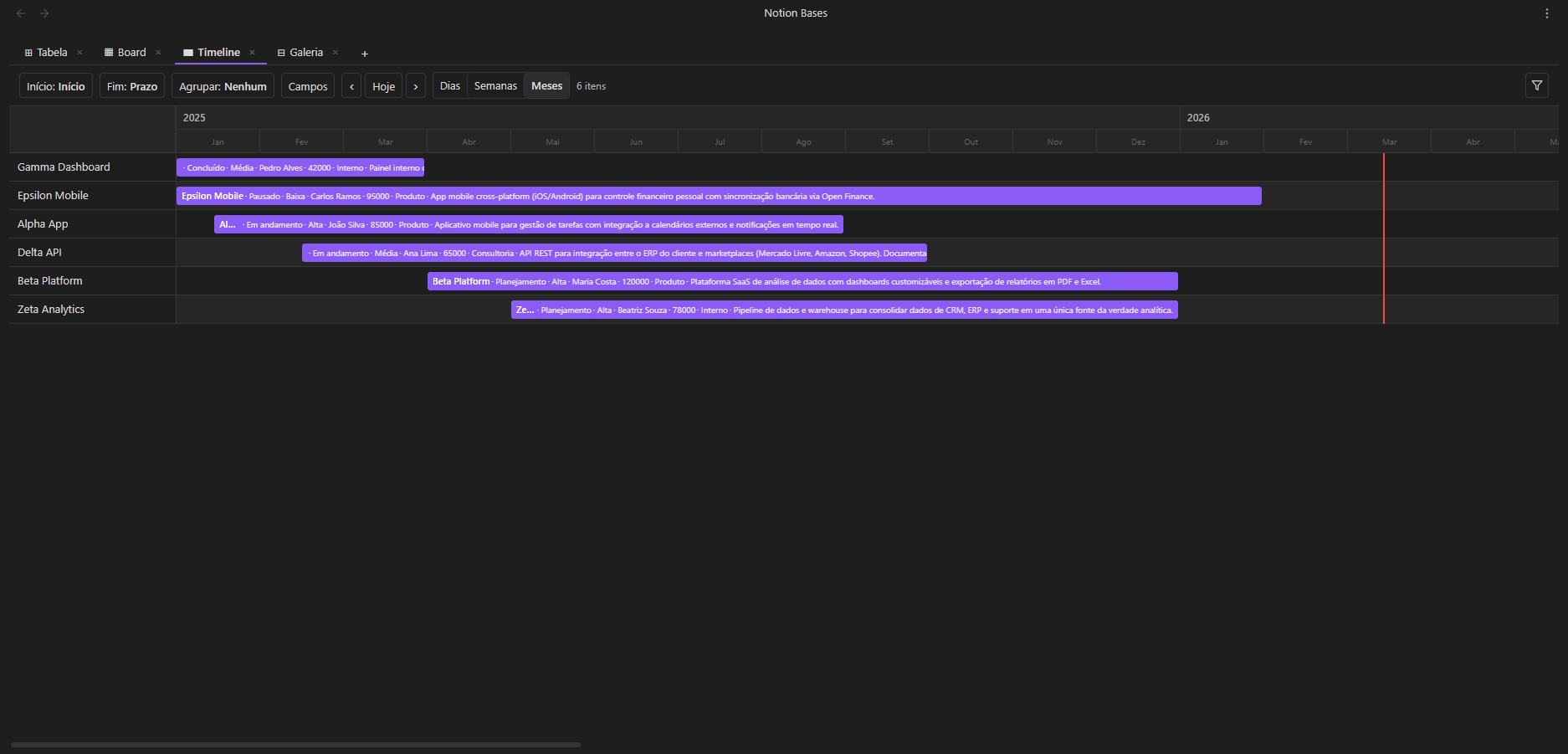
Timeline (Gantt)
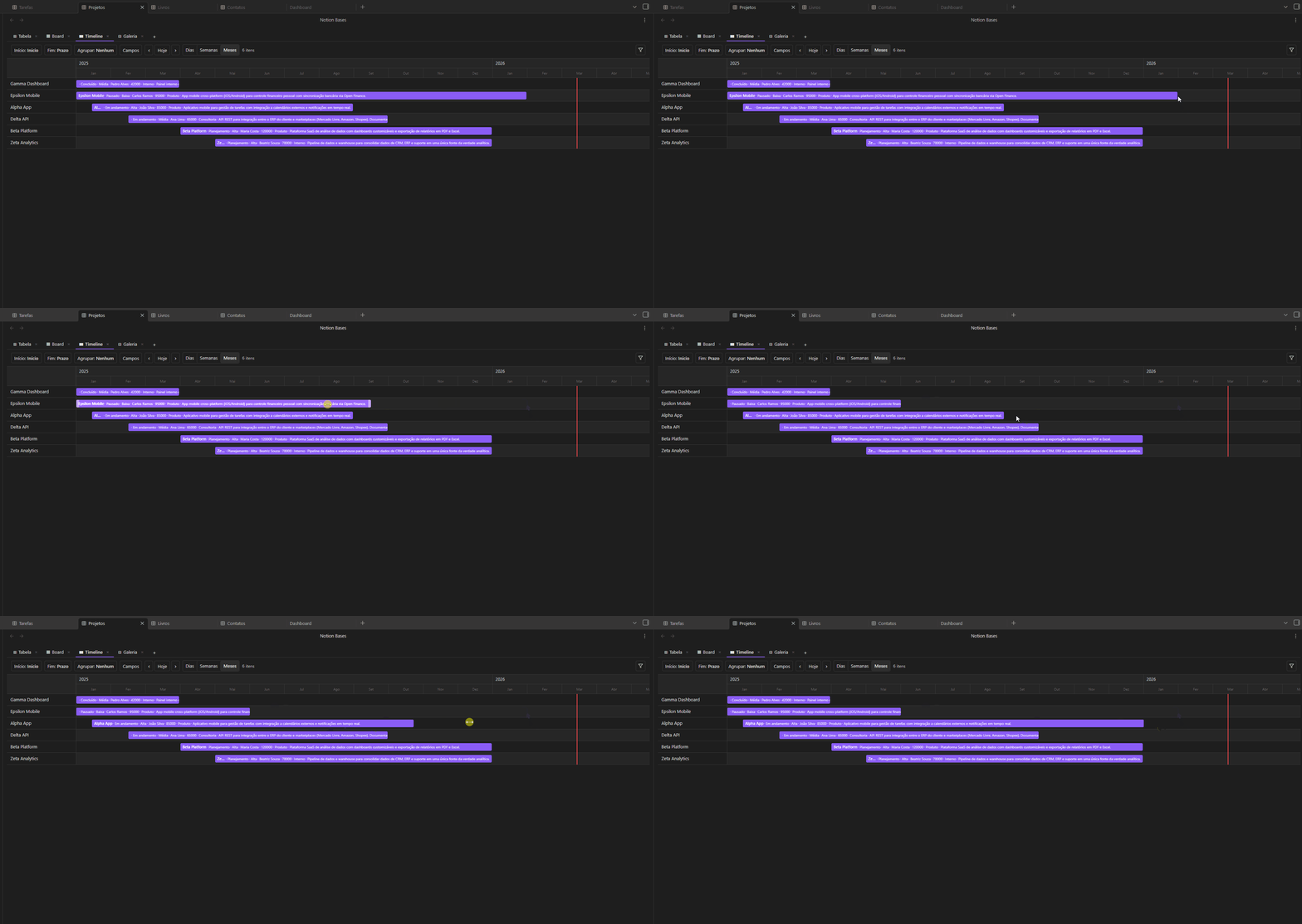
Horizontal bar chart with three zoom levels (days / weeks / months). Drag bar edges to resize start or end dates. Group rows by any field.
Chart
Bar, line, and pie charts rendered as pure SVG. Pick a category column (X axis), choose count or a number column (Y axis), and select an aggregation function. Smart axis formatting with k/M suffixes and integer ticks. Responsive sizing and full mobile support.

Features
| Category | What you get |
|---|---|
| Column types | Title, Text, Number, Select, Multi-select, Checkbox, Date, URL, Email, Phone, Status, Formula, Relation, Lookup, Rollup, Image, Audio, Video |
| Formulas | IF, SUM, AVG, CONCAT, LEFT, ROUND and more |
| Relations & Lookups | Link rows across databases, pull values from related notes |
| Rollup | Aggregate values across related databases: sum, count, avg, min, max, count_values, list |
| Charts | Bar, line, pie — pure SVG with aggregations and smart axis formatting |
| Subtasks | Hierarchical rows with expand/collapse up to 3 levels via self-relations |
| Filters | Type-aware operators, AND/OR groups |
| Sorts | Multi-column with priority ordering |
| Aggregation | Sum, Average, Min, Max, Count — updates live |
| Number formatting | Prefix ($, R$), suffix (%, kg), decimals, thousands separator |
| Column controls | Pin, resize (drag), reorder (drag) |
| CSV | Import and export |
| Bulk actions | Select rows to delete, duplicate or move |
| Schema inference | Auto-detects column types from existing frontmatter |
| Embeds | Embed any database inside a note via code block |
| Multi-view | Each view has independent filters, sorts and field visibility |
| 100% Markdown | Every row is a .md file. No lock-in, ever |
Column types
| Type | Description |
|---|---|
title |
Note filename — always the first column |
text |
Plain text |
number |
Numeric value with optional formatting |
select |
Single option from a defined list |
multiselect |
Multiple options |
checkbox |
Boolean true / false |
date |
Date value |
url |
Clickable link |
email |
Email address |
phone |
Phone number |
status |
Colored badge with inline management |
formula |
Computed value from other columns |
relation |
Link to a note in another database |
lookup |
Pull a field from a related database |
image |
Display an image from the vault |
rollup |
Aggregate values from related databases |
audio |
Inline audio player with folder-based file picker |
video |
Video with modal player and folder-based file picker |
Getting started
Installation
Note: Notion Bases is not yet available in Obsidian's Community Plugins directory. For now, use one of the methods below.
Via BRAT (recommended)
- Install BRAT from Community Plugins
- Open BRAT settings → Add Beta plugin
- Paste:
bgarciamoura/obsidian-notion-bases-plugin - Enable Notion Bases in Settings → Community plugins
Manual installation
- Download
main.js,manifest.jsonandstyles.cssfrom the latest release - Create
<your-vault>/.obsidian/plugins/notion-bases/ - Copy the three files into it
- Reload Obsidian and enable the plugin in Settings → Community plugins
Create your first database
- Open the command palette (
Ctrl/Cmd + P) → "Create new database" - Pick a folder — a
_database.mdfile marks it as a database - Click the table icon in the ribbon (or run "Open database") to open it
Add views
Click + in the view tab bar to add a new view. Each view has its own filters, sorts and field visibility. Drag tabs to reorder.
Embed in a note
```nb-database
path: Projects
```
Pin a fixed view type (no tabs):
```nb-database
path: Projects
type: table
```
How data is stored
Everything lives in your vault as plain Markdown:
| What | Where |
|---|---|
| Rows | .md files in the database folder |
| Column values | Frontmatter fields in each note |
| Schema & view config | Frontmatter of _database.md |
| Embed view configs | Frontmatter of the hosting note |
Open any file in any text editor and your data is right there.
Requirements
- Obsidian
1.4.0or later - Desktop and mobile supported
Support the project
If Notion Bases makes your vault more powerful, consider supporting development:


Contributing
Contributions are welcome! Please read the Contributing Guide before submitting a pull request.
For bugs and feature requests, use the issue tracker.
License
GPL v3 — free to use and modify, but any distribution must remain open source under the same license.