
PAX SAPIENTICA 


Overview
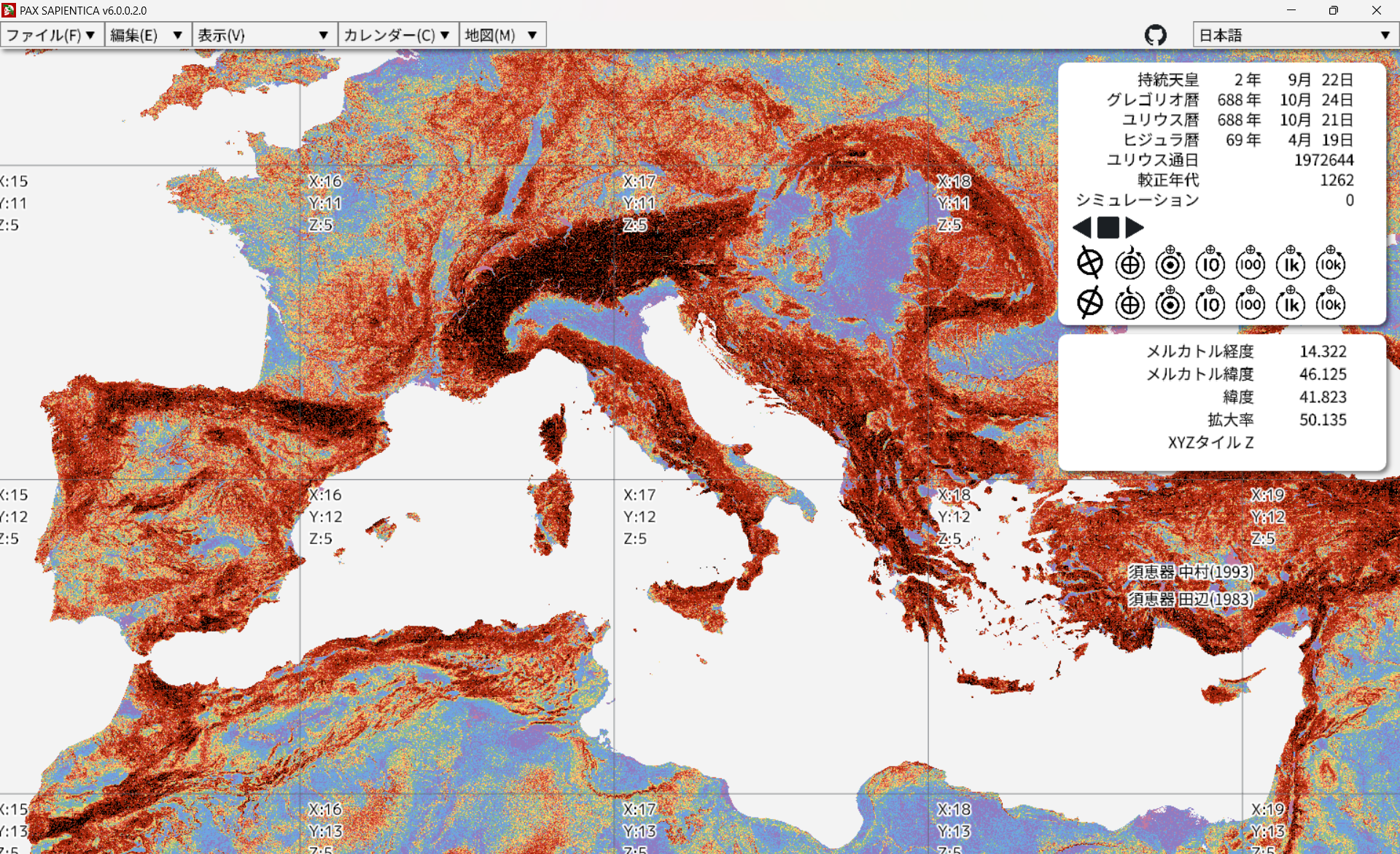
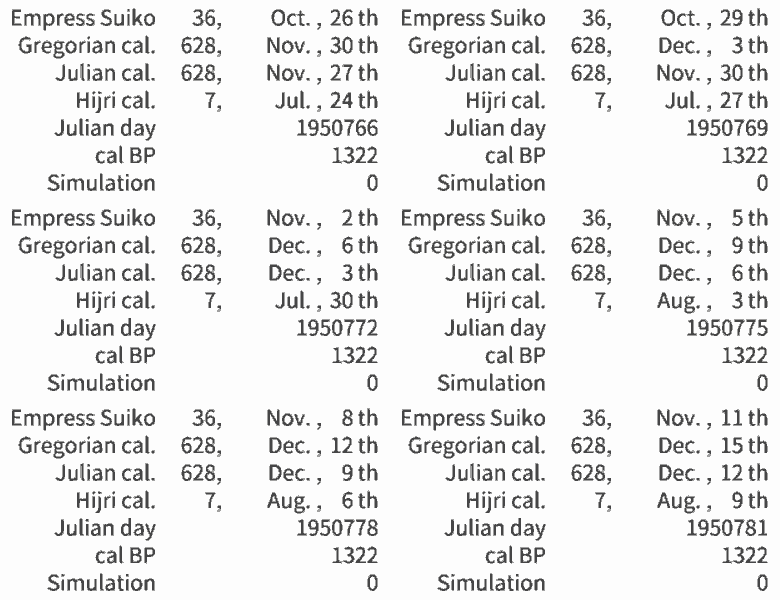
This software is PAX SAPIENTICA (abbreviated PAXS). PAXS is a GIS for philological, archaeological, and anthropological data. It has the ability to display calendars for each region in each time period and agent-based simulation.
The phenomenon of history is formed by a complex interplay of time, space, and the actions of the people who lived within them. At the core of PAX SAPIENTICA lies the objective to understand and reproduce this dynamism of history. Specifically, it aims to seamlessly integrate temporal and spatial information, which is indispensable for historical research, and furthermore, to dynamically analyze history as "an accumulation of people's actions" using the agent-based simulation method.
Traditional Geographic Information Systems (GIS), while adept at handling spatial information, have faced challenges in managing complex temporal information crucial for historical research, such as the concept of the time axis, calendars specific to different eras, and archaeological chronologies. Moreover, existing agent-based simulation software has not always been optimized for the specific needs of historical research, for instance, displaying and managing calendrical systems or chronological frameworks of particular periods. PAX SAPIENTICA is designed to overcome these challenges and meet the unique requirements faced by historical researchers.
List of elements supported by this software.
📅 Calendar
| Available | Calendar Name |
|---|---|
| ✅ | Julian calendar |
| ✅ | Gregorian calendar |
| ✅ | Japanese calendar |
| ✅ | Chinese calendar |
| ✅ | Islamic calendar |
| ✅ | Julian day number |
🏠 Agent-Based Simulation (ABS)
This is an agent-based simulation that estimates settlement and population dynamics in the Japanese archipelago from the 3rd to 7th centuries. It was presented at the 48th Annual Meeting of the Japan Association for Archaeoinformatics on December 2, 2023.
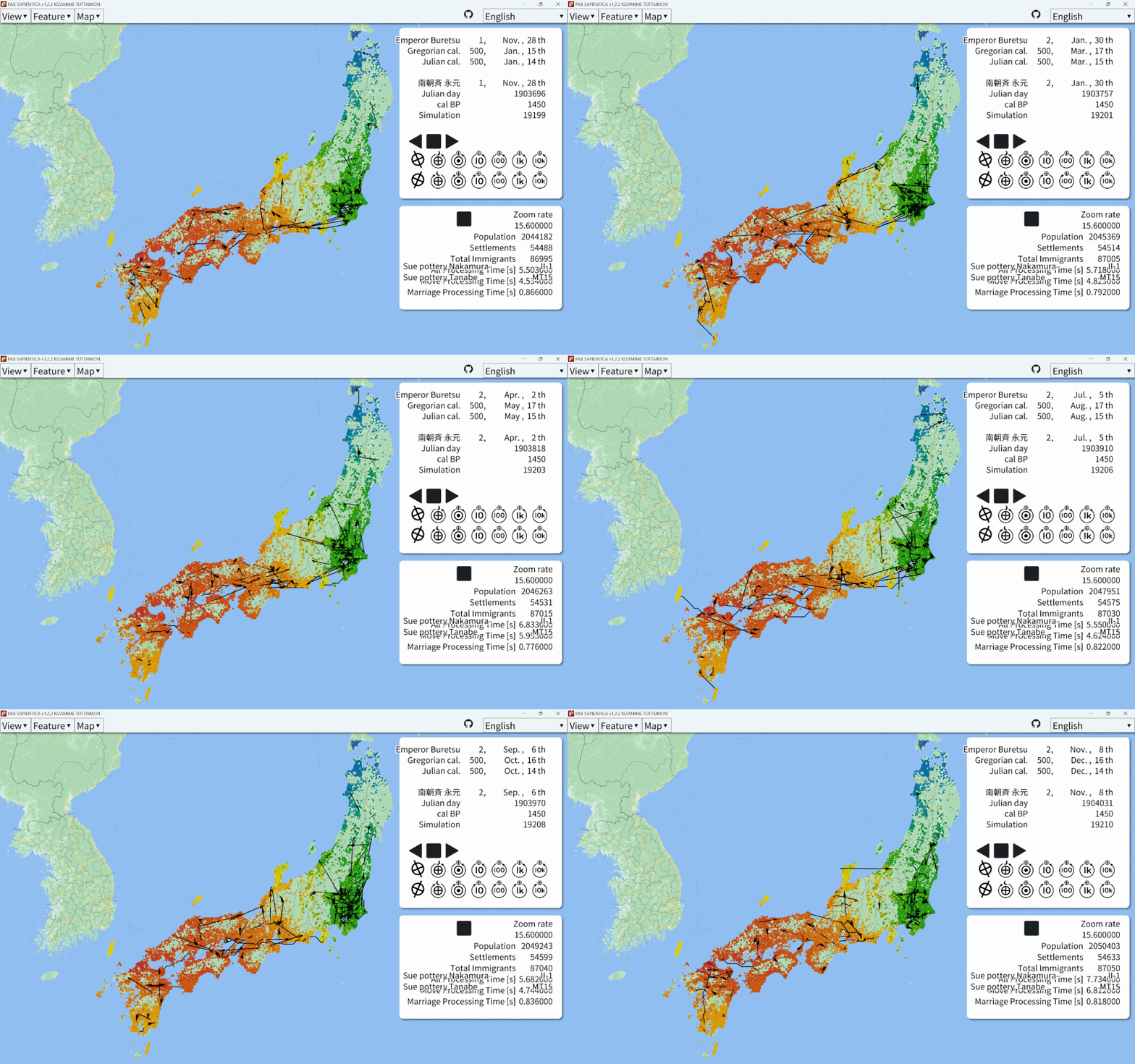
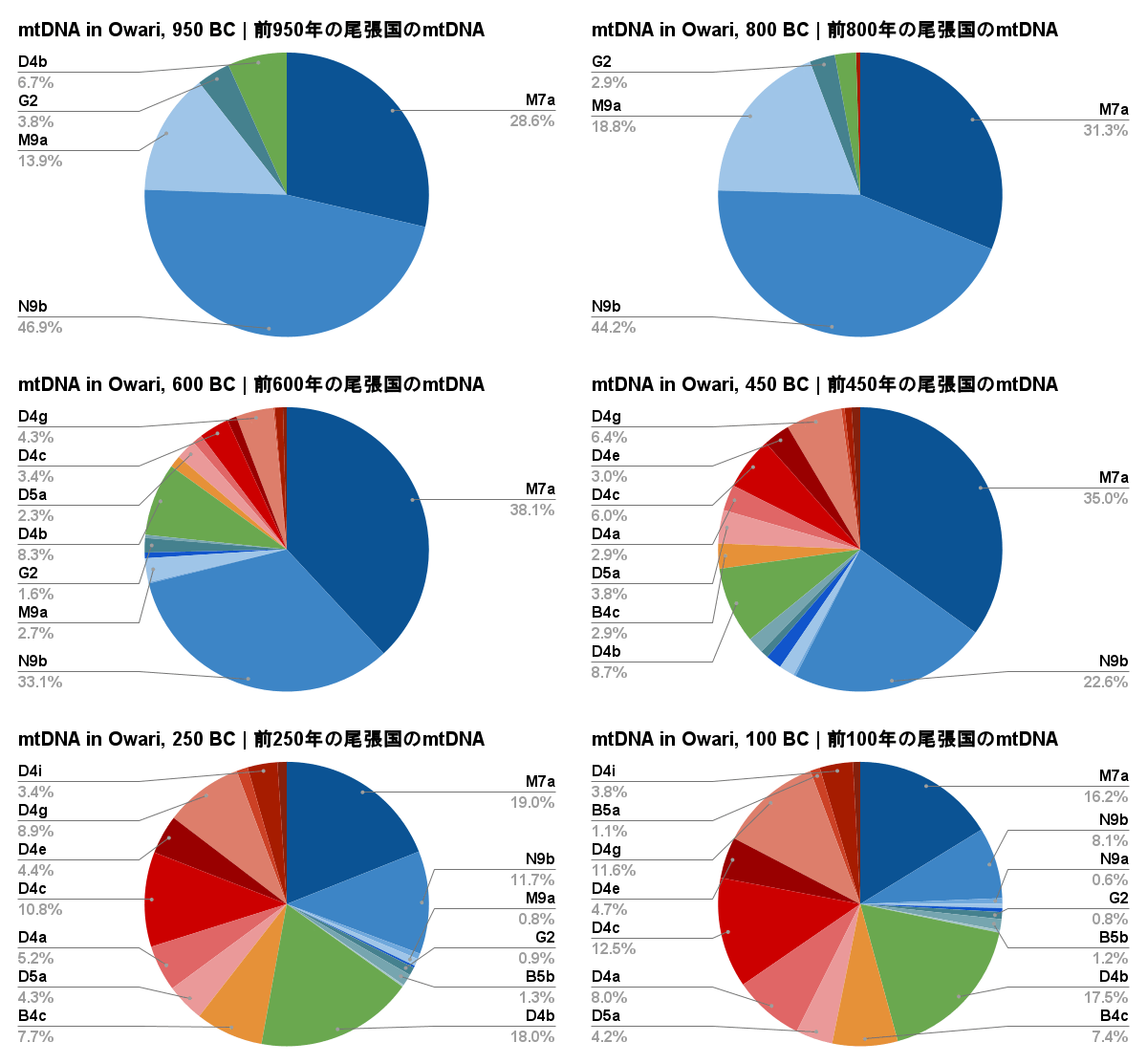
Figure. Percentage of mitochondrial DNA haplogroups in the Owari Province of Japan by year from 950 BCE to 100 BCE as output by ABS.
🧬 DNA Haplogroups
This software can handle DNA haplogroup data of ancient human bones.
The following GIF animation shows the changes in East Asian mtDNA haplogroups from 1 Julian day (4713 BC) to the present.
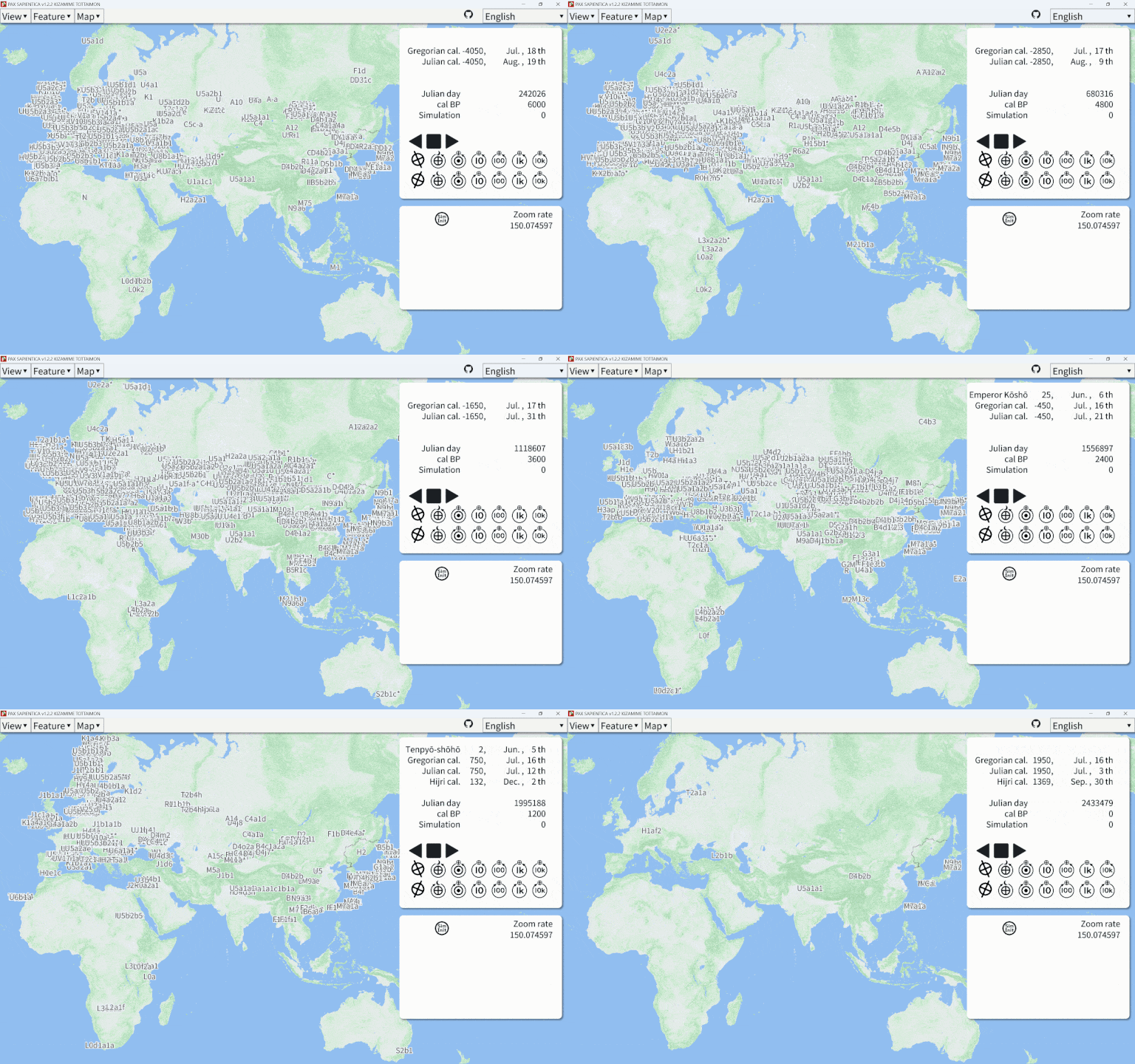
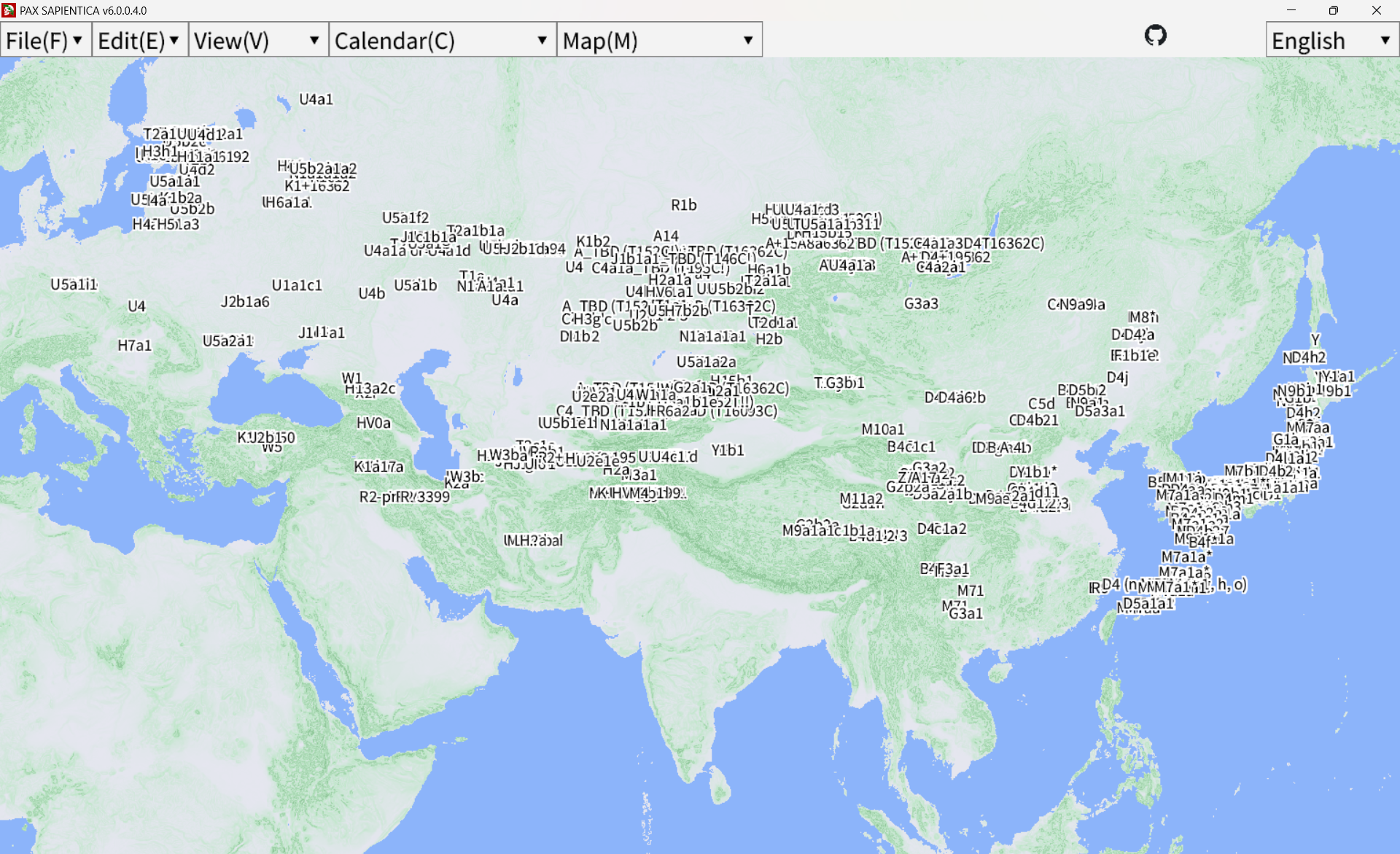
Ancient human bone mtDNA data registered as of December 21, 2023.
👤 Movement of a person
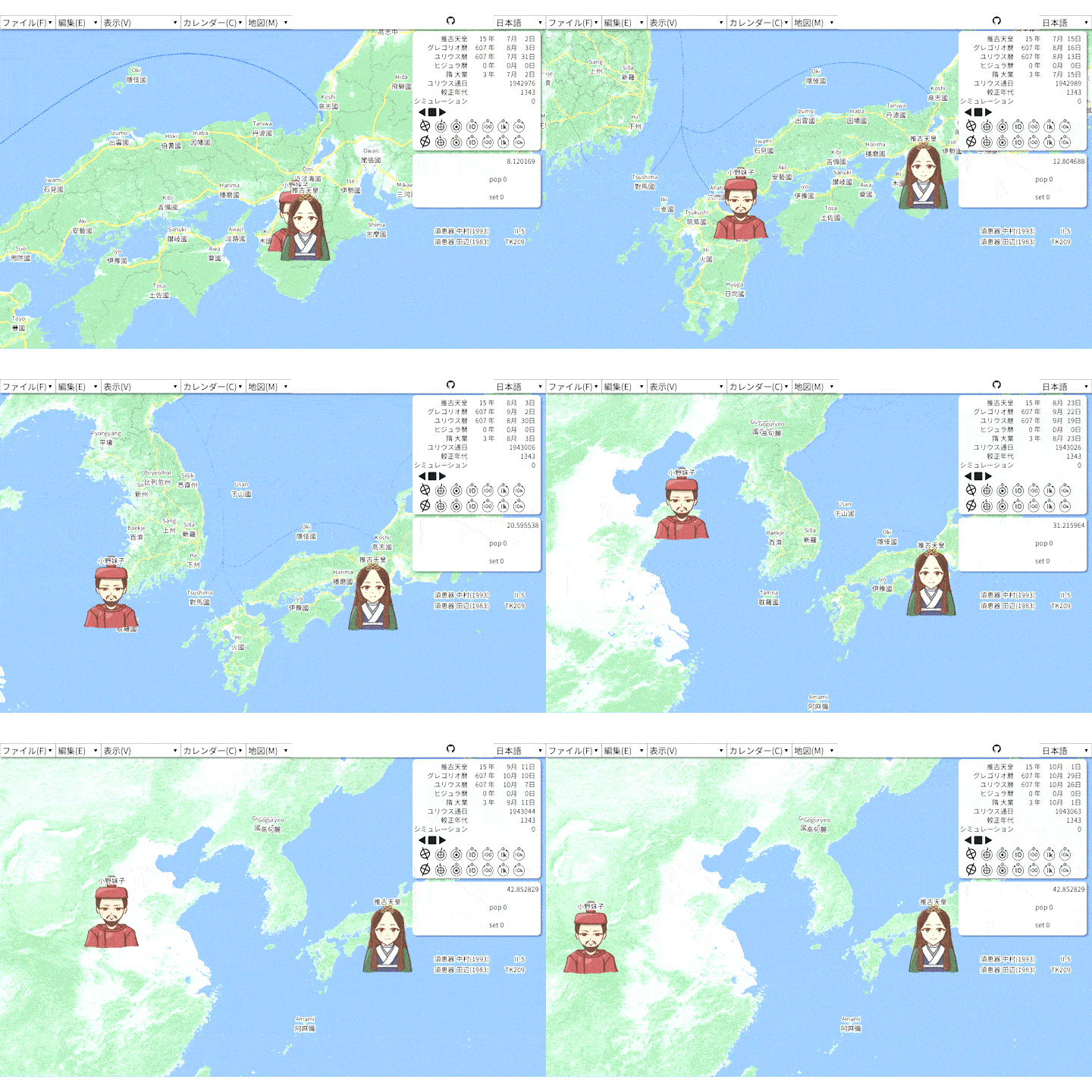
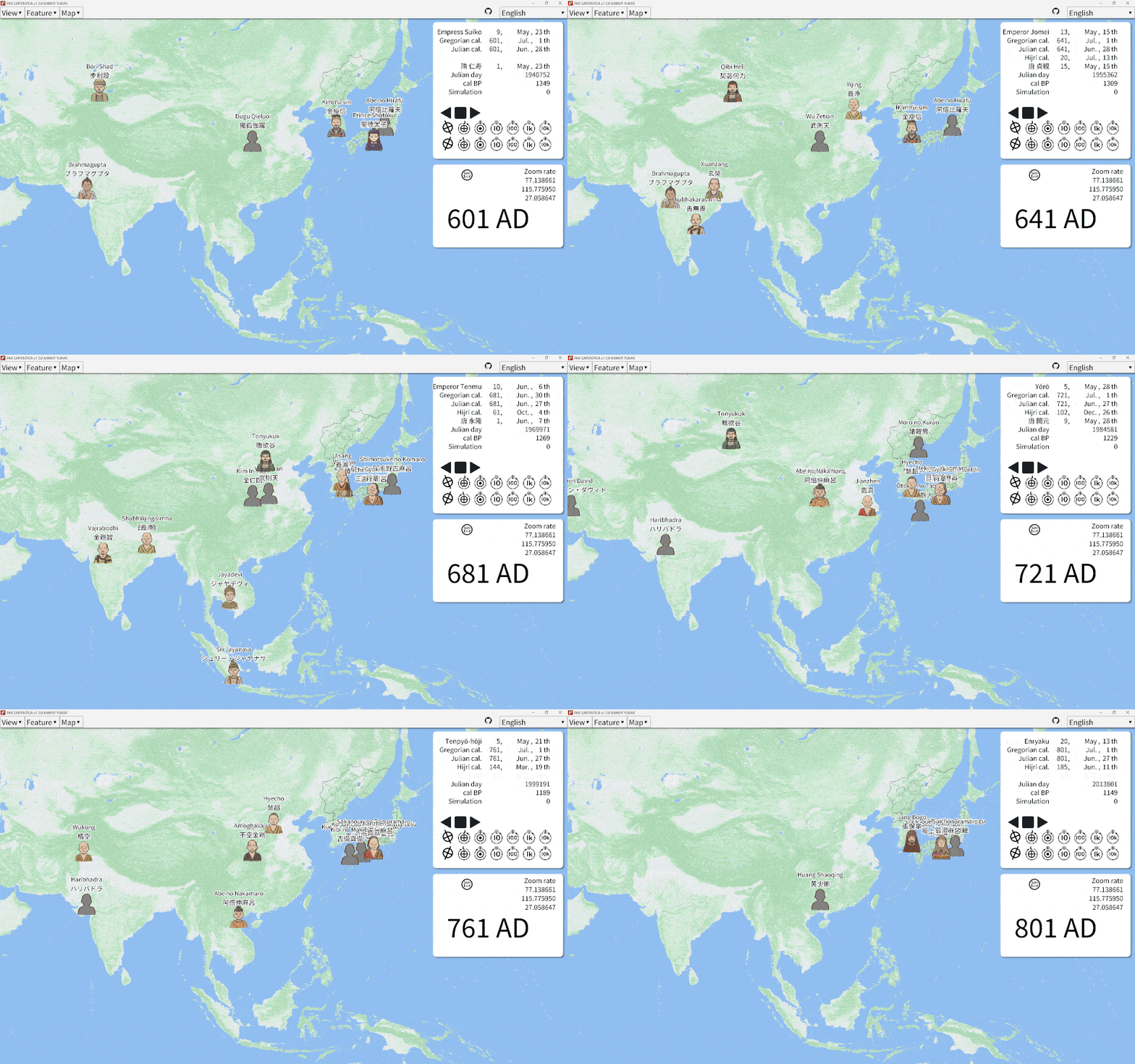
This software allows you to visualize and move historical figures.
Displaying historical figures on maps offers several key advantages:
- Deepens Spatial Understanding: It visualizes figures' activity ranges, travel routes, and the geographical influences on their actions and impacts.
- Integrates Time and Space: It allows for tracking historical changes and power dynamics spatially over time, providing better context for events.
- Facilitates New Discoveries: It can reveal previously unseen geographical patterns, correlations, and relationships, sparking new research questions.
- Enhances Education and Learning: It makes history more engaging, tangible, and easier to remember by linking abstract information to concrete locations.
- Promotes Interdisciplinary Research: It aids in combining historical data with insights from geography, archaeology, and other fields.
- Increases Public Engagement: It makes history more accessible and relatable to a wider audience, fostering interest in local and broader historical narratives.
📍 Distributions
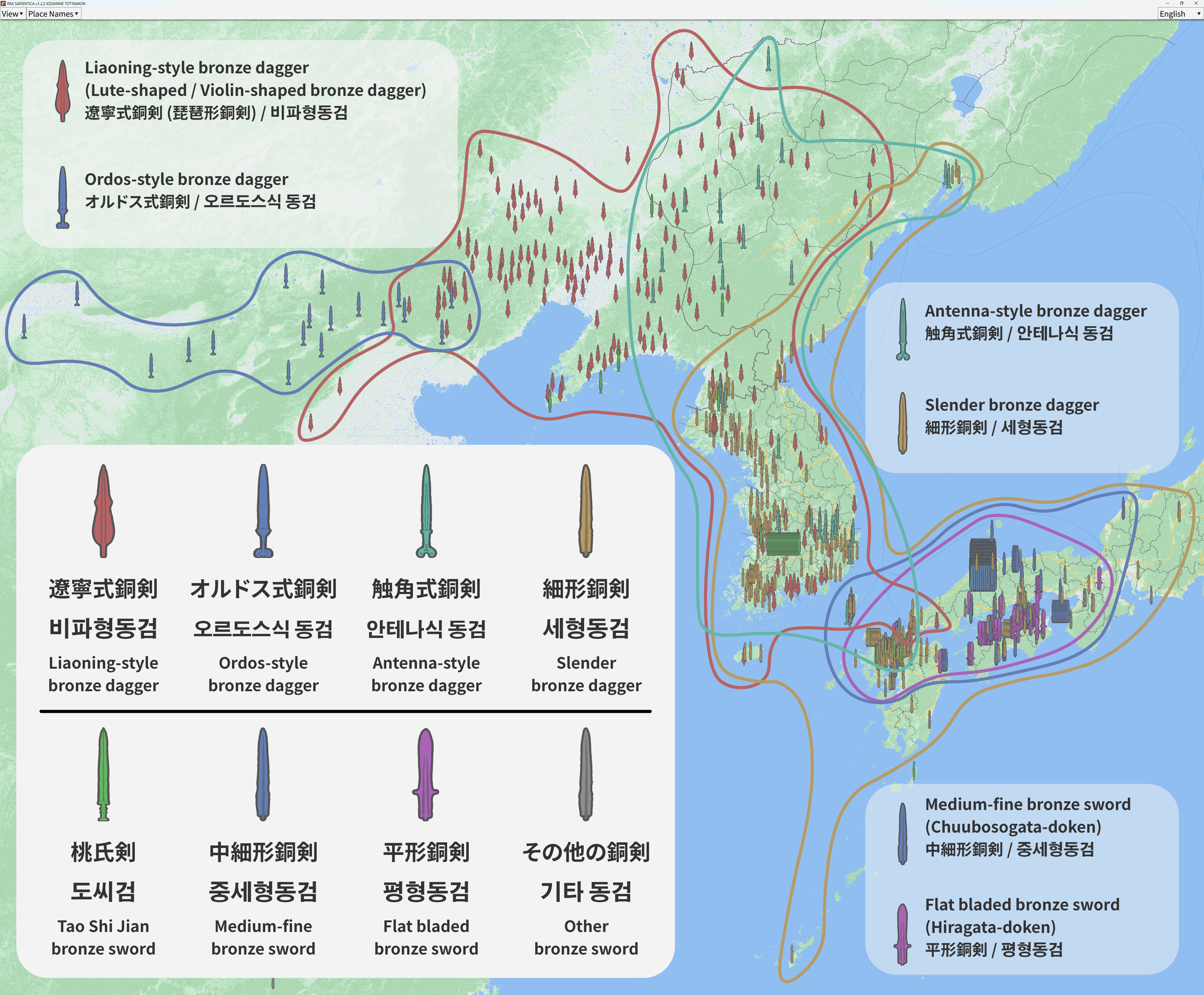
Distribution of bronze swords in NortheastAsia
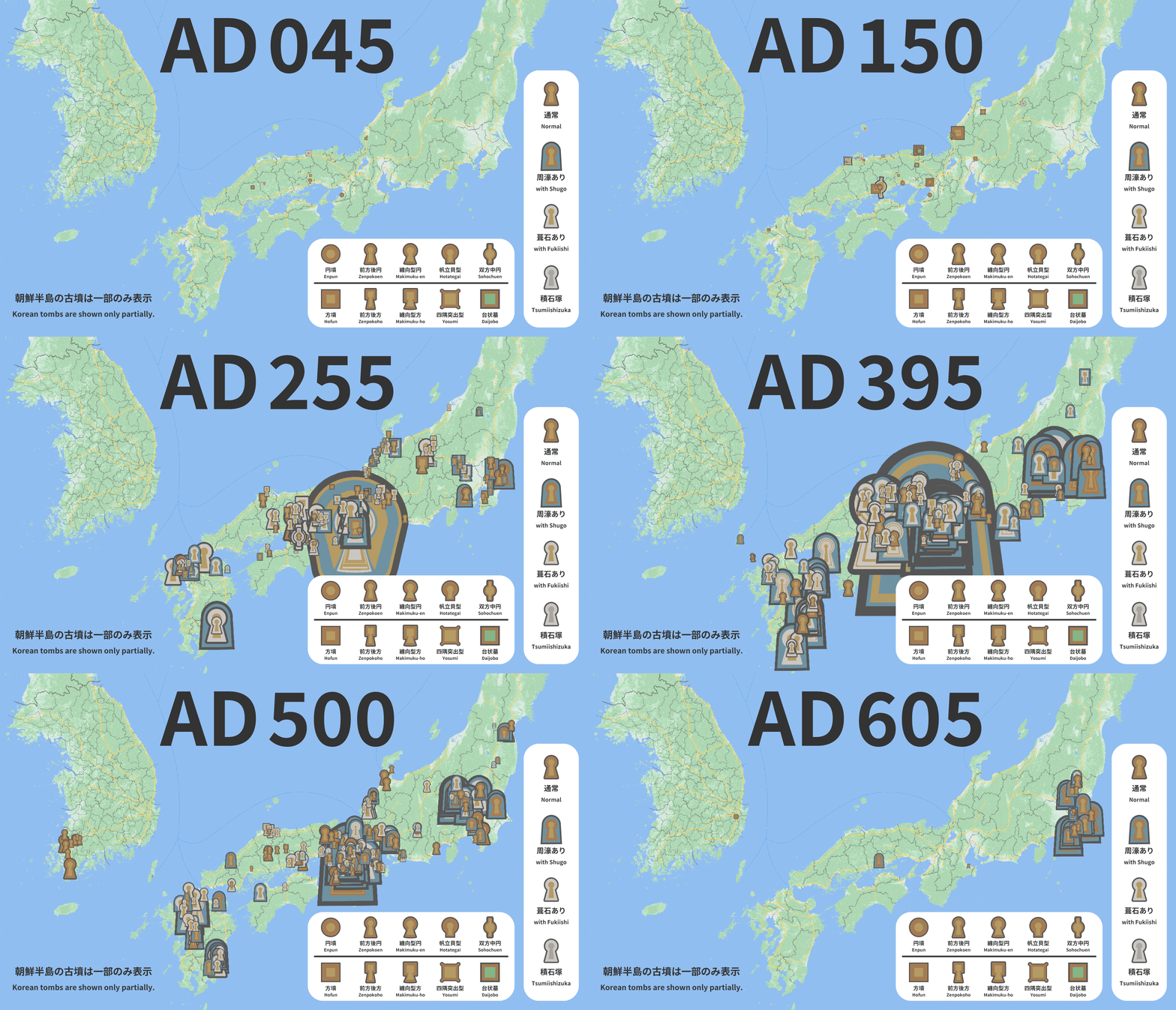
Distribution of Zenpokoenfun tombs in Japan
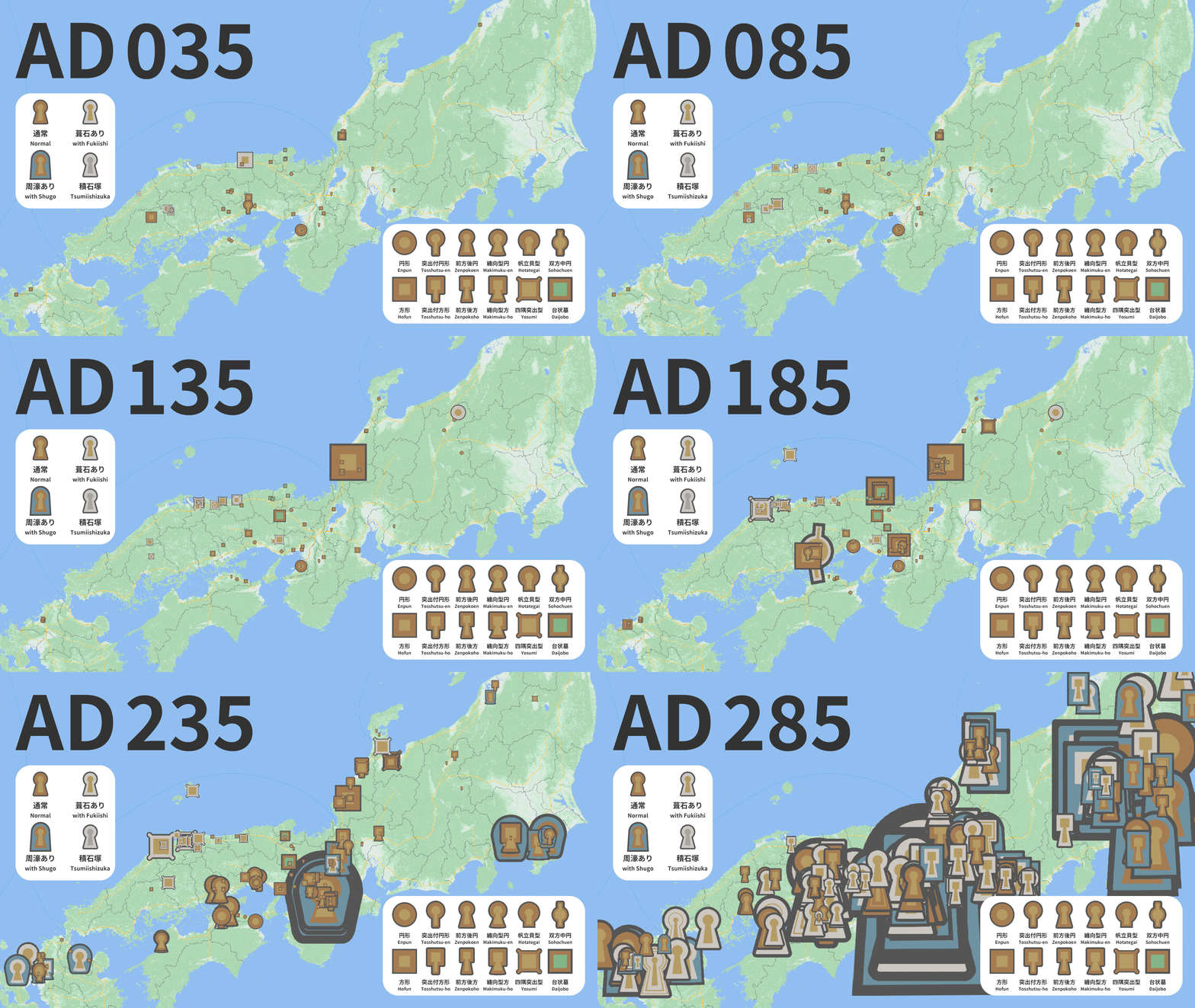
Distribution of Yayoi Funkyubo tombs in Japan
Distribution of bronze bells in Japan

Distribution of weapon-shaped bronzes in Japan

How to Install
This software has both a GUI and a CUI.
GUI
The GUI supports the following libraries
- SFML (Recommended - via vcpkg)
- macOS Setup Guide - Use vcpkg to install SFML
- Linux Setup Guide - Use vcpkg to install SFML
- SFML v3.0.0 (.sln, CMake / for Windows) - Bundled binaries available (also supports vcpkg)
- OpenSiv3D (tested with v0.6.13 & Visual Studio Community 2022 v17.8.3)
- DxLib (tested on Windows and Android versions)
Any of the above libraries will launch the GUI software.
Quick Start with vcpkg (macOS/Linux)
macOS:
# Setup vcpkg and install SFML with static linking
./Scripts/SetupVcpkgMac.sh

# Development build (no optimizations, faster builds)
./Scripts/DevelopmentBuild.sh
./DevelopmentBuild/SFMLMapViewer

# Production build (optimized for distribution)
./Scripts/ProductionBuild.sh
./ProductionBuild/SFMLMapViewer.app/Contents/MacOS/SFMLMapViewer

# Or use CMake directly (auto-detects ARM64/x64 architecture)
cmake -B build -S Projects \
  -DCMAKE_TOOLCHAIN_FILE=vcpkg/scripts/buildsystems/vcpkg.cmake \
  -DSFML_STATIC_LIBRARIES=TRUE \
  -DVCPKG_INSTALLED_DIR=vcpkg_installed \
  -DVCPKG_OVERLAY_TRIPLETS=Projects/cmake \
  -DVCPKG_TARGET_TRIPLET=arm64-osx-static  # or x64-osx-static for Intel Macs
cmake --build build
./build/MapViewer/SFMLMapViewer
Linux:
# Setup vcpkg and install SFML
./Scripts/SetupVcpkgLinux.sh

# Development build (no optimizations, faster builds)
./Scripts/DevelopmentBuild.sh
./DevelopmentBuild/SFMLMapViewer

# Production build (optimized for distribution)
./Scripts/ProductionBuild.sh
./ProductionBuild/SFMLMapViewer

# Or use CMake directly
cmake -B build -S Projects \
  -DCMAKE_TOOLCHAIN_FILE=vcpkg/scripts/buildsystems/vcpkg.cmake \
  -DSFML_STATIC_LIBRARIES=TRUE \
  -DVCPKG_INSTALLED_DIR=vcpkg_installed
cmake --build build
./build/MapViewer/SFMLMapViewer
CUI
To try this library, build cmake.
[!TIP] For example, clone this repository. You can open the cloned directory with VS Code and build it with CMake.
Code Documentation
https://aspjt.github.io/PAX_SAPIENTICA/
How to Contribute
This project welcomes issues and pull requests. Anyone can send issues and pull requests.
You can find out how to contribute here.
Supported Environment
Compilers
- GNU Compiler Collection (GCC)
- Clang
- Microsoft Visual C++ (MSVC)
Language Version
C++17 or later
Build Tools
- CMake (e.g. Visual Studio Code)
- .sln / Microsoft Visual Studio
- Android Studio
Android Studio
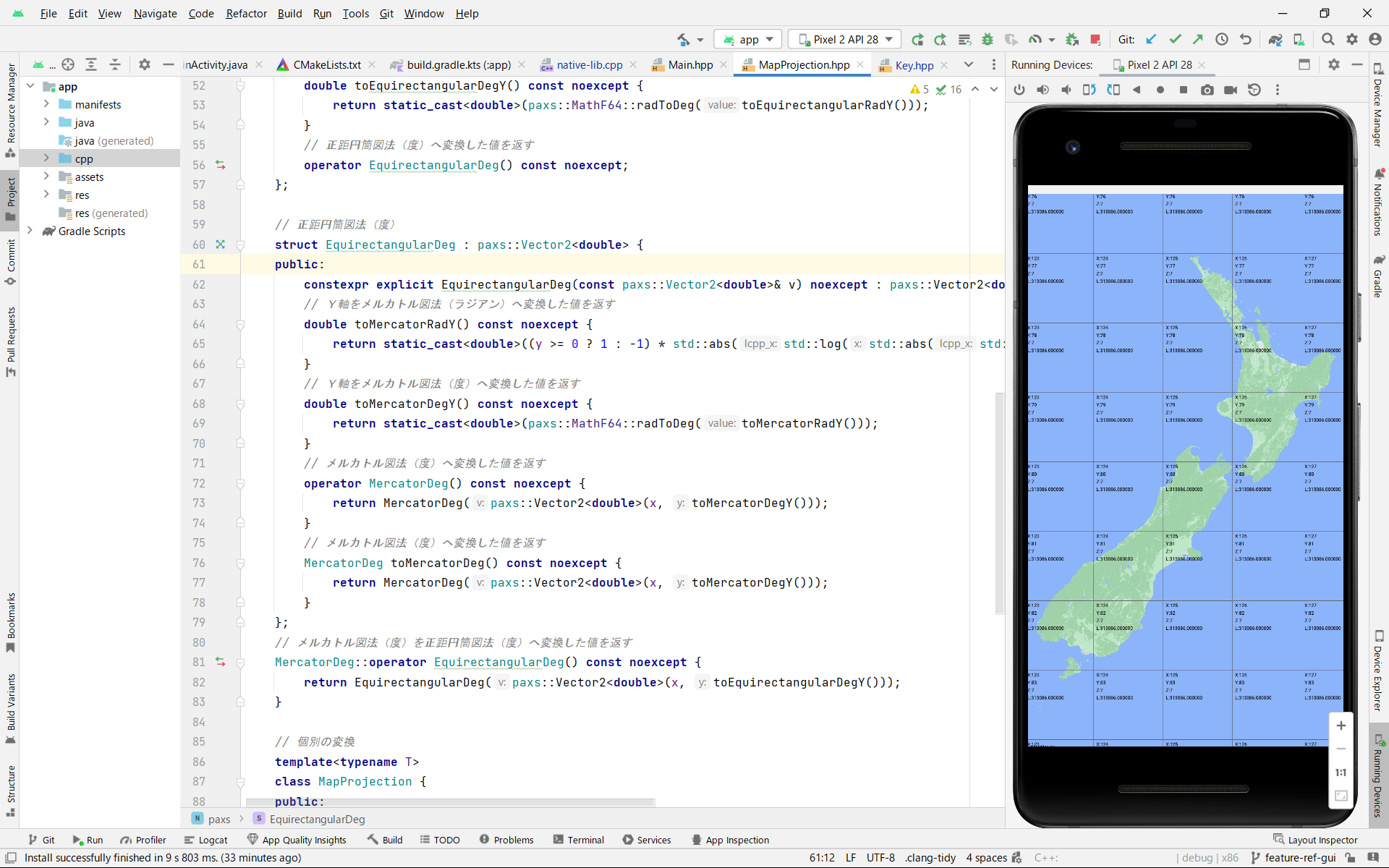
This library has been tested to work in a mobile environment.
[!IMPORTANT] The Android version of DxLib, a wrapper library for drawing APIs, is used. Drawing APIs such as OpenGL and Vulkan are not directly supported.
Main Developers
| Icon | Name | Main Work |
|---|---|---|
 |
As Project | ● Planning ● Design Concepts ● Specification Document Preparation |
 |
guinpen98 | ● Programming ● Simulation ● GitHub Actions / CI&CD |
License
These codes in the Library directory are licensed under CC0 (PUBLIC DOMAIN).
Third party content is copyrighted by its respective owners.
