


Savvy
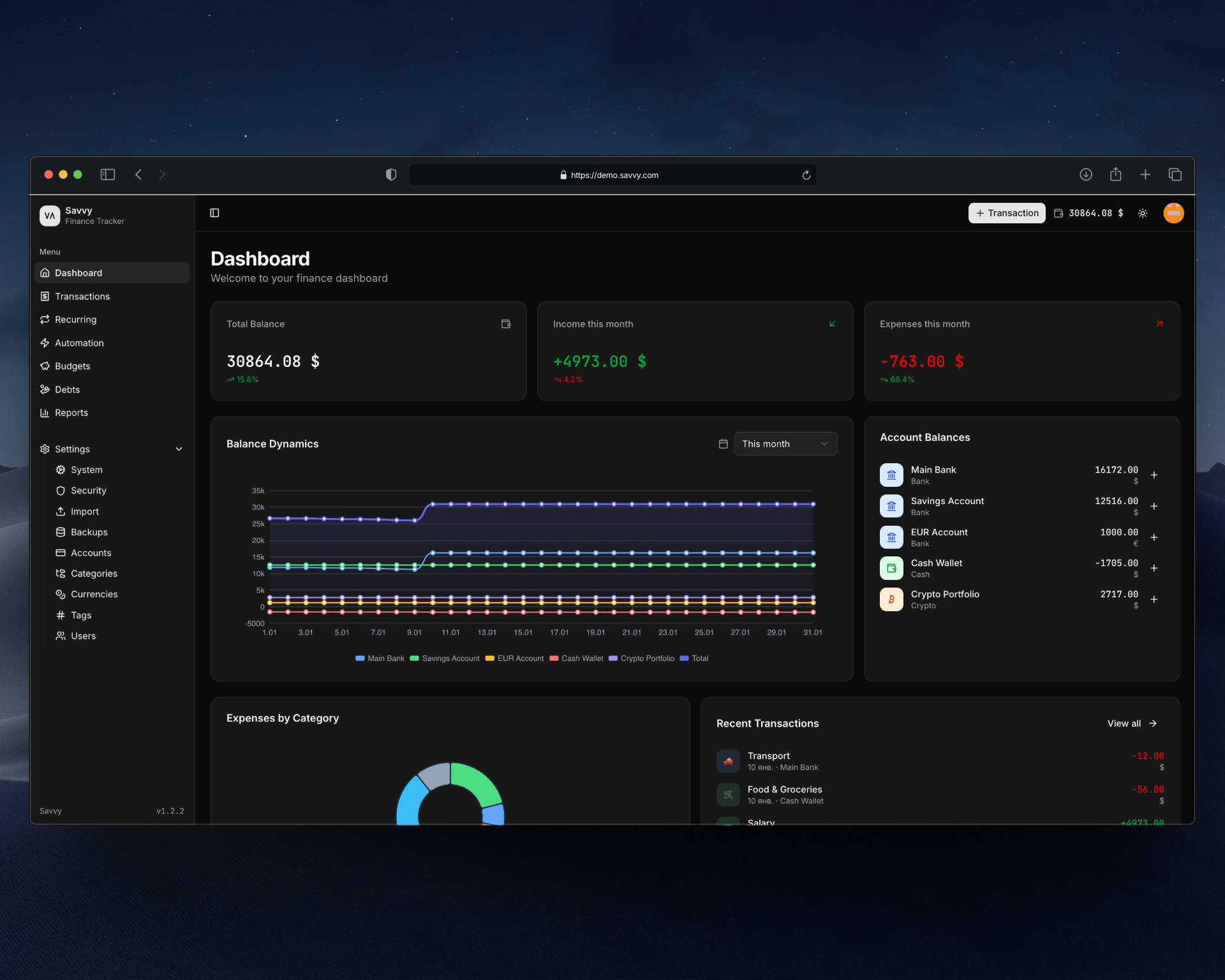
Selfhosted expense tracker with full multi-currency support. One container — done.




⚡ Quick Start
docker run -d -p 3000:80 -v savvy-data:/data truenormis/savvy:latest
Open localhost:3000 and create your account.
✨ Features
- Multi-currency — any fiat or crypto, transfers between them
- Auto exchange rates — currency rates updated automatically via API
- Recurring transactions — scheduled payments (daily, weekly, monthly, yearly)
- Automation rules — auto-categorize transactions based on conditions
- Debts — track loans and borrowings with payment history
- Budgets — set limits and track progress
- Categories & tags — flexible organization
- Multi-user — share with family or team, role-based access (admin/user)
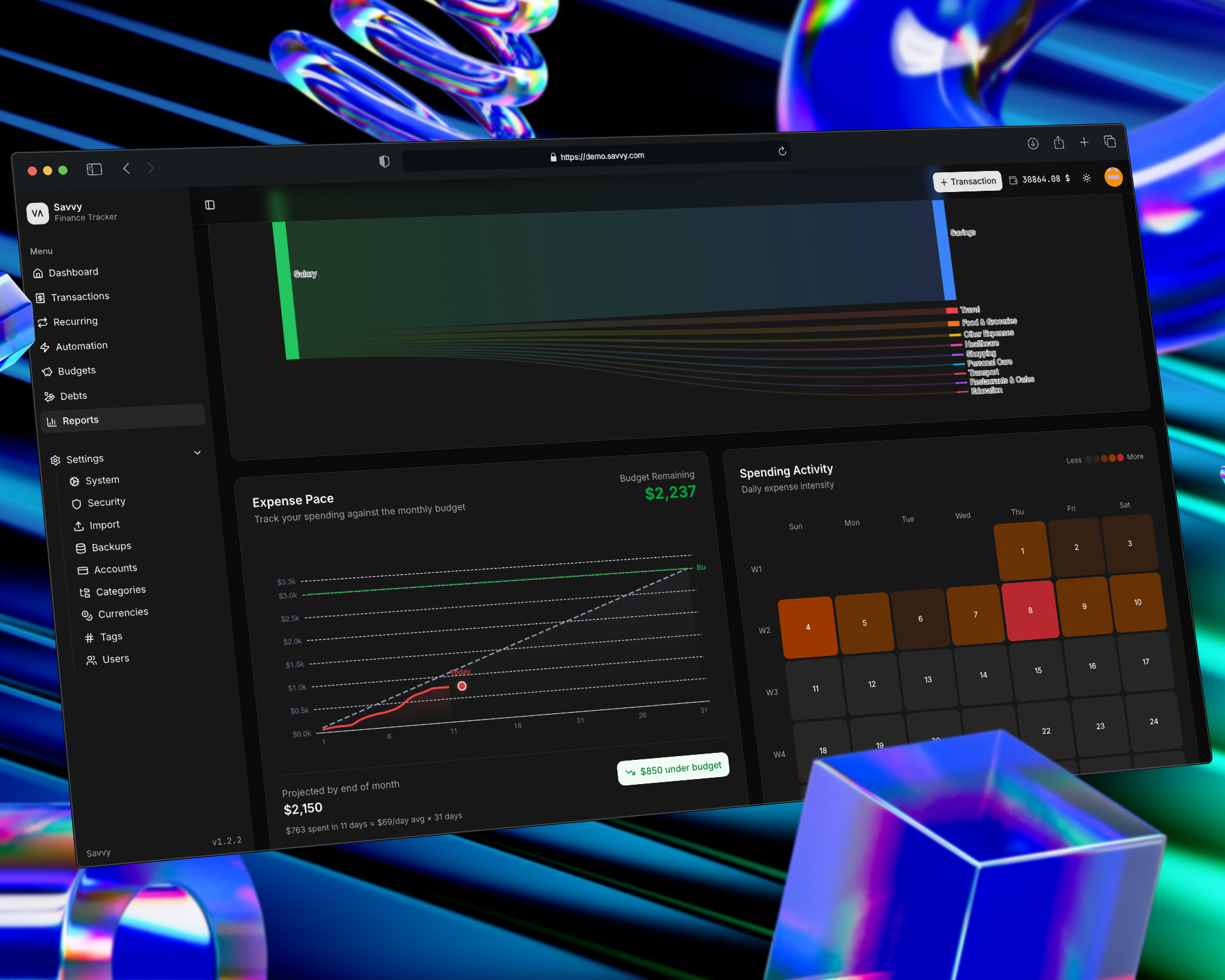
- Rich analytics — Sankey diagrams, heatmaps, net worth tracking, expense pace
- CSV import — import transactions from bank exports with duplicate detection
- Backups — create, restore and download database backups
- 2FA — two-factor authentication via TOTP (Google Authenticator, etc.)
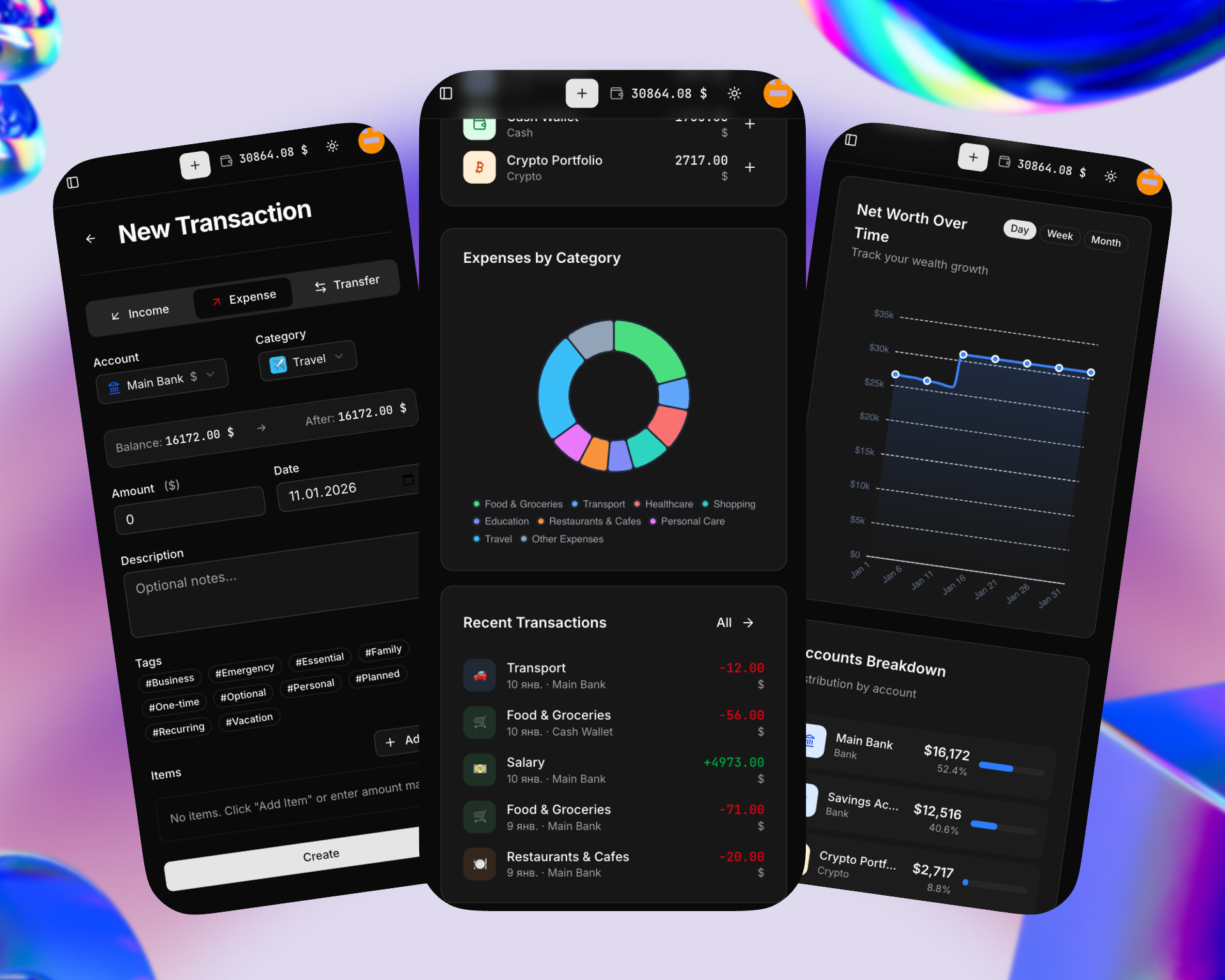
📱 Mobile-Friendly
Fully responsive design built with ShadCN/UI — track expenses from your phone right after purchase.
🚀 Deployment
Docker Compose (Recommended)
services:
  savvy:
    image: truenormis/savvy:latest
    container_name: savvy
    restart: unless-stopped
    ports:
      - "3000:80"
    volumes:
      - savvy-data:/data
    environment:
      - APP_URL=https://savvy.yourdomain.com
      - TZ=Europe/Kyiv
    healthcheck:
      test: ["CMD", "wget", "-q", "-O", "/dev/null", "http://127.0.0.1/livez"]
      interval: 10s
      timeout: 3s
      start_period: 60s
      retries: 3

volumes:
  savvy-data:
Environment Variables
| Variable | Description | Default |
|---|---|---|
APP_URL |
Public URL of your instance | http://localhost |
TZ |
Timezone | UTC |
Behind a Reverse Proxy
Set APP_URL to your public https:// URL. Savvy honors the X-Forwarded-Proto and X-Forwarded-For headers from the proxy, so HTTPS link generation and real client IPs work automatically — no extra configuration needed.
Health Checks
Two probe endpoints are exposed for orchestrators and uptime monitoring (responses use the IETF application/health+json format):
| Endpoint | Purpose | Healthy | Unhealthy |
|---|---|---|---|
/livez |
Liveness — the app process is up. Use it for container restart decisions. | 200 |
— |
/readyz |
Readiness — database is reachable and migrations are applied. Gate traffic. | 200 |
503 |
/livez stays up during maintenance mode; /readyz returns 503 so traffic drains while the instance is not ready.
With Traefik (HTTPS)
services:
  savvy:
    image: truenormis/savvy:latest
    container_name: savvy
    restart: unless-stopped
    volumes:
      - savvy-data:/data
    environment:
      - APP_URL=https://savvy.yourdomain.com
      - TZ=Europe/Kyiv
    labels:
      - "traefik.enable=true"
      - "traefik.http.routers.savvy.rule=Host(`savvy.yourdomain.com`)"
      - "traefik.http.routers.savvy.entrypoints=websecure"
      - "traefik.http.routers.savvy.tls.certresolver=letsencrypt"
      - "traefik.http.services.savvy.loadbalancer.server.port=80"
    networks:
      - traefik

volumes:
  savvy-data:

networks:
  traefik:
    external: true
With Nginx Proxy Manager
- Run Savvy on internal port:
services:
  savvy:
    image: truenormis/savvy:latest
    container_name: savvy
    restart: unless-stopped
    expose:
      - "80"
    volumes:
      - savvy-data:/data
    environment:
      - APP_URL=https://savvy.yourdomain.com
    networks:
      - npm-network

volumes:
  savvy-data:

networks:
  npm-network:
    external: true
- In Nginx Proxy Manager, create proxy host pointing to
savvy:80
Kubernetes
Deploy as a single-replica Deployment with a PersistentVolumeClaim mounted at /data. SQLite is single-writer, so use strategy: { type: Recreate }. The container runs as non-root (www-data, uid 82) — grant NET_BIND_SERVICE so it can bind port 80. Wire the probes to the health endpoints:
        startupProbe:
          httpGet: { path: /livez, port: 80 }
          periodSeconds: 3
          failureThreshold: 30
        livenessProbe:
          httpGet: { path: /livez, port: 80 }
          periodSeconds: 10
        readinessProbe:
          httpGet: { path: /readyz, port: 80 }
          periodSeconds: 10
Helm chart coming soon.
🔄 Updating
docker compose pull
docker compose up -d
Your data is safe in the /data volume.
💾 Backups
Backups can be managed directly from the UI (Settings → Backups).
[!WARNING] The database runs in WAL mode, so recent writes may still live in the
database.sqlite-walfile and won't be indatabase.sqliteyet. Copyingdatabase.sqlitealone can silently lose the latest data. Always checkpoint the WAL into the main file first (or use the in-app backup, which handles this for you).
Manual backup:
# Fold the WAL into the main file, then copy
docker exec savvy php artisan tinker --execute="DB::statement('PRAGMA wal_checkpoint(TRUNCATE);');"
docker cp savvy:/data/database.sqlite ./backup-$(date +%Y%m%d).sqlite
Restore (stop writers first so the WAL doesn't fight the swap):
docker compose down
docker cp ./backup.sqlite savvy:/data/database.sqlite
docker compose up -d
🔒 Privacy
Your data stays with you. SQLite database stored in /data volume — no external services required.
⚙️ How It Works
One container runs everything under Supervisor — Nginx, PHP-FPM, the scheduler (recurring transactions, automatic exchange-rate updates) and a queue worker for background jobs. SQLite lives in /data; no external database, cache, or queue service is required. Migrations run automatically on startup.
🛠 Stack
Laravel • SQLite • Docker • ShadCN/UI • Tailwind CSS
🤝 Contributing
Contributions are welcome! Please open an issue first to discuss what you would like to change.
📄 License
Made with ❤️ for people who want control over their finances