
Slipway: a Clojure Companion to Jetty 12.1


Slipway by Factor House
- Introduction
- Why Jetty?
- Why Slipway?
- Using Slipway
- Configuring Slipway
- Sente Websockets
- JAAS Authentication
- License
- Contributing
Introduction
Eclipse Jetty is the web server at the heart of our product, Kpow for Apache Kafka®.
Slipway is a Clojure companion to embedded Jetty 12.1 with WebSocket support.
Slipway configuration models Jetty instead of exposing a simplified DSL. This approach allows leverage of all Jetty capabilities while providing sensible defaults for basic behaviour. If in doubt, read the Jetty docs.
Use the Community Edition of Kpow with our local-repo to see Slipway in action.
Archived versions: Previous support for Jetty 9, 10, and 11 is preserved in the
archive/directory but is no longer maintained. Slipway 2.x targets Jetty 12.1 exclusively.
Why Jetty?
Jetty is a mature, stable, commercially supported project with an active, experienced team of core contributors.
Ubiquitous in the enterprise Java world, Jetty has many eyes raising issues and driving improvement.
Jetty is a great choice of web server for a general purpose web application.
Why Slipway?
Requirements
Kpow is a web application with a SPA UI served by WebSockets.
Kpow has seemingly every possible Jetty configuration option in use by at least one end-user.
We incorporate automated NVD scanning and feedback from external security teams.
Primary Goals
Slipway provides first-class, extensible support for:
- Core Jetty capabilities in Jetty-style
- HTTP 1.1
- HTTPS / SSL
- Synchronous handlers
- JAAS Authentication (LDAP, HashUser, etc)
- Form / basic authentication
- WebSockets
- Java 17+
- Jetty 12.1
- Session management
- Proxy protocol / HTTP forwarded
- HTTP compliance modes (RFC9110, RFC2616, RFC7230, etc)
- Compression (Gzip and extensible)
- Configurable error handling
- Automated CVE scanning with NVD
- Comprehensive integration tests
Secondary Goals
- Broad support for general Jetty use-cases / configuration
Out of Scope
- HTTP/2 and HTTP/3
- Asynchronous handlers
- Ajax (including auto-fallback)
Non-Goals
- A simplified DSL for Jetty
Using Slipway
Add io.factorhouse/slipway-jetty12 to your project dependencies:
;; deps.edn
{io.factorhouse/slipway-jetty12 {:mvn/version "2.0.6"}}

;; project.clj
[io.factorhouse/slipway-jetty12 "2.0.6"]
Requires Java 17+.
Quick Start
Open a REPL and start Slipway with a ring handler and a map of configuration options:
(require '[slipway :as slipway])
(require '[slipway.server :as server])
(require '[slipway.connector.http :as http])

(defn handler [_] {:status 200 :body "Hello world"})

(def http-connector #::http{:port 3000})

(slipway/start handler #::server{:connectors [http-connector]})
Your hello world application is now running on http://localhost:3000.
To stop the server:
(slipway/stop server)
Example Servers
The test/slipway/test_server.clj namespace contains a range of example server configurations for use in development and testing.
The stateful start!/stop! functions are a convenience for integration tests and local development, not canonical Slipway usage.
(require '[slipway.test-server :as test-server])

;; Start a plain HTTP server
(test-server/start! [:http])

;; Start with hash-based form authentication
(test-server/start! [:http] :hash-auth)

;; Start with basic authentication
(test-server/start! [:http] :basic-auth)

;; Start with HTTP + HTTPS
(test-server/start! [:http+https])
Your sample application is available on http://localhost:3000.
For hash auth, login with jetty/jetty, admin/admin, plain/plain, other/other, or user/password as defined in hash-realm.properties.
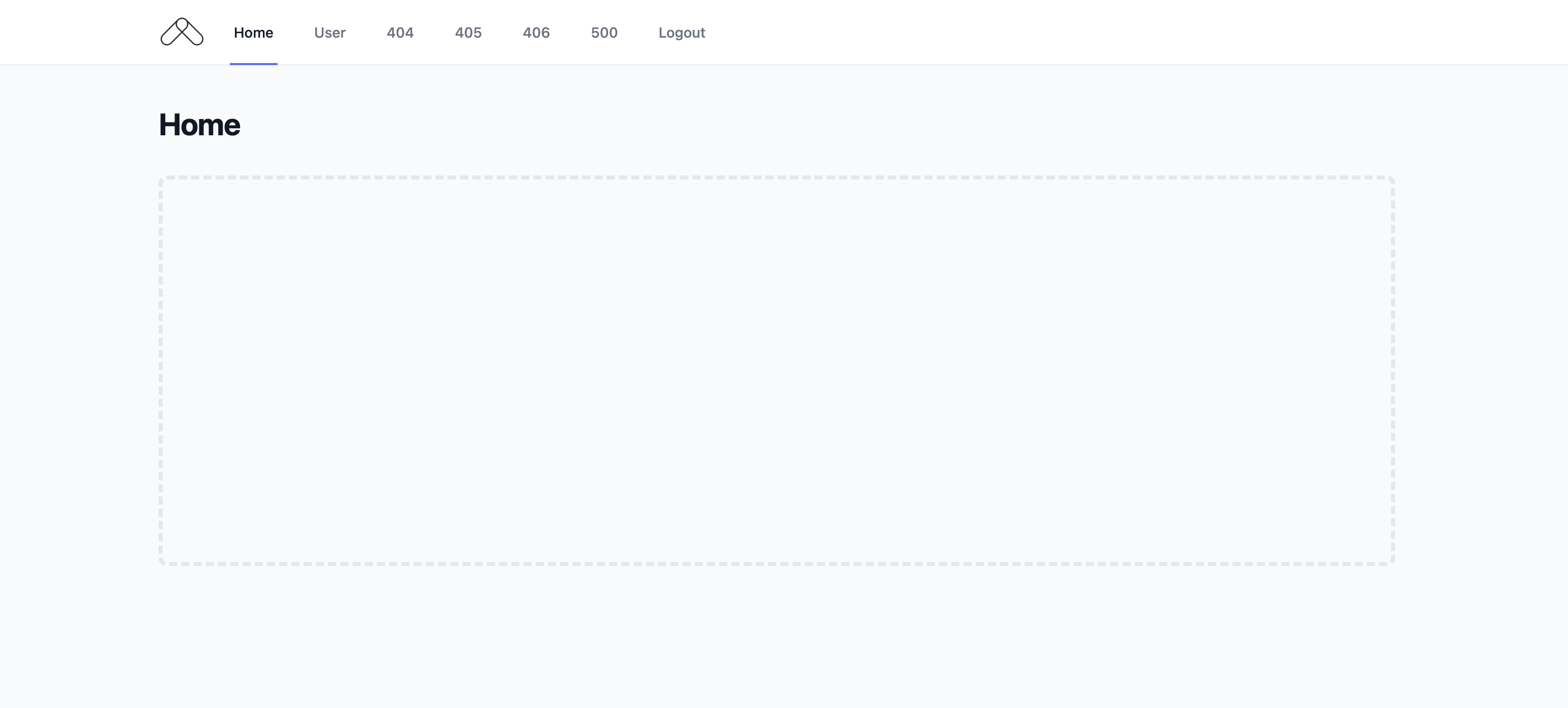
After login, the default home page presents useful links for user info and error pages.
Configuring Slipway
Jetty is sophisticated as it addresses a complex domain with flexibility and configurability.
Slipway holds close to Jetty idioms for configuration rather than presenting a simplified DSL.
Slipway takes a single map of namespaced configuration. Namespaces correspond to Jetty domain models and can be considered as separate maps then merged.
:slipway
The top-level namespace determines whether Slipway joins the Jetty thread pool.
#:slipway{:join? "join the Jetty threadpool, blocks the calling thread until Jetty exits, default false"}
:slipway.server
Configuration of core server options.
#:slipway.server{:handler       "the base Jetty handler implementation (:default defmethod impl found in slipway.handler)"
                 :connectors    "the connectors supported by this server"
                 :thread-pool   "the thread-pool used by this server (nil for default behaviour)"
                 :scheduler     "the scheduler used by this server (nil for default behaviour)"
                 :buffer-pool   "the buffer-pool used by this server (nil for default behaviour)"
                 :error-handler "the error-handler used by this server for Jetty-level errors"}
:slipway.server/handler
Slipway provides a default server-handler implementation via a defmethod dispatch in src/slipway/handler.clj.
Use a custom server-handler by implementing a new server/handler defmethod and providing its dispatch key as ::server/handler.
:slipway.server/connectors
Slipway accepts a list of server connectors, allowing multi-connector setups, e.g.:
(ns slipway.example
  (:require [slipway.connector.http :as http]
            [slipway.connector.https :as https]
            [slipway.server :as server]))

(def http-connector #::http{:port 3000})

(def https-connector #::https{:port                3443
                              :keystore            "dev-resources/my-keystore.jks"
                              :keystore-type       "PKCS12"
                              :keystore-password   "password"
                              :truststore          "dev-resources/my-truststore.jks"
                              :truststore-password "password"
                              :truststore-type     "PKCS12"})

(def server #::server{:connectors [http-connector https-connector]})
:slipway.server/error-handler
Provide a concrete org.eclipse.jetty.server.handler.ErrorHandler to manage Jetty-level errors (not to be confused with ring/application-level errors handled within your application).
Slipway provides a utility for creating custom error handlers in src/slipway/error.clj:
(require '[slipway.error :as error])

(defn body-fn
  [_request _charset code _uri message _cause]
  (str "<html><body><h1>" code " " message "</h1></body></html>"))

(def my-error-handler (error/handler body-fn))
:slipway.handler
Configuration of the default server handler.
#:slipway.handler{:context-path    "the root context path, default '/'"
                  :ws-path         "the path serving the websocket upgrade handler, default '/chsk'"
                  :null-path-info? "true if /path is not redirected to /path/, default true"}
:slipway.websockets
Configuration of WebSocket options.
#:slipway.websockets{:enabled?                 "are websockets enabled? default true"
                     :path-spec                "the websocket path-spec, default '/chsk'"
                     :idle-timeout-ms          "max websocket idle time in ms, default 300000"
                     :input-buffer-bytes       "max websocket input buffer size in bytes"
                     :output-buffer-bytes      "max websocket output buffer size in bytes"
                     :max-text-message-bytes   "max websocket text message size that can be received in bytes"
                     :max-binary-message-bytes "max websocket binary message size that can be received in bytes"
                     :max-frame-bytes          "max websocket frame size in bytes"
                     :max-outgoing-frames      "max websocket frames waiting to be sent per session, default -1"
                     :auto-fragment            "websocket auto fragment (boolean), default true"}
See the Jetty docs to understand how to tune WebSockets for your own purposes.
:slipway.session
Configuration of HTTP session options.
#:slipway.session{:secure-request-only?    "set the secure flag on session cookies (default true)"
                  :http-only?              "set the http-only flag on session cookies (default true)"
                  :same-site               "set session cookie same-site policy to :none, :lax, or :strict (default :strict)"
                  :max-inactive-interval-s "max session idle time in seconds (default -1, no expiry)"
                  :cookie-name             "the name of the session cookie (default 'JSESSIONID')"
                  :session-id-manager      "the meta manager used for cross-context session management"
                  :refresh-cookie-age-s    "max time before a session cookie is re-set in seconds"
                  :using-cookies           "true if cookies are used to track sessions (default true)"
                  :using-uri-parameters    "true if URI parameters are used to track sessions (default false)"
                  :path-parameter-name     "name of path parameter used for URL session tracking"}
:slipway.security
Configuration of Jetty auth options. See JAAS Authentication below for configuration guides.
#:slipway.security{:realm               "the Jetty authentication realm"
                   :hash-user-file      "the path to a Jetty Hash User File"
                   :login-service       "a Jetty LoginService identifier, 'jaas' and 'hash' supported by default"
                   :identity-service    "a concrete Jetty IdentityService"
                   :authenticator       "a concrete Jetty Authenticator (e.g. FormAuthenticator or BasicAuthenticator)"
                   :constraint-mappings "a vector of [^String pathSpec, org.eclipse.jetty.security.Constraint] pairs"}
Example constraint mapping:
(import '[org.eclipse.jetty.security Constraint])

(def constraints
  [["/up"    Constraint/ALLOWED]
   ["/css/*" Constraint/ALLOWED]
   ["/img/*" Constraint/ALLOWED]
   ["/*"     Constraint/ANY_USER]])
:slipway.connector.http
Configuration of an HTTP server connector.
#:slipway.connector.http{:host                       "the network interface this connector binds to as an IP address or hostname. Default null (all interfaces)"
                         :port                       "port this connector listens on. If 0 a random port is assigned, default 80"
                         :idle-timeout-ms            "max idle time for a connection in ms, default 200000"
                         :http-forwarded?            "if true, add the ForwardedRequestCustomizer. See Jetty Forward HTTP docs"
                         :proxy-protocol?            "if true, add the ProxyConnectionFactory. See Jetty Proxy Protocol docs"
                         :http-config                "a concrete HttpConfiguration object to replace the default config entirely"
                         :configurator               "a fn taking the final connector as argument, allowing further configuration"
                         :send-server-version?       "if true, send the Server header in responses (default false)"
                         :send-date-header?          "if true, send the Date header in responses (default false)"
                         :relative-redirect-allowed? "if true, allow relative redirects (default false)"
                         :http-compliance            "set the HttpCompliance mode, e.g. 'RFC2616' or 'RFC7230' (default RFC9110)"}
:slipway.connector.https
Configuration of an HTTPS server connector.
#:slipway.connector.https{:host                       "the network interface this connector binds to as an IP address or hostname. Default null (all interfaces)"
                          :port                       "port this connector listens on. If 0 a random port is assigned, default 443"
                          :idle-timeout-ms            "max idle time for a connection in ms, default 200000"
                          :http-forwarded?            "if true, add the ForwardedRequestCustomizer. See Jetty Forward HTTP docs"
                          :proxy-protocol?            "if true, add the ProxyConnectionFactory. See Jetty Proxy Protocol docs"
                          :http-config                "a concrete HttpConfiguration object to replace the default config entirely"
                          :configurator               "a fn taking the final connector as argument, allowing further configuration"
                          :keystore                   "keystore to use, either path (String) or concrete KeyStore"
                          :keystore-type              "type of keystore, e.g. JKS or PKCS12"
                          :keystore-password          "password of the keystore"
                          :key-manager-password       "password for the specific key within the keystore"
                          :truststore                 "truststore to use, either path (String) or concrete KeyStore"
                          :truststore-password        "password of the truststore"
                          :truststore-type            "type of the truststore, e.g. JKS or PKCS12"
                          :include-protocols          "a list of protocol name patterns to include in SSLEngine"
                          :exclude-protocols          "a list of protocol name patterns to exclude from SSLEngine"
                          :replace-exclude-protocols? "if true will replace existing exclude-protocols, otherwise adds them"
                          :exclude-ciphers            "a list of cipher suite names to exclude from SSLEngine"
                          :replace-exclude-ciphers?   "if true will replace existing exclude-ciphers, otherwise adds them"
                          :security-provider          "the security provider name"
                          :client-auth                "either :need or :want to set the corresponding need/wantClientAuth field"
                          :ssl-context                "a concrete pre-configured SslContext"
                          :sni-required?              "if true SNI is required, else requests are rejected with 400, default false"
                          :sni-host-check?            "if true the SNI host name must match when there is an SNI certificate, default false"
                          :sts-max-age-s              "set the Strict-Transport-Security max age in seconds (default -1, disabled)"
                          :sts-include-subdomains?    "true if includeSubDomains is sent with any Strict-Transport-Security header"
                          :send-server-version?       "if true, send the Server header in responses (default false)"
                          :send-date-header?          "if true, send the Date header in responses (default false)"
                          :relative-redirect-allowed? "if true, allow relative redirects (default false)"
                          :http-compliance            "set the HttpCompliance mode, e.g. 'RFC2616' or 'RFC7230' (default RFC9110)"}
:slipway.handler.compression
Configuration of the compression handler. Replaces the former :slipway.handler.gzip namespace from Slipway 1.x.
#:slipway.handler.compression{:enabled?           "is the compression handler enabled? default true"
                               :path-spec          "the compression path-spec, default '/*'"
                               :format             "compression format dispatch key, defaults to :gzip (GzipCompression)"
                               :compress-min-bytes "min response size to trigger compression in bytes (default 1024)"
                               :compression-config "a concrete Jetty CompressionConfig instance (nil for default configuration)"}
The :format key dispatches via defmulti — extend it to add custom compression formats:
(require '[slipway.handler.compression :as compression])
(import '[org.eclipse.jetty.compression.gzip GzipCompression])

(defmethod compression/format :my-format [_opts]
  (GzipCompression.)) ; substitute your own compression implementation
Sente Websockets
Slipway supports Sente out of the box via the slipway.sente namespace.
(require '[slipway.sente :as sente])

(def sente-server
  (sente/start {:allowed-origins #{"http://localhost:3000"}}))

;; sente-server contains:
;; :ch-recv         - the incoming message channel
;; :chsk-send!      - fn to send messages, (chsk-send! uid msg) or (chsk-send! :broadcast msg)
;; :ws-handshake-fn - the ring handler for the /chsk route
;; :connected-uids  - atom of connected user IDs

(sente/stop sente-server)
Wire ws-handshake-fn into your router at the /chsk path:
["/chsk" {:get {:handler (:ws-handshake-fn sente-server)}}]
Refer to Sente's getting started guide for more information.
JAAS Authentication
JAAS implements a Java version of the standard Pluggable Authentication Module (PAM) framework.
JAAS can be used for two purposes:
- for authentication of users, to reliably and securely determine who is currently executing Java code
- for authorization of users to ensure they have the access control rights (permissions) required to do the actions performed.
For more information visit the Jetty documentation.
Various configurations of Slipway with JAAS auth can be found in the test_server.clj namespace.
-Djava.security.auth.login.config
Start your application (JAR or REPL session) with the additional JVM option:
-Djava.security.auth.login.config=/some/path/to/jaas.config
For example configurations refer to this tutorial.
Hash Authentication
The simplest JAAS authentication module. A static list of hashed users in a file.
Example jaas.config: (my-realm must match the configured :slipway.security/realm)
my-realm {
           org.eclipse.jetty.jaas.spi.PropertyFileLoginModule required
           debug="true"
           file="dev-resources/jaas/hash-realm.properties";
       };
Example hash-realm.properties:
# The format is
#  <username>: <password>[,<rolename> ...]
#
# Passwords may be clear text, obfuscated or checksummed.
# Use org.eclipse.jetty.util.security.Password to generate obfuscated passwords.
#
jetty: MD5:164c88b302622e17050af52c89945d44,user
admin: CRYPT:adpexzg3FUZAk,server-administrator,content-administrator,admin,user
other: OBF:1xmk1w261u9r1w1c1xmq,user
plain: plain,user
user: password,user
LDAP Authentication
Example jaas.config: (my-realm must match the configured :slipway.security/realm)
my-realm {
  org.eclipse.jetty.jaas.spi.LdapLoginModule required
  useLdaps="false"
  debug="true"
  contextFactory="com.sun.jndi.ldap.LdapCtxFactory"
  hostname="localhost"
  port="10389"
  bindDn="uid=admin,ou=system"
  bindPassword="AES:ARClD4Hz3A2VpdCGqZArl/OglnIawMHRzW0cVjraODxIeg=="
  authenticationMethod="simple"
  forceBindingLogin="true"
  userBaseDn="OU=Users,DC=example,DC=com"
  userRdnAttribute="uid"
  userIdAttribute="uid"
  userPasswordAttribute="userPassword"
  roleBaseDn="OU=Groups,DC=example,DC=com"
  roleNameAttribute="roleName"
  roleMemberAttribute="uniqueMember"
  roleObjectClass="groupOfUniqueNames";
};
Contributing
We are very welcoming of any bug tickets and/or minor fixes, but we do not currently welcome larger functional contributions.
Slipway is at the heart of our commercial software and as such we take a conservative approach to modelling Jetty's capabilities.
License
Distributed under the Apache 2.0 License.
Copyright (c) Factor House