

Sloggo



Introduction
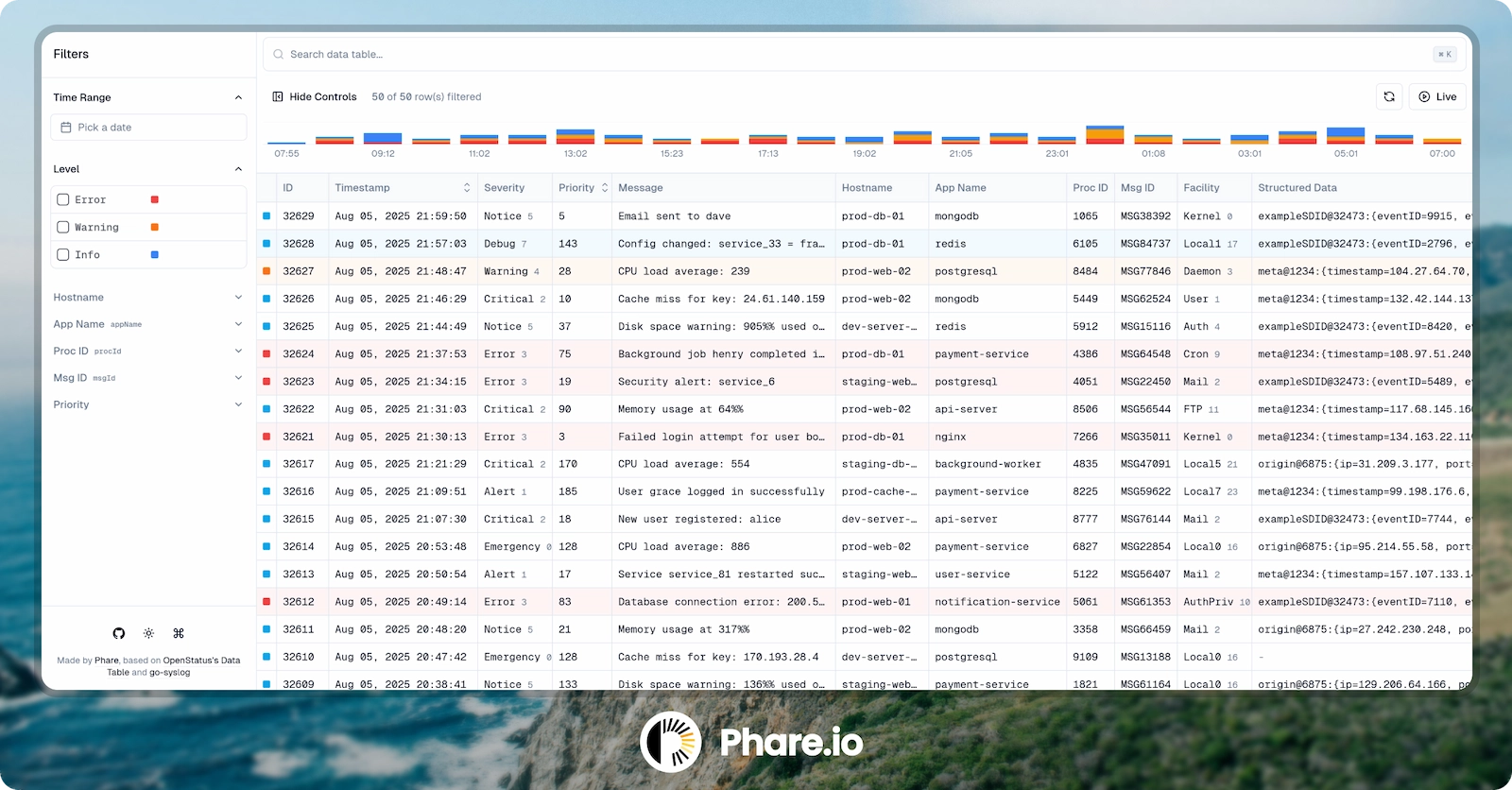
Sloggo is a lightweight log collection and exploration tool. It ingests logs over TCP and UDP using the RFC 5424 Syslog protocol, stores them in DuckDB, and presents them in a clean, modern web UI.
Designed for small to medium-sized setups where you want real-time logs without spinning up the JVM or a full Kubernetes cluster to ingest 10 daily lines of logs.
It runs in a single process with minimal resource usage, quick configuration via environment variables, and is less than 10 MiB in compressed size.
[!WARNING] Sloggo is currently in alpha release, do not use it for anything serious, it also doesn’t offer any security layer by default, only use it in a private network, or behind a secure reverse proxy.
Sloggo is made by Phare, a small bootstrapped company building shockingly good uptime monitoring, alerts, incidents, analytics, and status pages, with free Open source grants.
Getting Started
-
Start the container with docker or podman:
docker run --name sloggo \ -p 5514:5514/udp -p 6514:6514 -p 8080:8080 \ -e SLOGGO_LISTENERS=tcp,udp \ -e SLOGGO_UDP_PORT=5514 \ -e SLOGGO_TCP_PORT=6514 \ -e SLOGGO_API_PORT=8080 \ -v ./data:/app/.duckdb \ ghcr.io/phare/sloggo:latest -
Send some logs
echo "<34>1 2025-08-04T12:00:00Z myhost sloggo - - - Hello, Sloggo" | nc localhost 6514 -
Access the application:
- Frontend: http://localhost:8080/
- Health check endpoint: http://localhost:8080/api/health
Testing
To run the backend tests:
make test
Environment Variables
The following environment variables can be used to configure the application:
SLOGGO_LISTENERS: Comma-separated list of listeners to enable (default:tcp,udp).SLOGGO_UDP_PORT: Port for the UDP Syslog listener (default:5514).SLOGGO_TCP_PORT: Port for the TCP Syslog listener (default:6514).SLOGGO_API_PORT: Port for the API (default:8080).SLOGGO_LOG_RETENTION_MINUTES: Duration in minutes to keep logs before deletion (default:43200- 30 days).SLOGGO_LOG_FORMAT: Log parsing format (default:auto). Supported values:auto: Try RFC 5424 first, then fall back to RFC 3164.RFC5424: Only parse messages as RFC 5424.RFC3164: Only parse messages as RFC 3164.
What Sloggo is
- RFC 5424 log ingestion over TCP and UDP
- Fast search, filtering, and tailing
- Up to 1 million logs per second ingestion rate
- Lightweight and resource-efficient single process with zero config
- Clean UI built with data-table-filters
What Sloggo is not
- A replacement for full-fledged log management systems like ELK, Loki, or Datadog
- A high availability or redundancy solution
- A logging solution for critical or sensitive data
- A tool for long-term log storage or analysis
- A production-ready solution (yet)
Why Sloggo?
Slug + log + Go.
🐌🤷 Some slugs and snails shoot love darts made of calcium into each other before mating.
Credits
- OpenStatus for the incredible data-table-filters React components.
- Leo Di Donato for his colossal work on go-syslog.
Contributing
Contributions are welcome! Please fork the repository and submit a pull request with your changes.
License
This project is licensed under the MIT License. See the LICENSE file for details.