
sports-quant


March Madness bracket prediction and NFL over/under modeling.
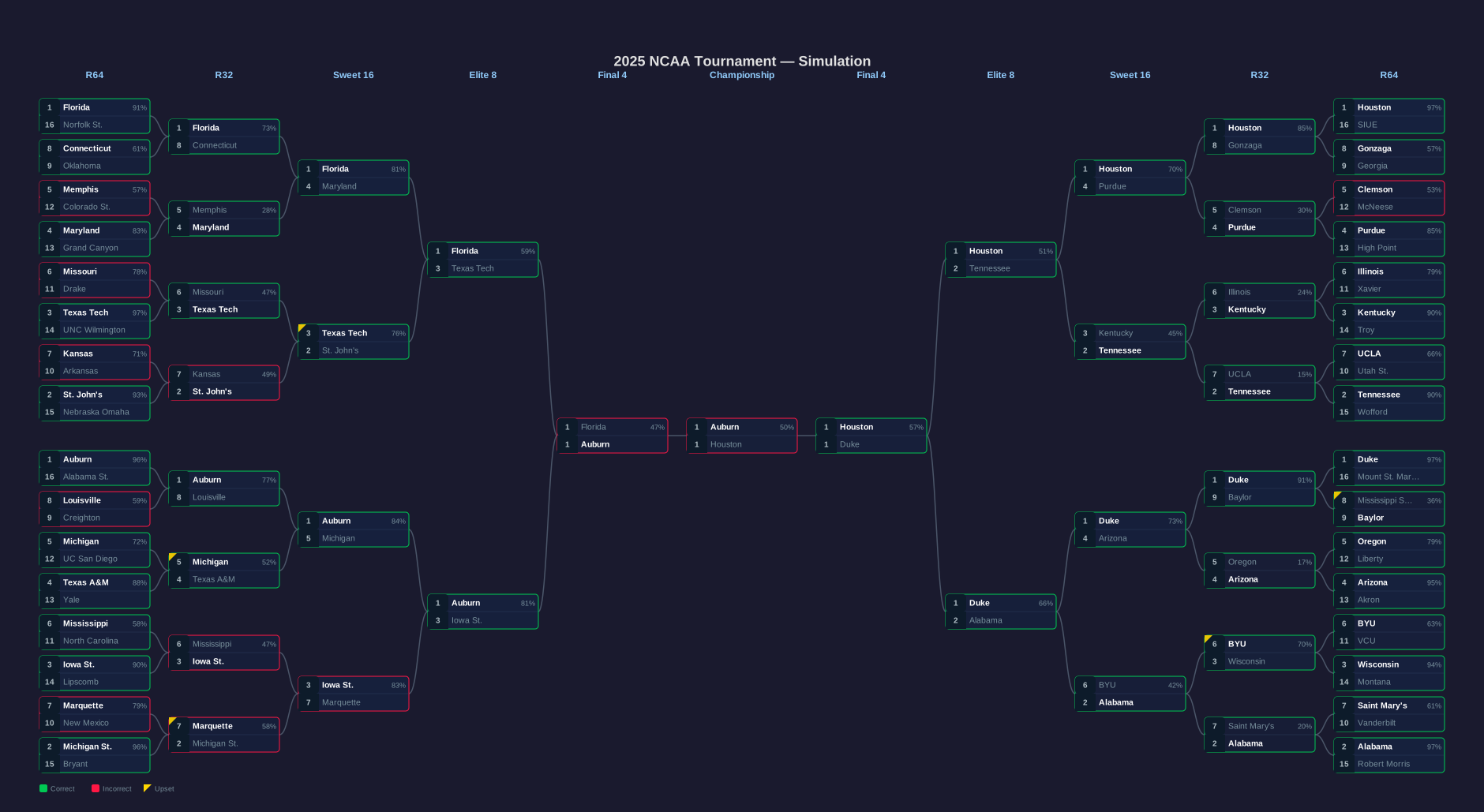
2025 bracket prediction — 51 of 63 games correct (81.0%)
Model Highlights
| 81.0% | 4 of 6 | Back-to-Back | Called It |
| bracket accuracy (2025) | champions correctly predicted | UConn champion picks (2023–2024) | NC State's Cinderella run (2024) |
Year-by-Year Accuracy
Results from v6b LightGBM ensemble with forward simulation, backtested across 6 tournaments:
| Year | Accuracy | Correct / Total | Champion | Champion Correct? | Highlights |
|---|---|---|---|---|---|
| 2025 | 79.4% | 50 / 63 | Florida (1) | No | Perfect Elite 8 (4/4), Sweet 16: 87.5% |
| 2024 | 76.2% | 48 / 63 | UConn (1) | Yes | Perfect Final Four + National Championship |
| 2019 | 76.2% | 48 / 63 | Virginia (1) | Yes | R32: 100% — perfect second round |
| 2022 | 71.4% | 45 / 63 | Kansas (1) | Yes | Perfect Elite 8 (4/4) |
| 2021 | 67.7% | 42 / 62 | Baylor (1) | No | Perfect Final Four |
| 2023 | 65.1% | 41 / 63 | UConn (4) | Yes | F4 + NCG correct despite historically wild year |
Average accuracy: 72.7% across 6 tournaments (274 / 377 games)
Upset Predictions
The model's best upset calls — games where a lower-seeded team was correctly predicted to win:
2024
| Round | Prediction | Seed Gap | Result |
|---|---|---|---|
| R64 | 12 Grand Canyon over 5 Saint Mary's | 7 | Correct |
| R64 | 11 NC State over 6 Texas Tech | 5 | Correct — NC State went on a Cinderella run to the Final Four |
| S16 | 4 Alabama over 1 North Carolina | 3 | Correct |
2023
| Round | Prediction | Seed Gap | Result |
|---|---|---|---|
| NCG | 4 UConn wins it all | — | Correct — a 4-seed national champion is rare |
2019
| Round | Prediction | Seed Gap | Result |
|---|---|---|---|
| R64 | 12 Oregon over 5 Wisconsin | 7 | Correct |
How the March Madness Model Works
The March Madness model uses a LightGBM ensemble trained on historical tournament data with features derived from team performance metrics, seeding, and matchup interactions.
- Feature engineering — KenPom ratings, Barttorvik T-Rank, seed-based statistics, conference strength, and matchup interaction features
- Ensemble prediction — Multiple LightGBM models vote on each game's win probability
- Forward simulation — The bracket is filled round-by-round, feeding predicted winners into the next round
- Seed debiasing — Adjusts for historical seed-vs-seed upset rates to avoid over-favoring top seeds
- Backtesting — Every prediction is out-of-sample; the model never sees future tournament results during training
Survivor Pool Optimizer
The project also includes a survivor pool optimizer that uses the model's round-by-round probabilities to select optimal picks across multiple strategies:
- Greedy — Pick the highest-probability survivor each round
- Bracket-aware — Avoid picking teams from the same bracket side
- Monte Carlo optimal — Simulate thousands of scenarios to maximize expected survival
NFL Over/Under Modeling
An end-to-end data pipeline that scrapes PFF team grades and Pro Football Reference game/betting data, builds analysis-ready datasets, and trains an ensemble XGBoost model for NFL over/under prediction.
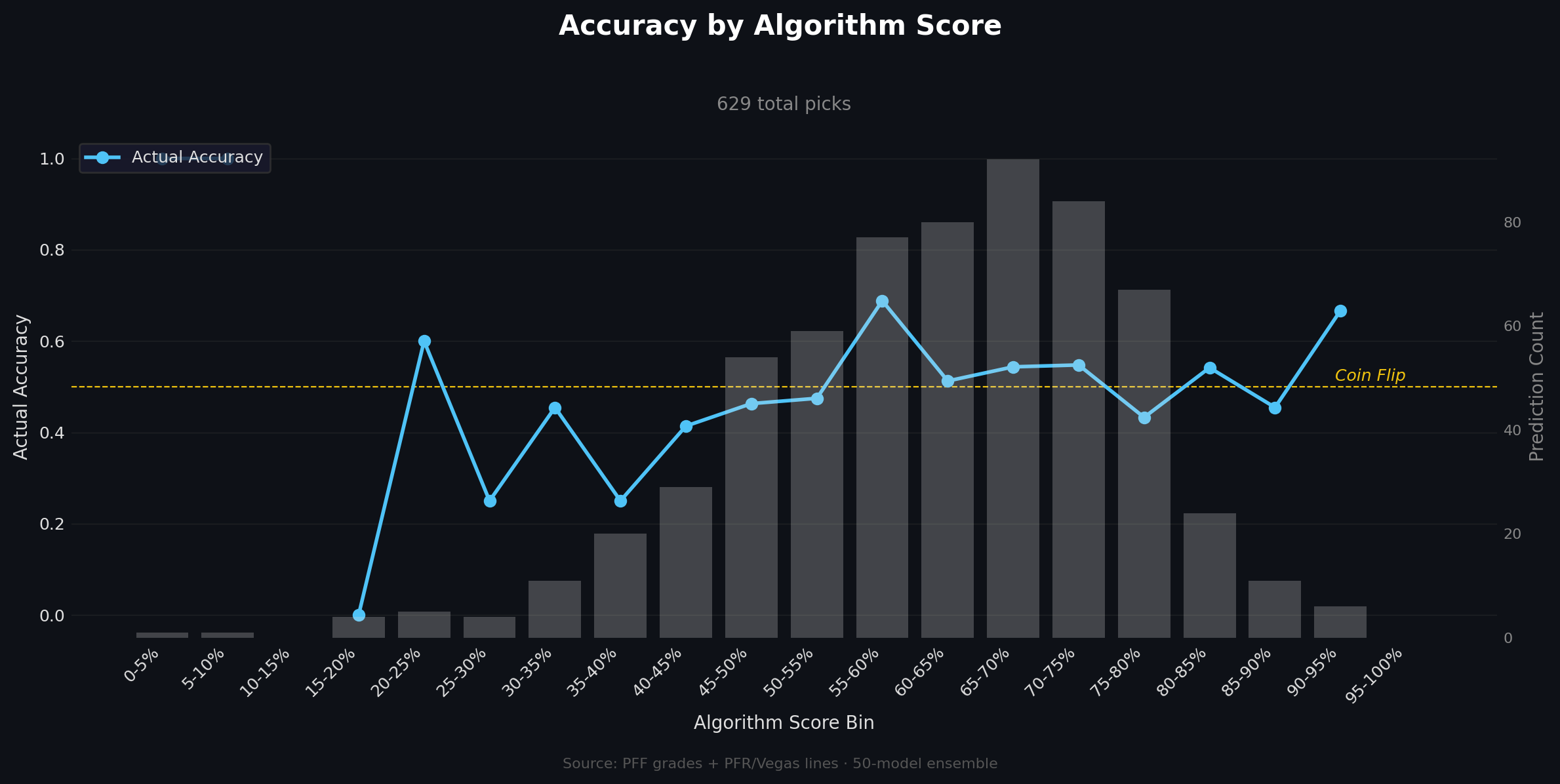
How the NFL Model Works
The core idea is simple: don't try to predict every game — find the games where the model is reliably right, and only bet those.
On each game-day the pipeline trains 50 XGBoost models with different random seeds on all available historical data. The pipeline filters to the top 3 based on a weighted seasonal accuracy score, then requires all three to agree on a pick before it counts. Each consensus pick gets an algorithm score that captures how well the ensemble has historically performed at that confidence level.
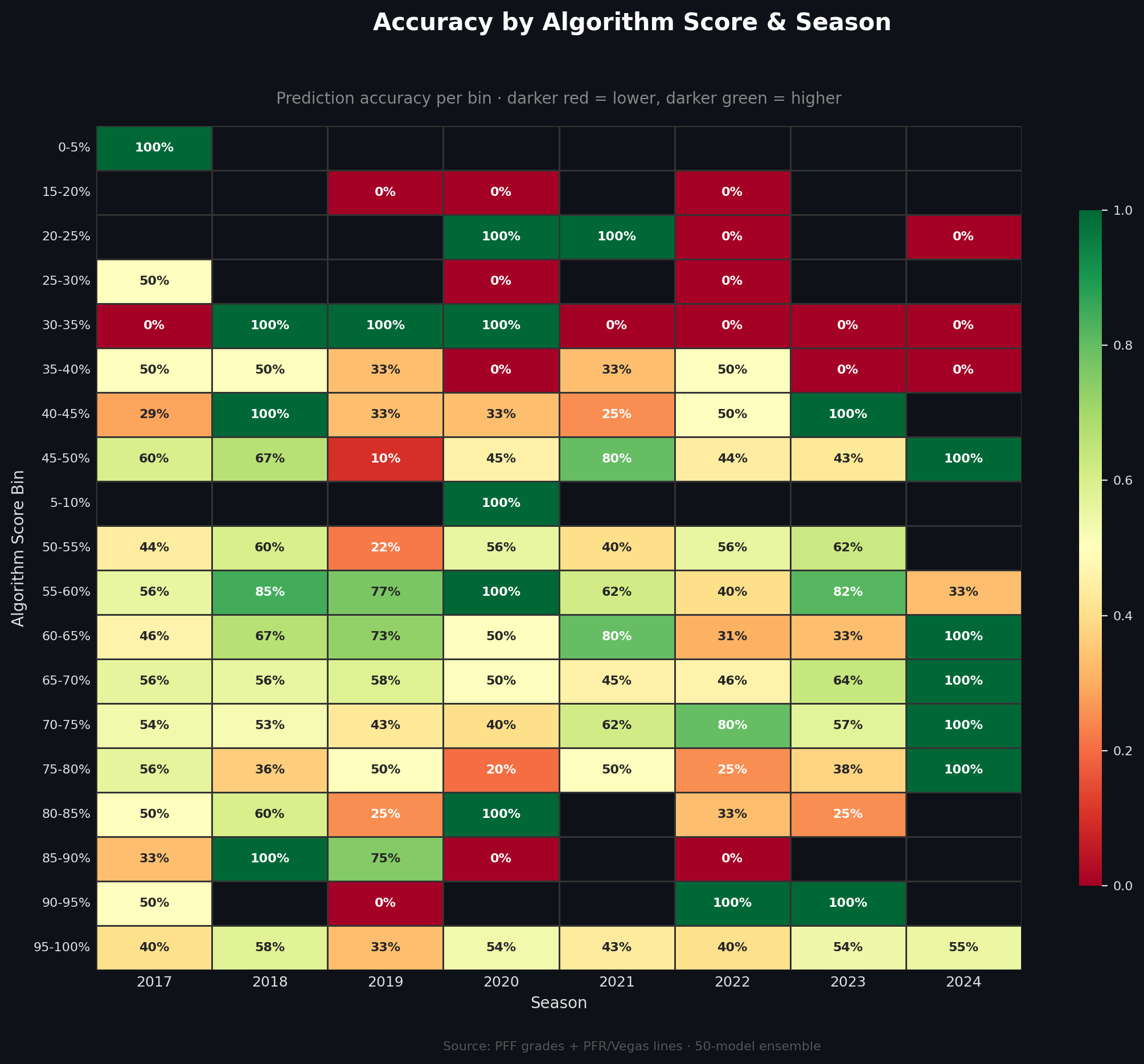
Higher algorithm-score bins tend to stay accurate across multiple seasons, while lower bins stay inaccurate.
Technical Details
| Parameter | Value |
|---|---|
| Models trained per game-day | 50 |
| Models kept after selection | Top 3 by weighted seasonal accuracy |
| Consensus requirement | All 3 must agree |
| Algorithm score | Weighted blend of per-model confidence-bin accuracy (0.4 / 0.35 / 0.25) |
| Bet sizing | 1% Kelly criterion |
| Starting simulation capital | $100 |
NFL Pipeline Architecture
PFF Scrape              PFR Scrape
    |                       |
    v                       v
Extract Dates          Normalize Dates
    |                       |
    v                       v
Normalize Names        Normalize Names
    |                       |
    +----------+   +--------+
               |   |
               v   v
              Merge
                |
                v
           Over/Under
                |
                v
         Rolling Averages
                |
                v
          Games Played
                |
                v
            Rankings
                |
       +--------+--------+
       |                  |
       v                  v
  Model Train        Backtest
  (ensemble)       (walk-forward)
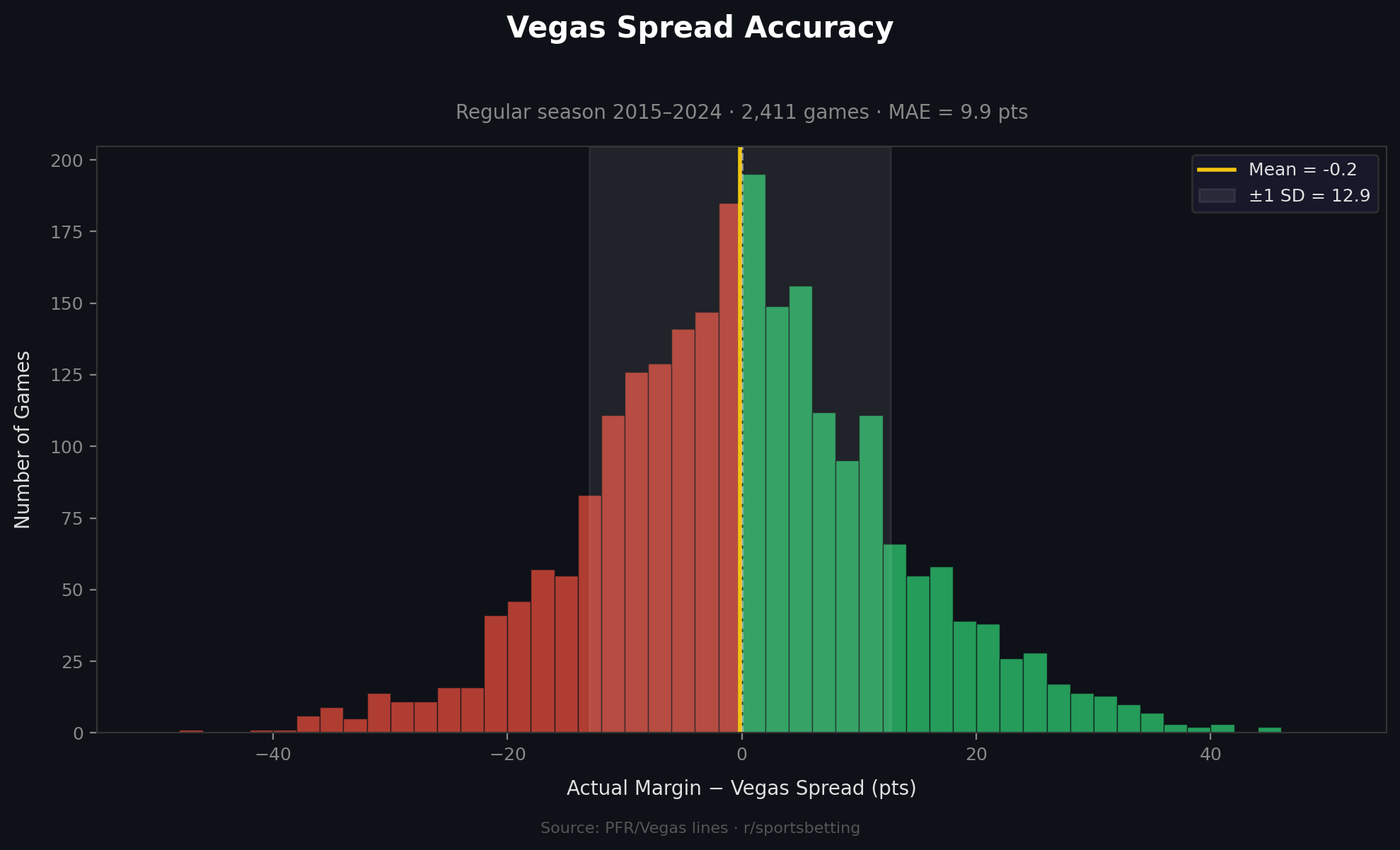
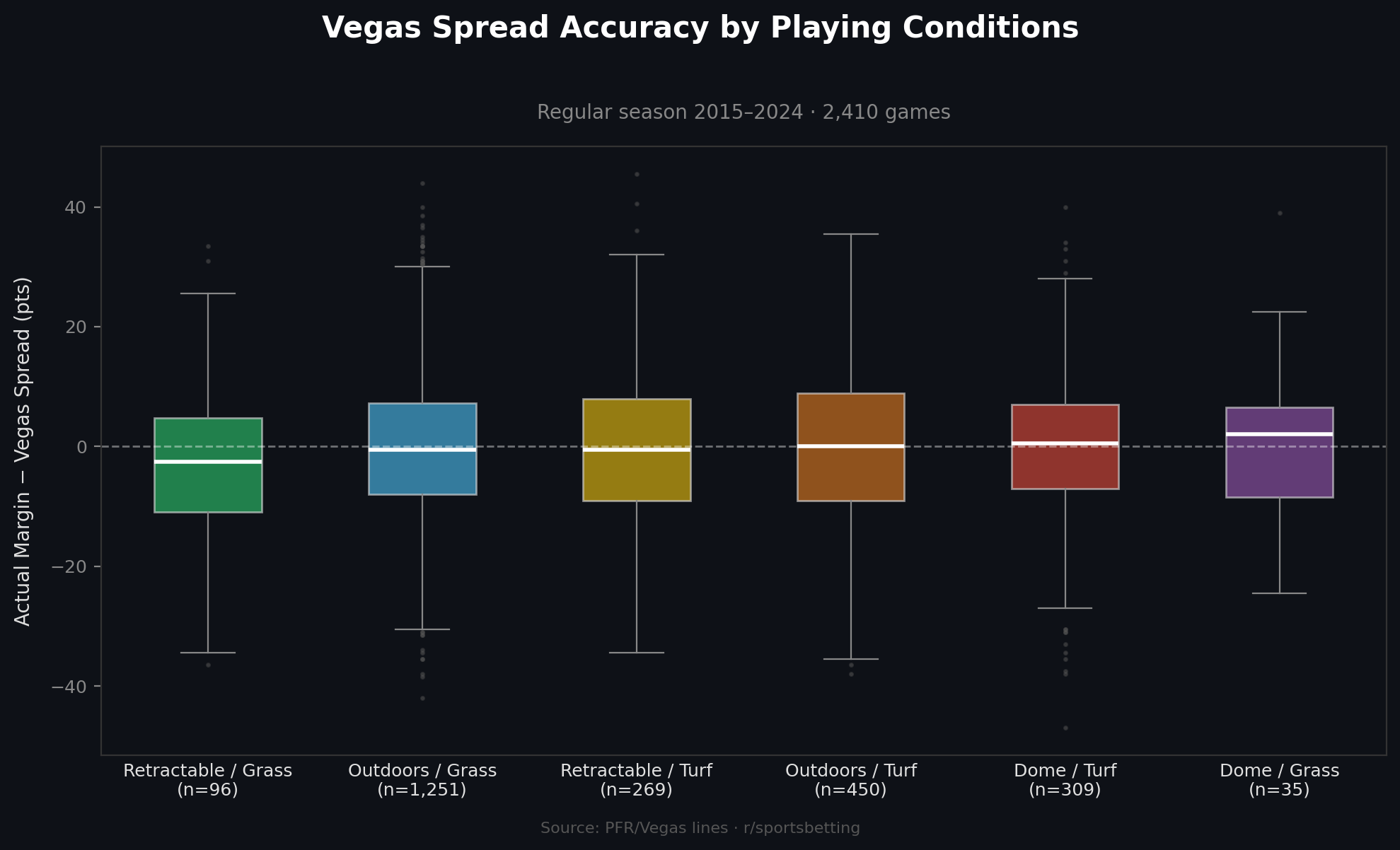
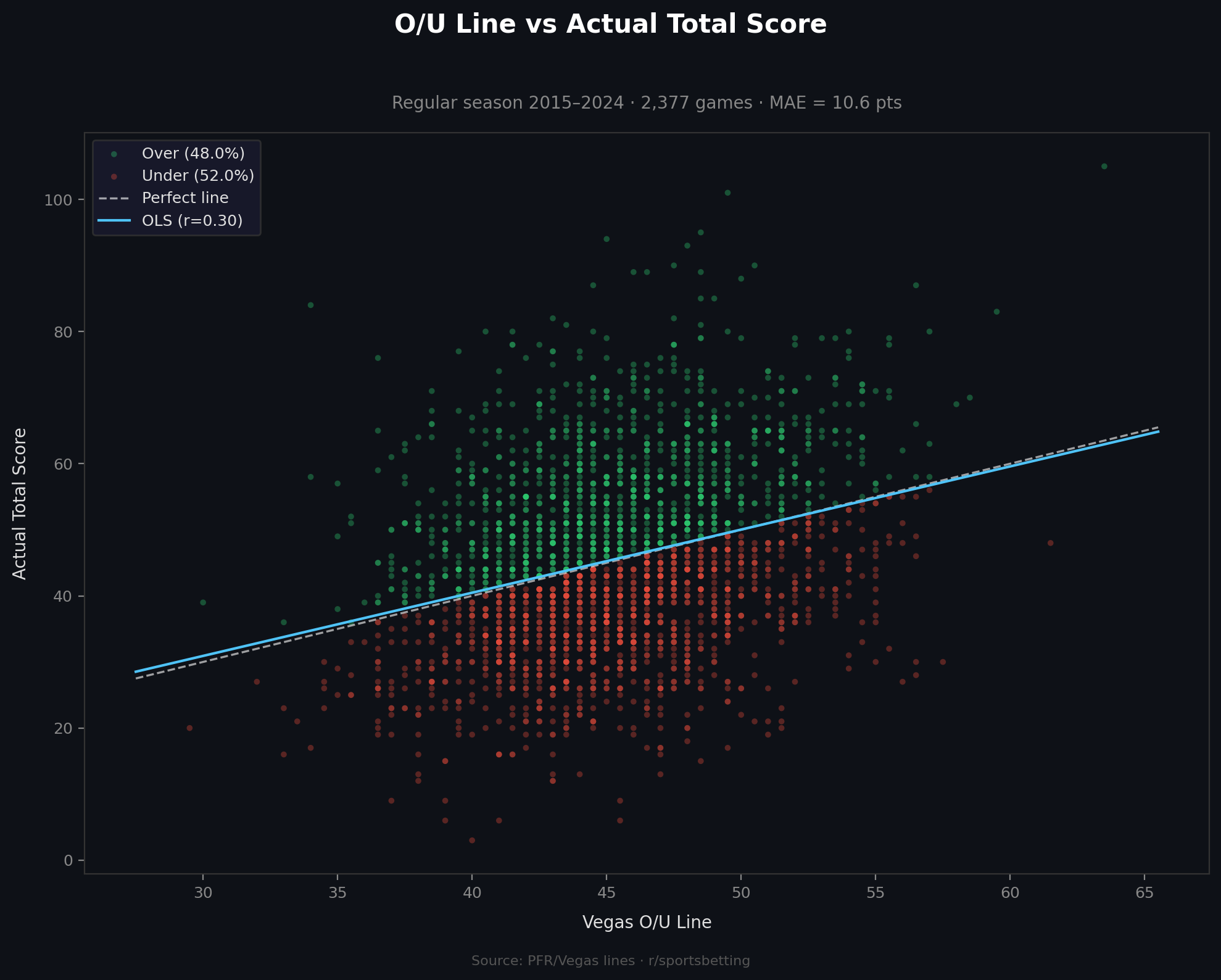
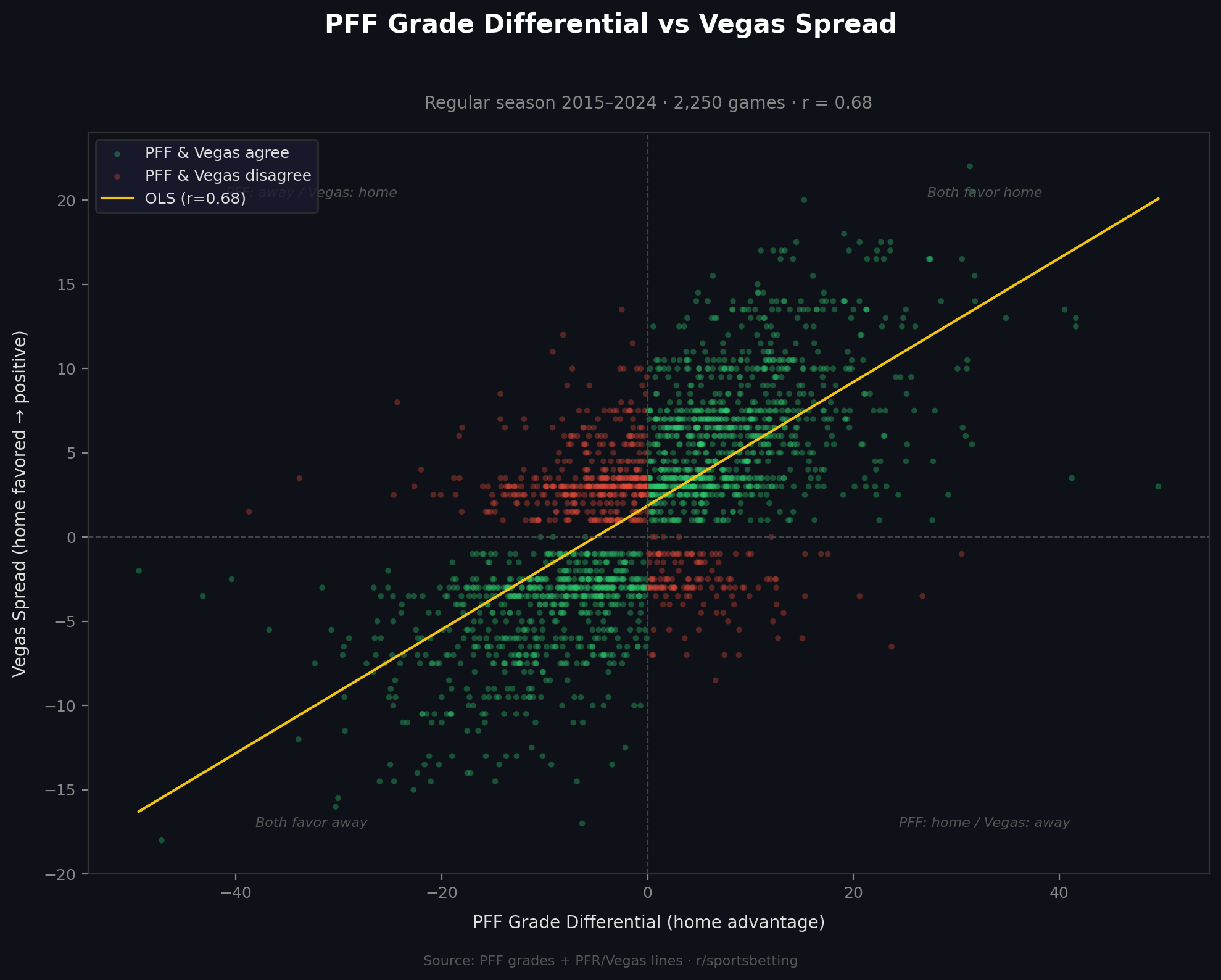
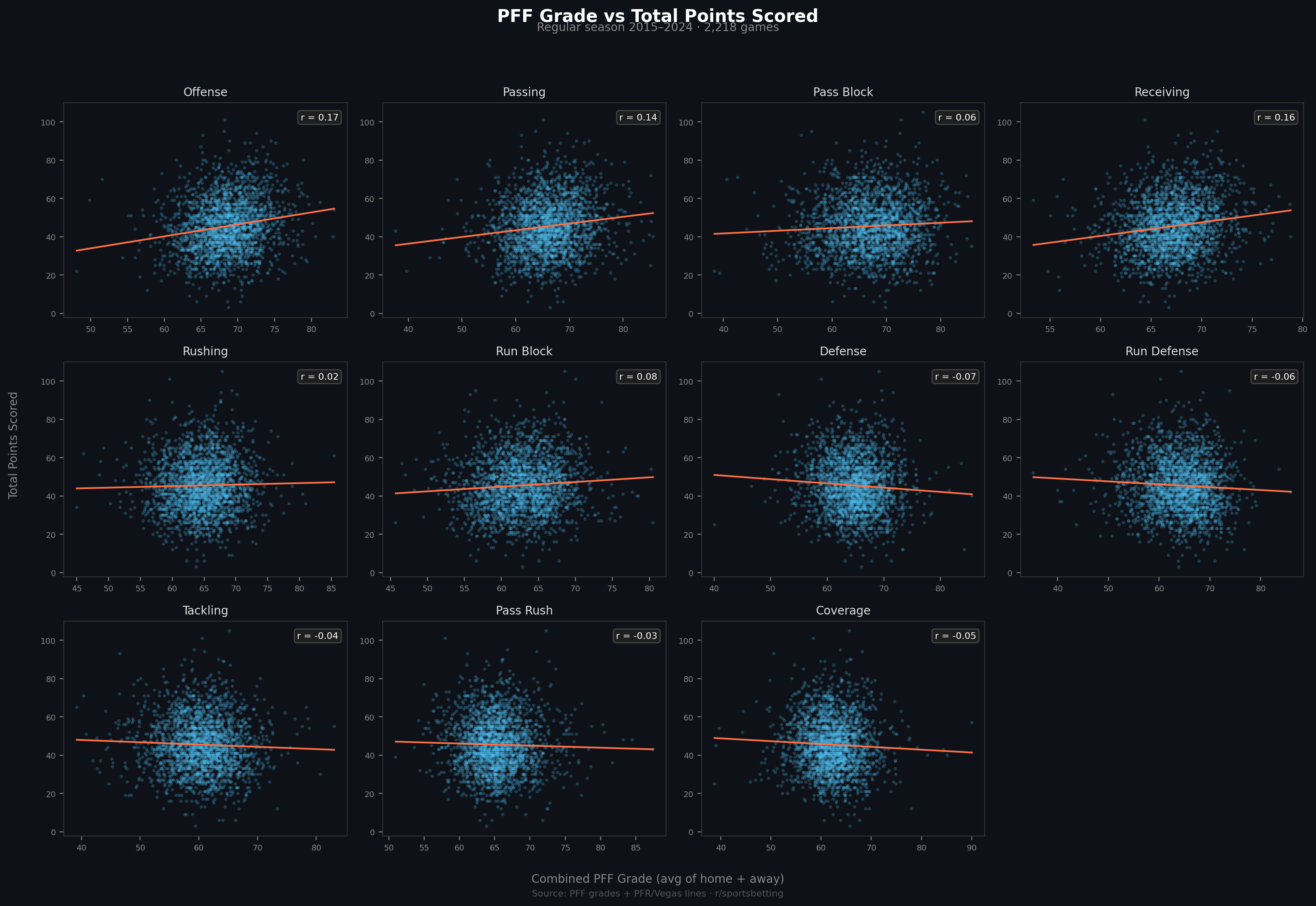
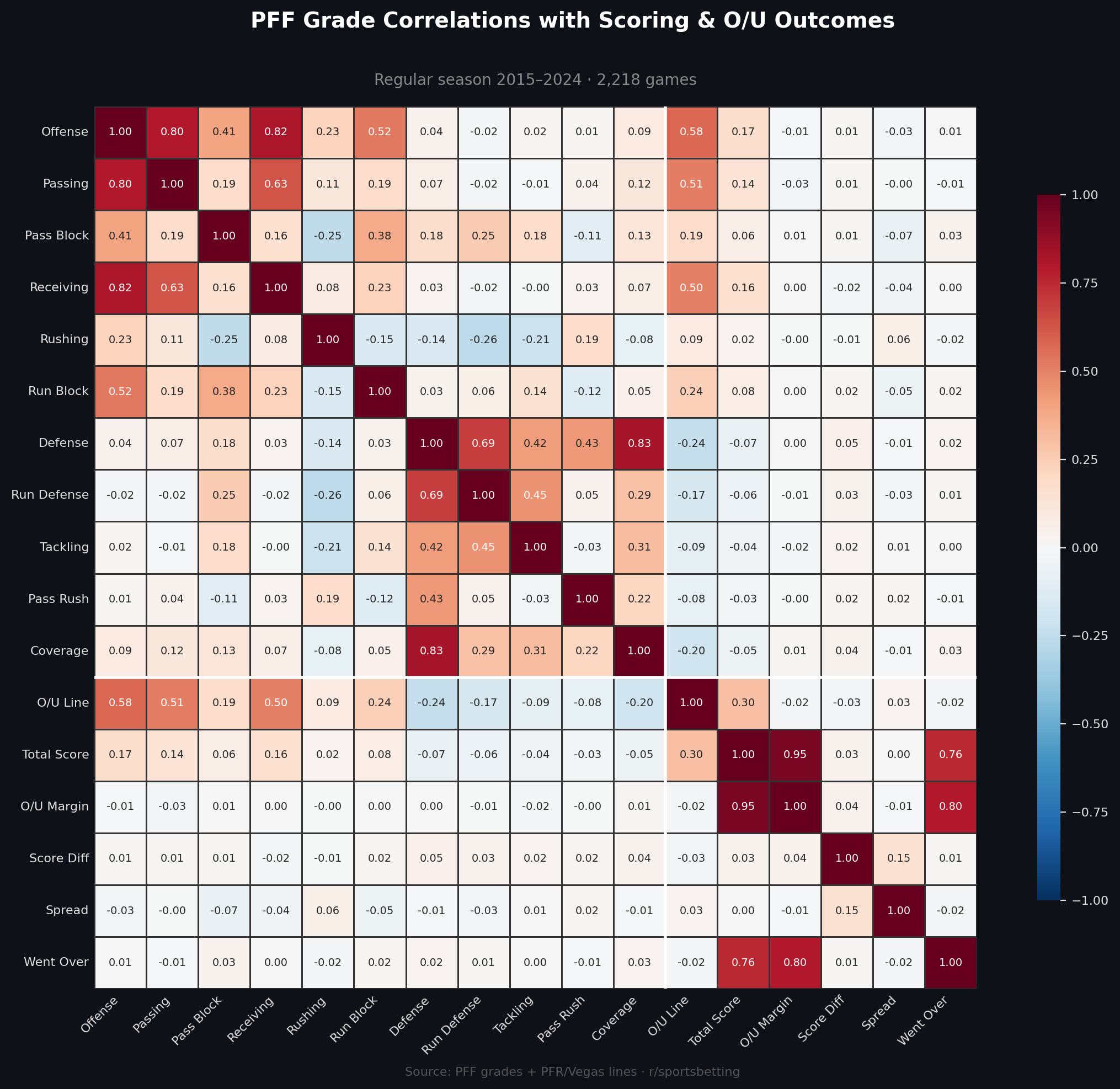
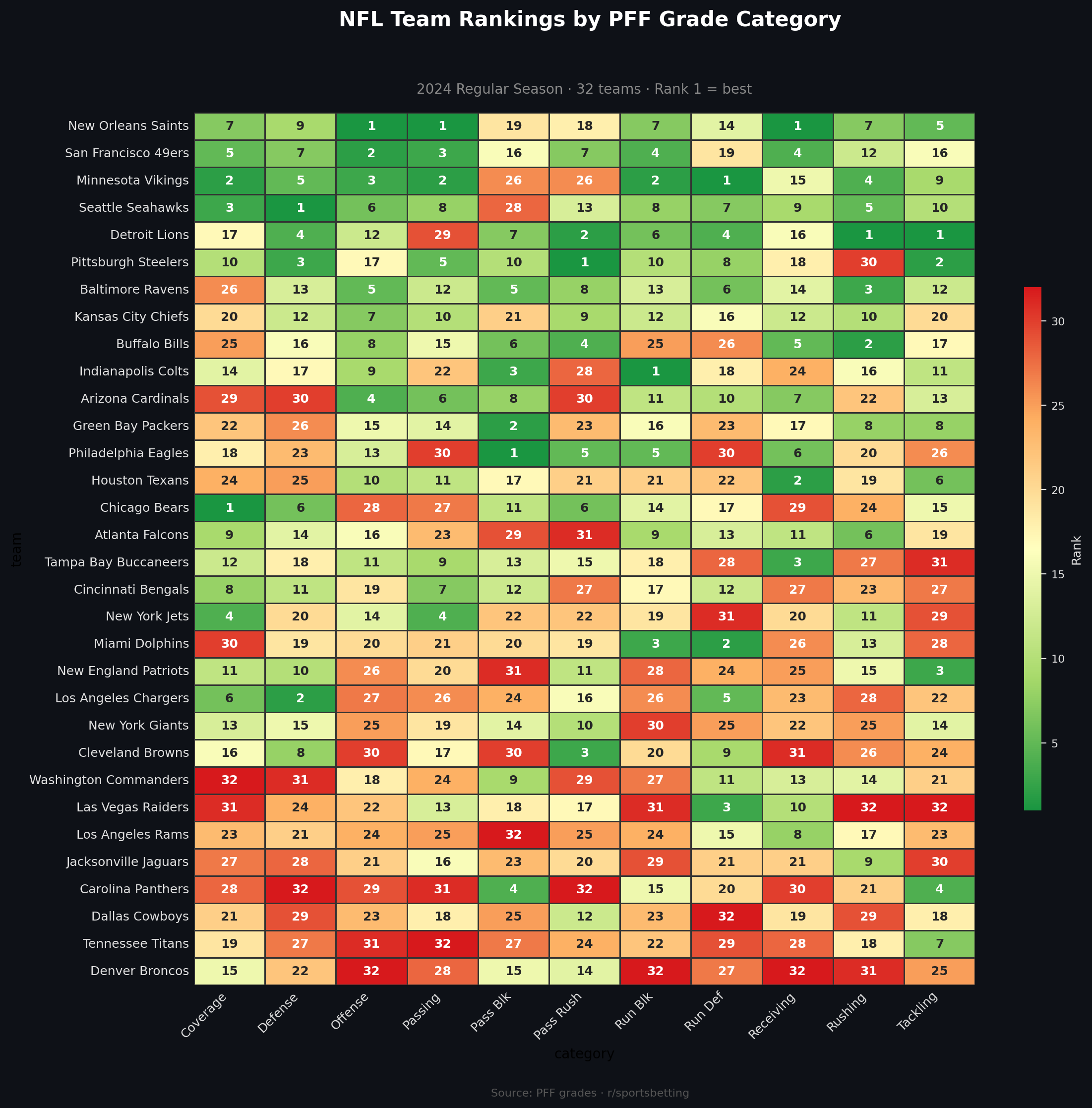
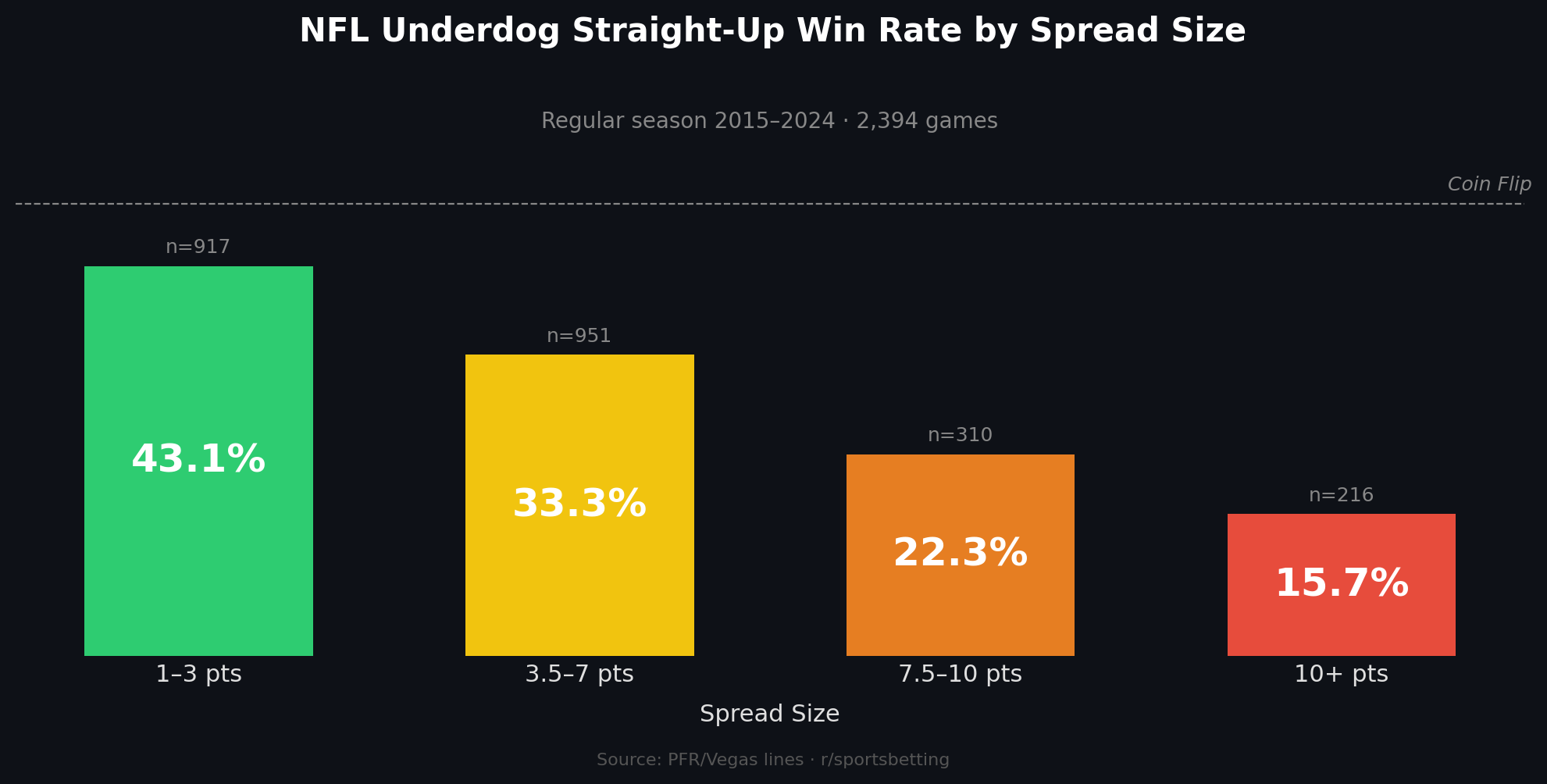
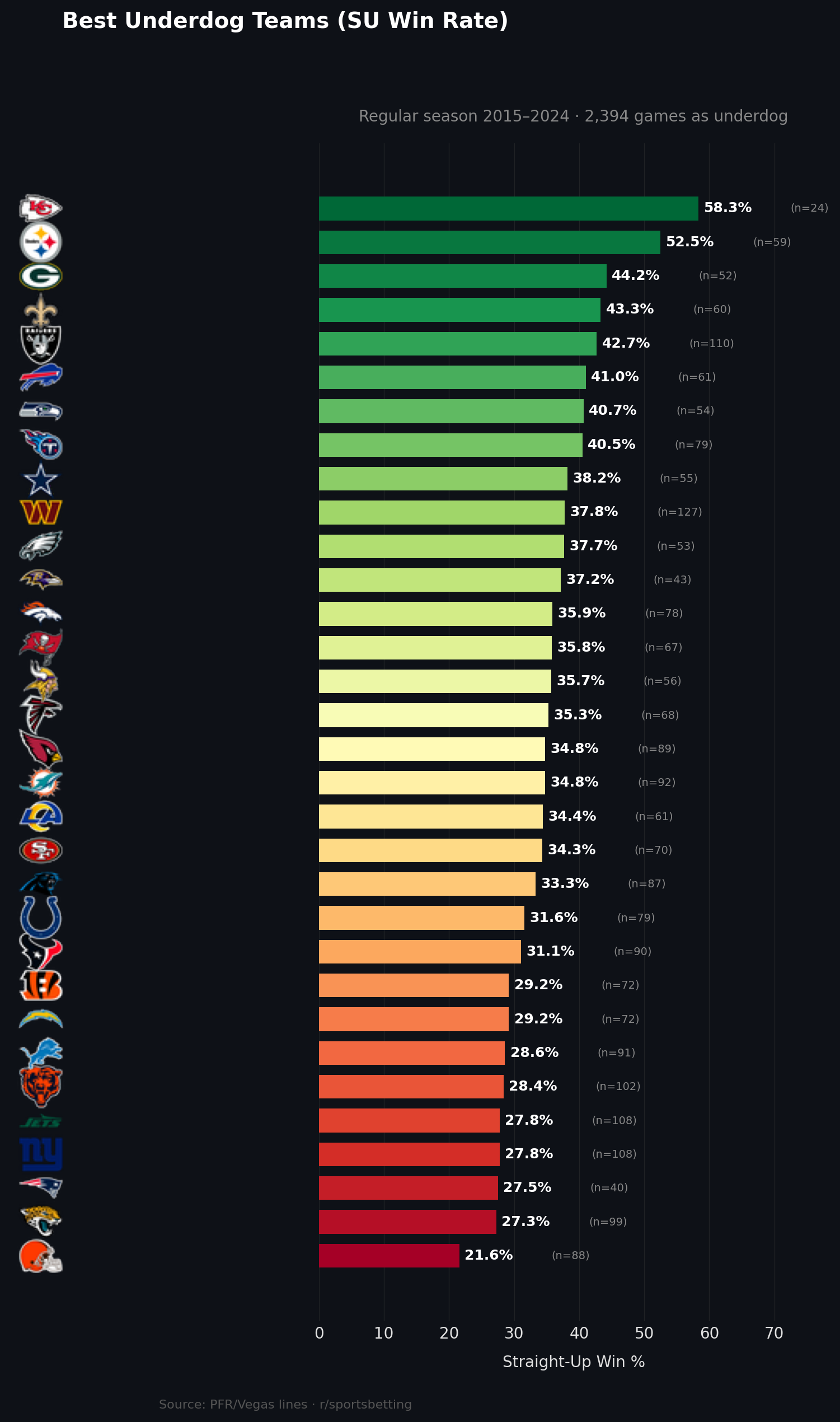
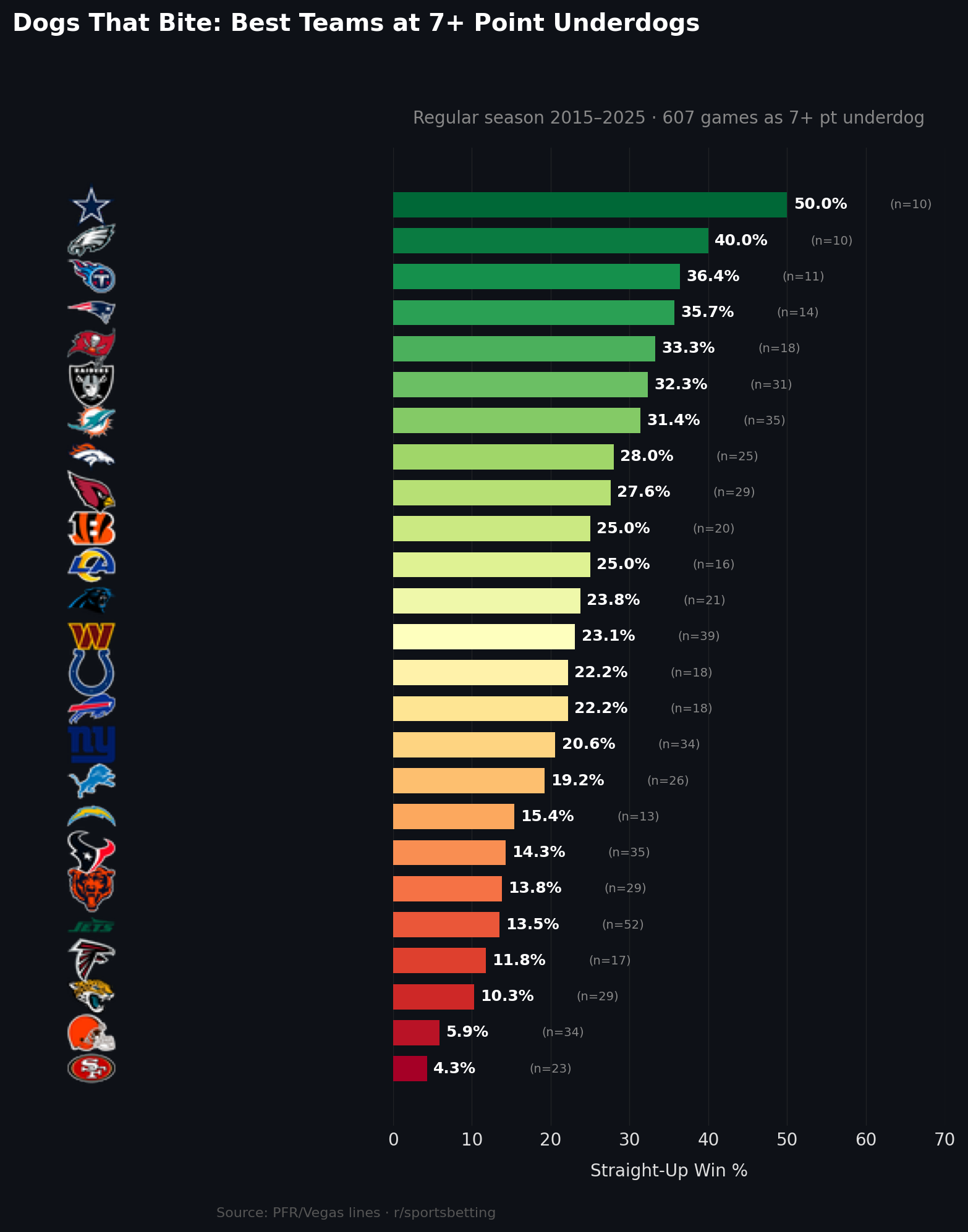
Example Charts
Expand NFL charts
Features
- March Madness Bracket Prediction — LightGBM ensemble with forward simulation, seed debiasing, and survivor pool optimization
- PFF Scraping — Selenium-based scraper for PFF team grades (requires PFF Premium; manual login on first run, cookies cached for subsequent runs)
- PFR Scraping — Proxy-rotated scraper for Pro Football Reference boxscores
- Data Normalization — Standardizes dates and team names across sources
- Dataset Merging — Inner join on date + team columns
- Rolling Averages — Pre-game cumulative stat averages per team per season
- Games Played Tracking — Cumulative games played before each matchup
- Feature Rankings — Per-date rankings across all teams
- Ensemble Training — Trains 50 XGBoost models per game-day, selects top 3 by weighted seasonal accuracy, requires consensus agreement, and runs a financial simulation
- Walk-Forward Backtesting — Trains 50 models across every historical date using walk-forward validation and averages metrics across all models
- CLI + Python API — Run the full pipeline or any individual step
Installation
Install from PyPI:
pip install sports-quant
Or install from source with Poetry:
git clone https://github.com/thadhutch/sports-quant.git
cd sports-quant
poetry install
Prerequisites
| Requirement | Why |
|---|---|
| Python 3.12+ | Runtime |
| Google Chrome | PFF scraper uses Selenium to render client-side data |
| PFF Premium subscription | Authenticates access to PFF team grades |
| Rotating proxies (CSV) | PFR rate-limits aggressively; proxies prevent blocks |
Configuration
Create a .env file (see .env.example) or export environment variables directly:
cp .env.example .env
| Variable | Default | Description |
|---|---|---|
NFL_SEASONS |
2025 |
Comma-separated seasons to scrape from PFF |
NFL_START_YEAR |
2025 |
First year for PFR boxscore URL collection |
NFL_END_YEAR |
2025 |
Last year for PFR boxscore URL collection |
NFL_MAX_WEEK |
18 |
Final week to scrape in the last season |
NFL_DATA_DIR |
data |
Base directory for all output files |
NFL_PROXY_FILE |
proxies/proxies.csv |
Path to proxy list (address:port:user:password per line) |
NFL_MODEL_CONFIG |
model_config.yaml |
Path to model configuration file |
Usage
CLI
# March Madness
sports-quant march-madness backtest         # Backtest across historical tournaments
sports-quant march-madness simulate 2025    # Generate 2025 bracket predictions
sports-quant march-madness survivor 2025    # Run survivor pool optimizer

# NFL (full pipeline)
sports-quant pipeline

# NFL (individual steps)
sports-quant scrape pff
sports-quant scrape pfr
sports-quant process all
sports-quant model train
sports-quant model backtest
Python API
import sports_quant

# March Madness
sports_quant.run_march_madness_backtest()
sports_quant.simulate_bracket(year=2025)

# NFL
sports_quant.run_full_pipeline()
sports_quant.run_training()
sports_quant.run_backtest()
Project Structure
sports-quant/
├── src/sports_quant/
│   ├── __init__.py           # Public API re-exports
│   ├── _config.py            # Paths, env vars, logging
│   ├── cli.py                # Click CLI entry point
│   ├── pipeline.py           # Pipeline orchestrators
│   ├── teams.py              # Team name/abbreviation mappings
│   ├── march_madness/        # March Madness bracket prediction
│   ├── scrapers/
│   │   ├── pff.py            # PFF grades scraper (Selenium)
│   │   ├── pfr.py            # PFR game data scraper
│   │   ├── pfr_urls.py       # PFR boxscore URL collector
│   │   ├── auth.py           # PFF authentication
│   │   └── proxies.py        # Proxy loading utilities
│   ├── parsers/
│   │   ├── pff_dates.py      # PFF date extraction
│   │   ├── pff_teams.py      # PFF team name normalization
│   │   ├── pfr_dates.py      # PFR date normalization
│   │   └── pfr_teams.py      # PFR team name extraction
│   ├── processing/
│   │   ├── merge.py          # Merge PFF + PFR datasets
│   │   ├── over_under.py     # O/U betting line extraction
│   │   ├── rolling_averages.py
│   │   ├── games_played.py
│   │   └── rankings.py
│   └── modeling/
│       ├── __init__.py       # Public API (run_training, run_backtest)
│       ├── _features.py      # Shared feature definitions
│       ├── _data.py          # Data loading and preparation
│       ├── _training.py      # Single-model and ensemble training
│       ├── _scoring.py       # Season weighting, consensus, model selection
│       ├── _simulation.py    # Financial simulation / profit tracking
│       ├── train.py          # Ensemble training orchestrator
│       ├── backtest.py       # Walk-forward backtesting orchestrator
│       └── plots.py          # All modeling-related charts
├── tests/
├── model_config.yaml
├── pyproject.toml
├── Makefile
├── LICENSE
└── README.md
Development
git clone https://github.com/thadhutch/sports-quant.git
cd sports-quant
poetry install
poetry run pytest -v
CI runs automatically on every push to master and on pull requests via GitHub Actions. Releases are published to PyPI through Trusted Publishers.
Contributing
- Fork the repository
- Create a feature branch (
git checkout -b feature/my-feature) - Make your changes and add tests
- Run the test suite (
poetry run pytest -v) - Commit and push
- Open a Pull Request
Known Limitations
- Data files are not tracked in git. Run the pipeline to generate them.
- PFF scraping is DOM-dependent. If PFF changes their frontend, selectors need updating.
- PFR scraping requires rotating proxies. Without them, requests will be rate-limited.
- PFF login requires manual interaction on first run. Cookies are cached afterward.
License
This project is licensed under the MIT License.