
Spring Boot Based Microservices
A modular, production-style microservices reference project for managing courses and reviews with strong focus on:
- API gateway routing
- OAuth2/OIDC security with Keycloak
- Observability (metrics, logs, traces)
- Docker Compose and Kubernetes/Tilt local deployment workflows
Table of Contents
- Overview
- Architecture
- Tech Stack
- Prerequisites
- Quick Start (Docker Compose)
- Run with Kubernetes + Tilt
- Core Endpoints
- Keycloak
- Observability
- Troubleshooting
Overview
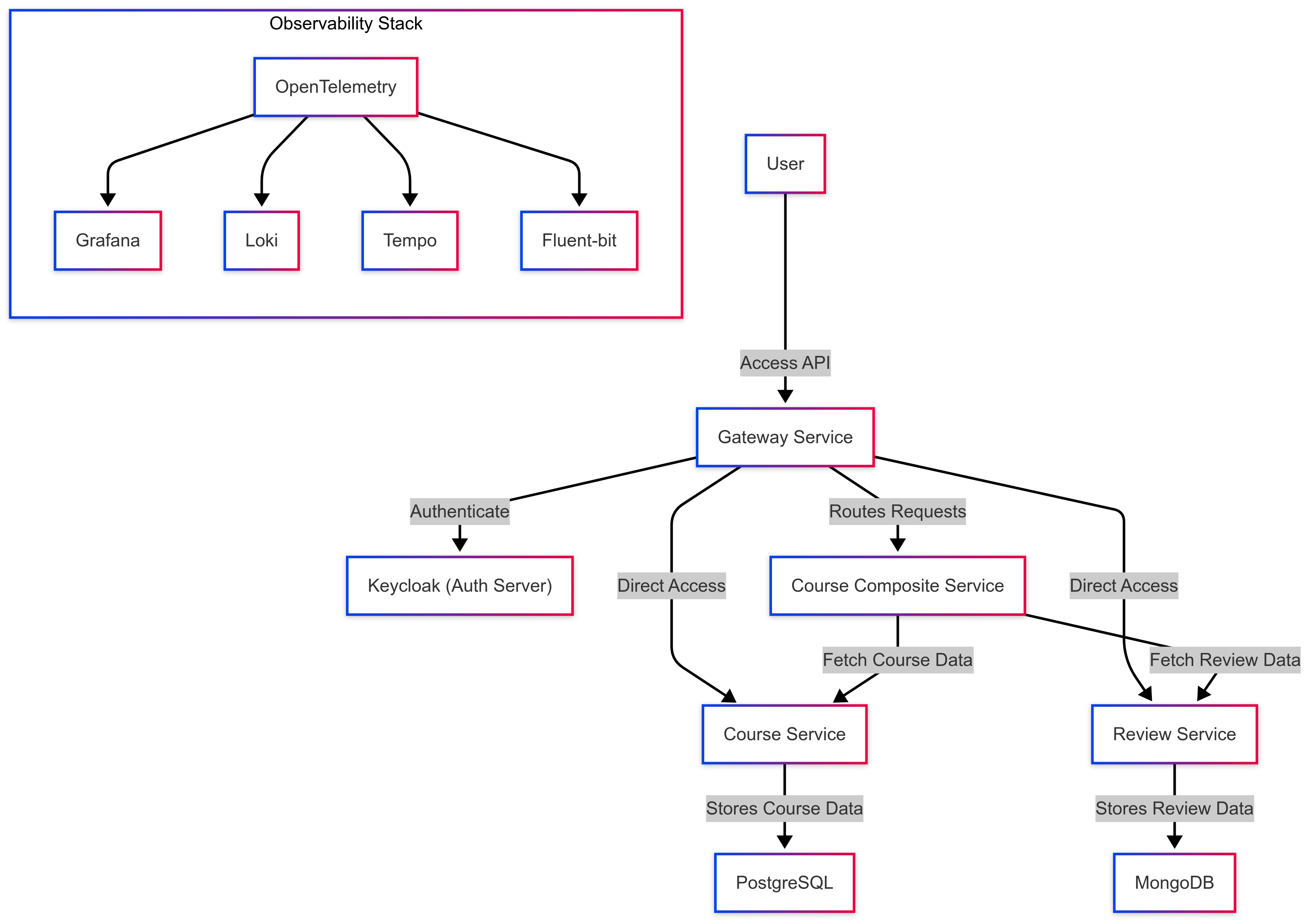
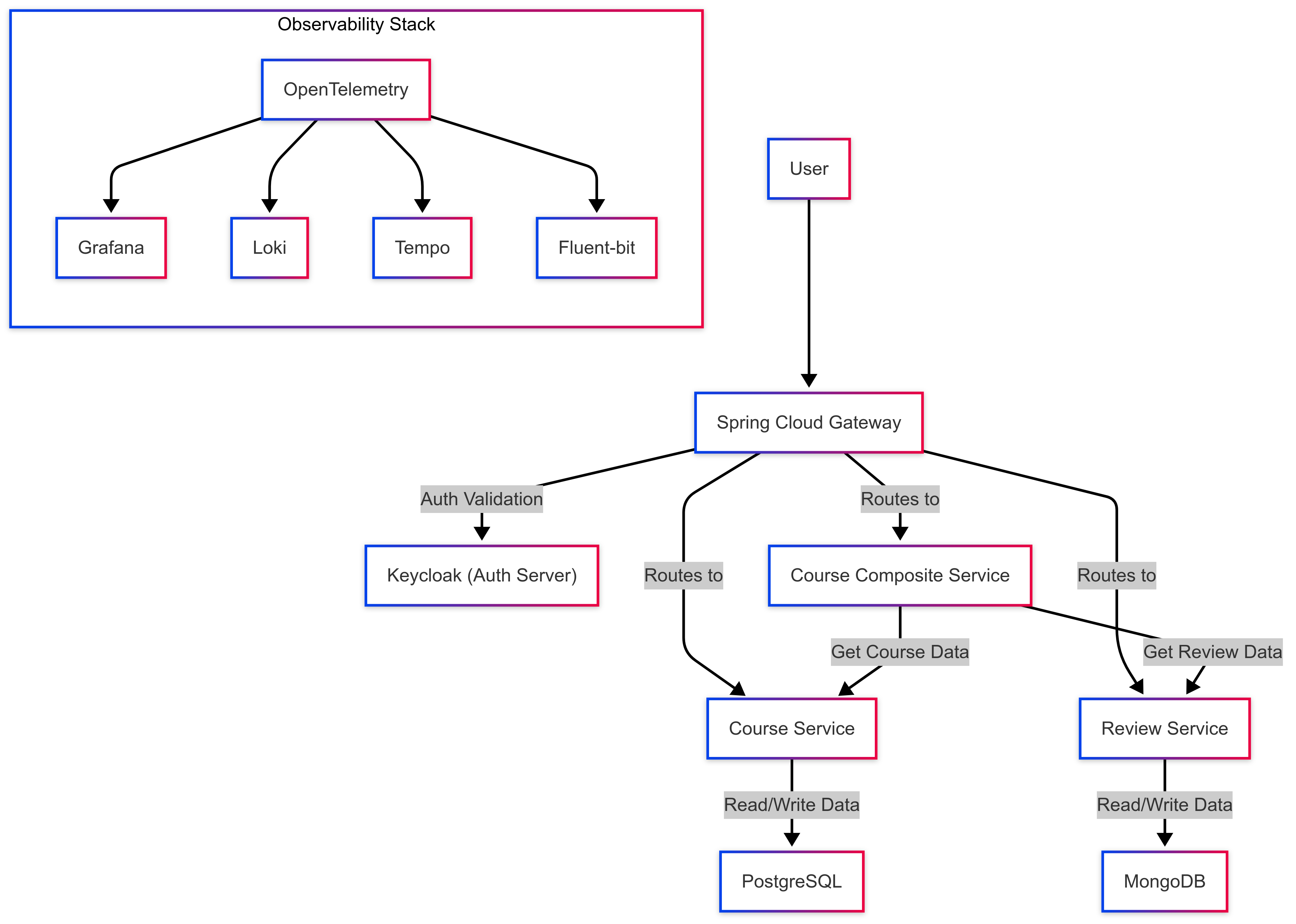
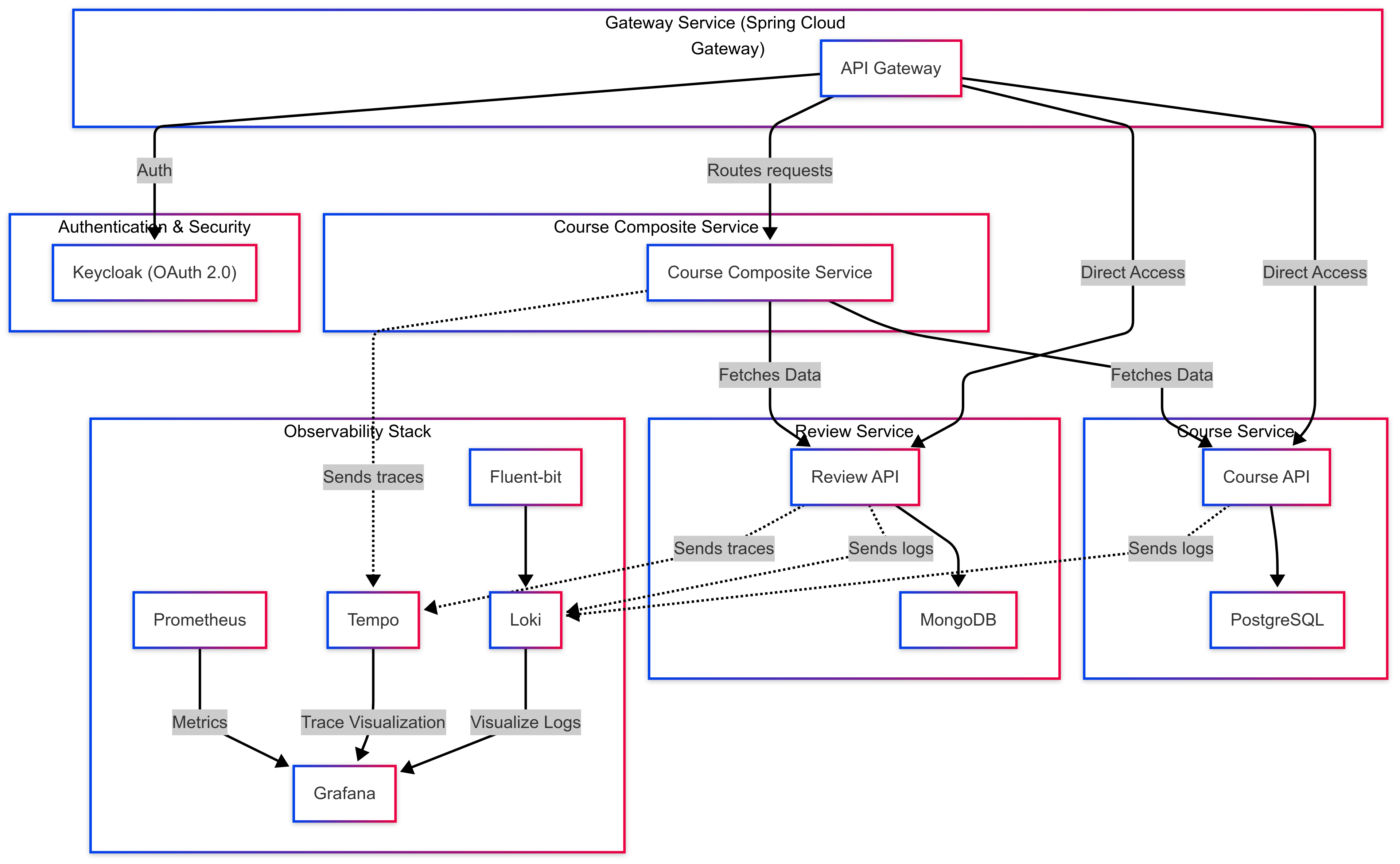
The system is split into domain services and platform components:
- Gateway Service: entry point and request routing
- Course Service: manages course data in PostgreSQL
- Review Service: manages review data in MongoDB
- Course Composite Service: aggregates course + review responses
- Keycloak: identity provider for authn/authz
- Observability stack: Prometheus, Grafana, Loki, Tempo, Fluent Bit, OpenTelemetry Collector
Architecture
Context Diagram
Container Diagram
Component Diagram
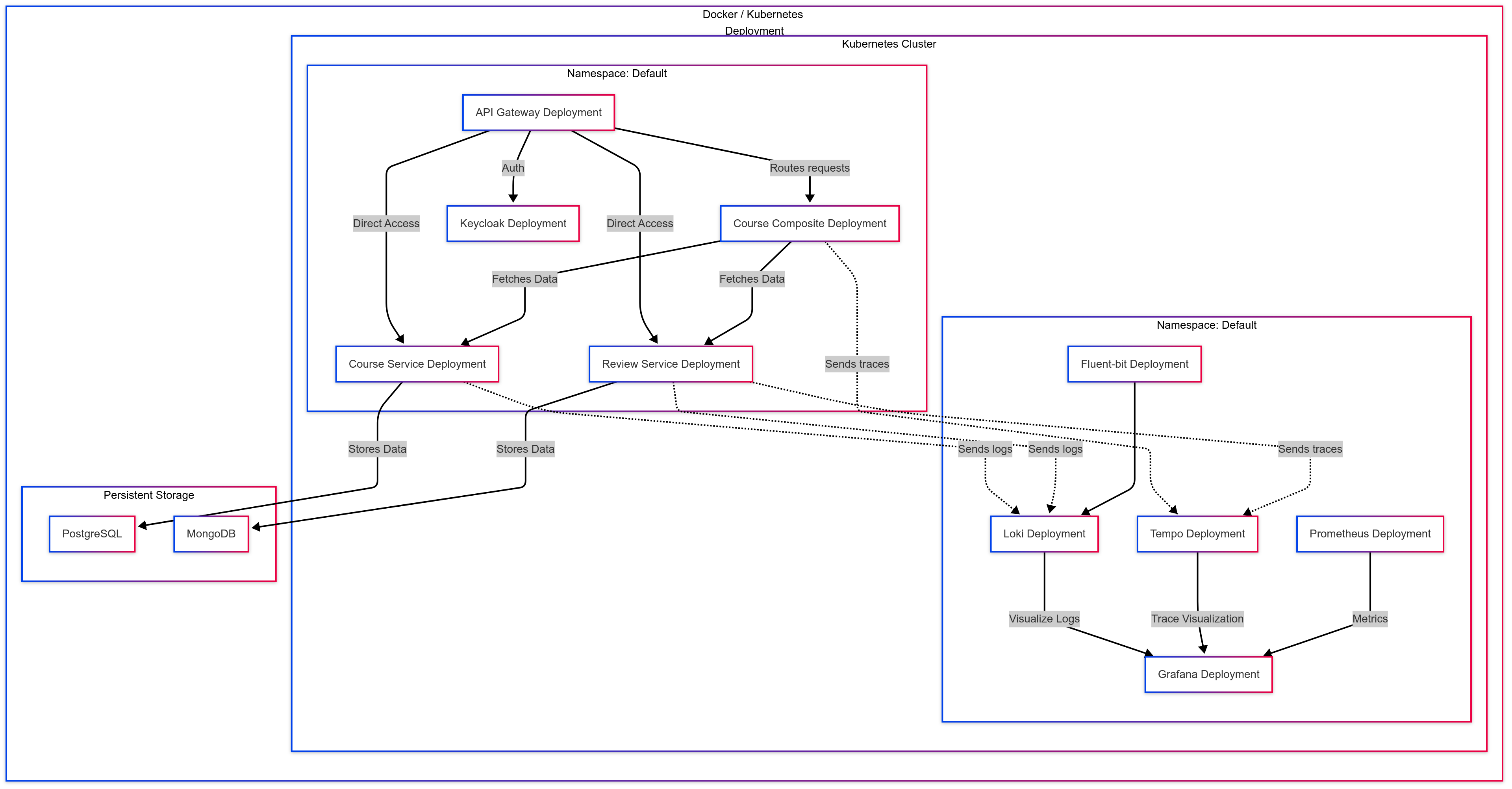
Deployment View
Tech Stack
- Java 17, Spring Boot, Spring Cloud Gateway
- PostgreSQL (Course Service)
- MongoDB (Review Service)
- Keycloak (OAuth2/OIDC)
- OpenTelemetry, Prometheus, Grafana, Loki, Tempo, Fluent Bit
- Docker Compose and Kubernetes (Minikube + Tilt)
Prerequisites
Install the following before running:
- Java 17+
- Maven 3.8+
- Docker + Docker Compose
- (Optional) Minikube + Tilt for Kubernetes mode
- curl or HTTPie for API validation
Quick Start (Docker Compose)
Make sure Docker Engine is running.
1) Start databases
cd docker
docker compose -f docker-compose-infra.yml up --build
2) Start observability stack
cd docker
docker compose -f docker-compose-observability.yml up --build
3) Start microservices
From repository root:
sh run.sh docker
or
sh run.sh
Run with Kubernetes + Tilt
1) Start Minikube
minikube start \
  --profile=microservice-deployment \
  --memory=4g \
  --cpus=4 \
  --disk-size=30g \
  --kubernetes-version=v1.31.0 \
  --driver=docker
2) Enable ingress
minikube addons enable ingress --profile microservice-deployment
3) Use Minikube Docker daemon
eval $(minikube -p microservice-deployment docker-env)
4) Build images
sh build-images.sh
5) Start platform with Tilt
tilt up
Optional check:
tilt get uiresources
Each service exposes actuator metrics and Prometheus output.
Core Endpoints
Ports and hostnames depend on your local setup (Docker vs Kubernetes ingress).
Typical routes exposed through the gateway:
GET /coursePOST /courseGET /reviewPOST /reviewGET /course-composite/{courseId}
Actuator/metrics examples:
GET /actuator/healthGET /actuator/prometheus
Keycloak
Keycloak is used as the identity provider for user authentication and token issuance.
Typical local flow:
- Open Keycloak admin/UI.
- Ensure realm, clients, and users are configured.
- Get a bearer token from Keycloak.
- Call gateway APIs with
Authorization: Bearer <token>.
The token must contain both:
Observability
Prometheus
- Check service targets are UP.
- Scrape metrics from
/actuator/prometheus.
Grafana
- Use dashboards for metrics/logs/traces correlation.
Fluent Bit + Loki
- Fluent Bit forwards service logs to Loki.
Tempo + OpenTelemetry
- Services export traces through OTel collector to Tempo.
Troubleshooting
- Services fail to start: verify dependent containers (PostgreSQL, MongoDB, Keycloak) are healthy.
- Auth issues (401/403): check token expiration, client config, and realm roles in Keycloak.
- No logs/traces/metrics: ensure Fluent Bit, OTel collector, Prometheus, Loki, and Tempo are running.
- Kubernetes image pull issues: confirm you built images in Minikube Docker context (
docker-env).
Notes
- This README focuses on readable setup and operational flow.
- Architecture diagrams remain in
notes/images.